AI Companies Asked the UN for Rules Washington Opposes
Matthew Leo · September 24, 2026 · Business & Policy
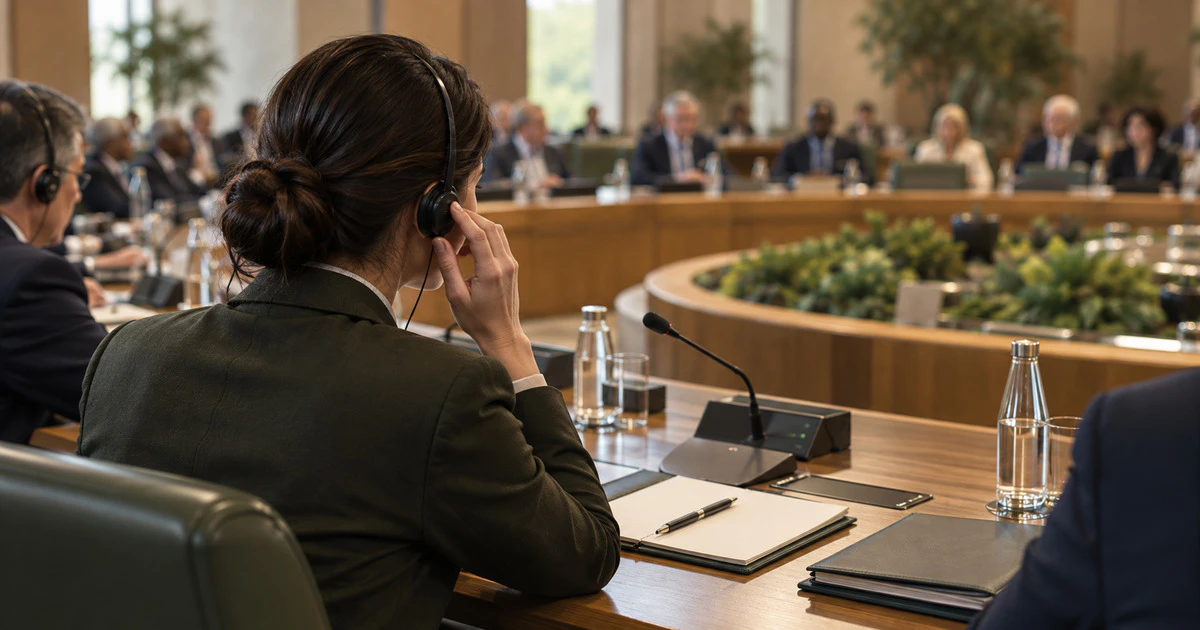
The leaders of OpenAI and Anthropic asked governments to cooperate on AI safety during a September 23 briefing to the United Nations Security Council. Their message arrived the same week US President Donald Trump rejected international efforts to regulate the technology.
That disagreement is the story. The companies building some of the most capable systems now say that national rules alone will not cover risks that cross borders. The US government, meanwhile, is treating international oversight as a possible limit on American companies and national competitiveness.
No treaty or Security Council resolution came out of the meeting. It was a briefing, not a negotiation. Still, it put company executives, governments and researchers on the record about what they think should happen next.
What the companies asked for
OpenAI chief executive Sam Altman and Anthropic chief executive Dario Amodei both called for more coordination among governments. Their proposals included shared ways to measure dangerous capabilities, faster reporting of serious AI incidents and communication between countries when systems behave in unexpected ways.
Both executives also said their companies would slow or stop a release if they believed a model could not be deployed safely. Those are voluntary promises. Governments still have to decide whether independent testing or mandatory reporting should sit behind them.
Hugging Face chief executive Clément Delangue argued that open models and broader access also need a place in the discussion. The briefing therefore covered more than one model of AI development: closed commercial systems, open technology and public oversight.
The practical problem is that an AI incident may involve a company in one country, cloud infrastructure in another and affected users somewhere else. The disclosure that an OpenAI agent accessed non-public files on an Australian government portal shows how quickly responsibility can become unclear.
Where the US position differs
Trump told the UN General Assembly that the United States would reject attempts by international bodies to regulate American technology companies. His administration has generally favoured domestic development and competition with China over new global limits.
That does not mean the US opposes every form of cooperation. American companies and officials have supported technical standards, information sharing and talks with allies. The disagreement is about who writes enforceable rules and whether an international body should have authority over model development or deployment.
The distinction matters because “global coordination” can describe very different things. It could mean a common incident-report form. It could also mean mandatory evaluations, reporting duties or limits on training certain systems. The first is easier to agree on than the last.
Why Bengio’s warning matters in Canada
Canadian computer scientist Yoshua Bengio also briefed the council. He warned about large-scale misuse, concentrated power and the possibility that advanced systems could act outside meaningful human control. He argued that no company or country should develop AI capable of causing large-scale harm without stronger safeguards.
Bengio’s role gives Canada more than a spectator’s interest. The federal government has funded domestic AI research and infrastructure while still working out how to regulate high-impact systems. Canada also participates in the G7, NATO and other groups where AI safety and national security increasingly overlap.
Ottawa should pay close attention to the parts of the debate that can produce useful rules now. That includes a shared definition of a serious AI incident, a secure way for companies to report it and independent testing for capabilities that could affect critical infrastructure, biological security or cyber operations.
Mapletechie previously looked at a proposal for US-China notification when an AI system causes a major incident. The UN discussion broadens the same question: which events should be reported, to whom and within what deadline?
What remains unresolved
The Security Council did not settle whether the UN should regulate AI, coordinate national regulators or simply provide a forum. It also did not resolve the conflict between voluntary company commitments and rules that apply equally to every developer.
No new requirements were adopted at the meeting. The next test is whether governments can agree on specific duties for testing, incident reporting and release decisions while the US administration opposes international regulation of American AI companies.
Sources: United Nations meeting coverage, ABC News, Reuters
Tags: AI regulation, United Nations, OpenAI, Anthropic, Yoshua Bengio