AI Data Centres Are Losing the Public Before They Win the Grid
Matthew Leo · Published August 29, 2026 · Business & Policy
The biggest constraint on AI infrastructure may not be chips, power or cooling. It may be whether communities still want the buildings.
On August 23, Texas Governor Greg Abbott delivered one of the sharpest warnings yet to the data-centre industry, saying companies had “dug their own grave” by moving too quickly and failing to win local support. That reversal matters because Texas spent years courting the same projects as engines of investment and AI growth.
The lesson is larger than Texas. Data centres are becoming the physical face of an AI boom that many people experience less as better software and more as higher electricity demand, land use, water consumption and giant industrial buildings appearing near their communities.
The industry has a social-licence problem now
Axios reported on August 23 that Abbott said the industry deserved the backlash it was facing after failing to build community support. The criticism was striking because he had previously championed major data-centre investments in Texas.
The shift did not happen in isolation. Data-centre opposition has been appearing across political lines and across several U.S. states, driven by concerns about electricity prices, water use, noise, land and whether promised jobs justify the infrastructure burden.
That makes this less like an ordinary zoning dispute and more like the beginning of a social-licence problem.
A project can have permits, investors and customers and still become politically difficult if the people living beside it believe they are paying the costs while someone else captures the benefits.
Power is where the argument gets personal
AI data centres can consume extraordinary amounts of electricity, especially when they are built as large clusters of accelerators rather than ordinary enterprise server rooms.
The industry often responds that new projects will finance dedicated generation or pay for the infrastructure they require. That can be true. It does not automatically answer local concerns about transmission upgrades, grid congestion, peak demand or who ultimately bears the cost of new capacity.
Texas has moved toward requiring large data centres to cover more of the electrical infrastructure associated with their demand. That principle is likely to spread because it is politically easier to defend than asking households to absorb costs created by some of the richest companies in the world.
For the AI industry, the message is simple: bringing your own servers is no longer enough. Increasingly, communities will expect you to explain who pays for the power system around them.
Water and land make the backlash harder to dismiss
Many data centres use substantial water for cooling, although the amount varies dramatically by design, climate and cooling technology.
That variability is important because “data centres use too much water” can be as misleading as “data centres barely use water.” A facility using air cooling in one region is not equivalent to a large evaporatively cooled campus in a drought-prone area.
But communities are not wrong to ask for the numbers.
The industry’s credibility problem grows when developers seek tax incentives while providing little public information about water consumption, electricity demand or emergency-generation plans. If a project needs major public infrastructure, “trust us” is a weak communications strategy.
The jobs argument has limits
Data-centre projects can create large numbers of construction jobs and significant tax revenue. Permanent staffing is usually much smaller once a highly automated facility is operating.
That does not make the economic benefit meaningless. A relatively small permanent workforce can still support a valuable tax base and surrounding supplier ecosystem.
The problem comes when political leaders sell a data centre to residents as if it were a factory employing thousands of people indefinitely.
If the lived outcome is a huge electricity customer with a modest long-term headcount, communities notice the difference between the promise and the reality.
Canada should learn from this before the backlash arrives at scale
Canada wants more domestic AI compute. That is strategically understandable. Canadian researchers and companies should not have to depend entirely on foreign cloud capacity for every advanced workload.
But the country will run into the same physical questions as the United States: where the facilities go, who supplies the electricity, how much water they use, what infrastructure they need and what the host community receives in return.
Canada has one advantage if it uses it properly: many provinces have relatively low-carbon electricity systems, and some regions have access to abundant hydroelectric generation. That can make Canadian compute attractive.
It can also create complacency. Clean electricity is still finite electricity. If a large data centre changes local demand enough to require expensive generation or transmission, the cost-allocation question does not disappear because the electrons came from hydro.
The best data-centre policy is boringly transparent
Governments do not need to choose between banning AI infrastructure and giving developers a blank cheque.
A better framework is straightforward:
Require clear estimates of electricity and water use before approval.
Make developers pay a fair share of dedicated grid upgrades.
Disclose tax incentives and expected permanent employment.
Set noise, backup-generation and environmental standards before construction begins.
Build local benefit agreements where communities are carrying unusual infrastructure costs.
Those rules can slow bad projects while making good ones easier to defend.
AI companies cannot PR their way around infrastructure physics
The technology industry is already debating whether the backlash is mainly a communications failure. Better communication would help, especially when projects are genuinely misunderstood.
But communications cannot solve a real electricity bill, a real water shortage or a real transmission upgrade.
The companies most likely to preserve public support will be the ones willing to make the economics visible: this is how much power we need, this is what we are paying for, this is what the community receives, and this is how we limit the environmental burden.
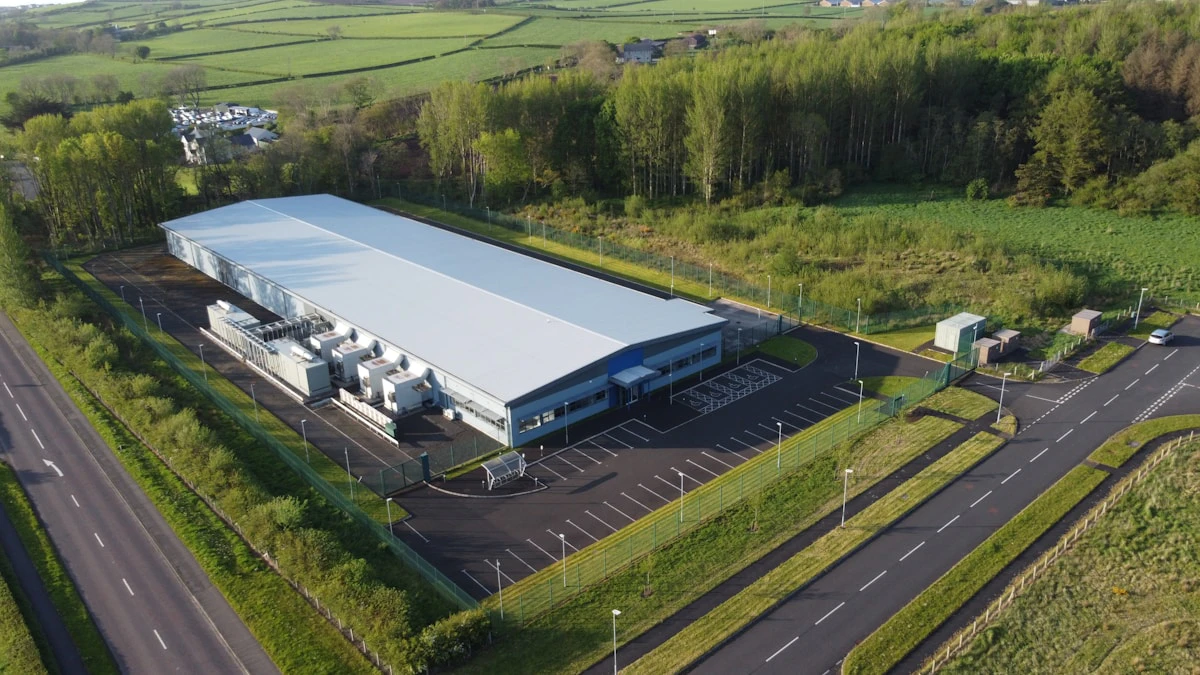
AI infrastructure is becoming too large to hide behind the language of “the cloud.” The cloud is a building now, and people can see it from their backyard.
That means the next phase of the AI race will not be decided only in labs and boardrooms. Some of it will be decided at utility hearings, municipal councils and town halls.
Tags: AI infrastructure, data centres, Business & Policy, Energy, Canada