Canada May Make AI Sales Calls Admit They Are Robots
Matthew Leo · Published August 13, 2026 · Business & Policy
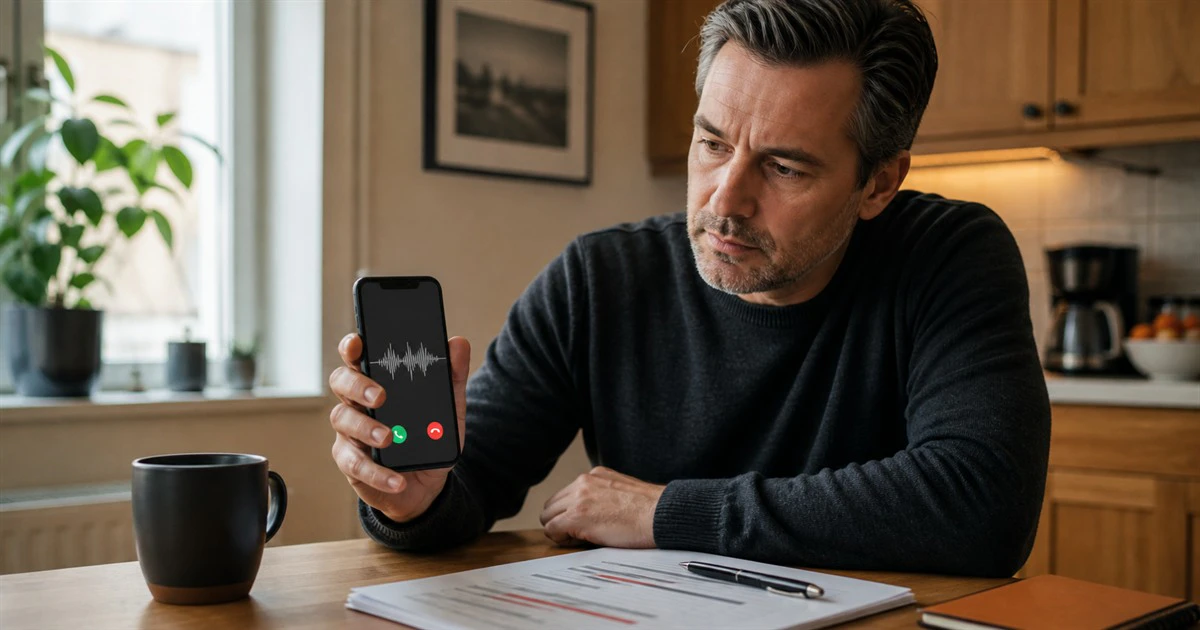
The next sales call that sounds human may have to admit that it is not.
Canada’s telecom regulator is reviewing the rules for telemarketing, robocalls and the National Do Not Call List. One of its clearest questions is whether a telemarketer using an artificial or synthesized voice should tell the person who answers that they are not speaking with a live caller.
The CRTC consultation closes its reply stage on August 11, 2026. No new rule has been adopted yet. Still, the review shows how quickly realistic voice technology has moved ahead of a framework first introduced in 2007.
The review reaches beyond the Do Not Call List
The Unsolicited Telecommunications Rules cover three related areas: the National Do Not Call List, ordinary telemarketing and automatically dialled or announced calls. Canadians can register a home phone, mobile, VoIP or fax number on the list. A non-exempt telemarketer normally needs consent before calling a registered number and must follow identification and record-keeping rules.
Some calls are exempt from the National DNCL rules, including calls made by registered charities, political candidates, newspapers seeking subscriptions and organizations that have an existing business relationship with the recipient. Exemption from the list does not give a caller permission to mislead people. Other telemarketing requirements and the deceptive-telemarketing provisions of the Competition Act may still apply.
The CRTC says it has completed more than 3,500 investigations into compliance since the framework began. Its current review is partly about simplifying duties that companies have found confusing. It is also about deciding whether definitions written around older autodiallers still make sense when software can hold a fluid conversation in a natural voice.
AI disclosure is the most important proposal
The regulator asks whether identification rules should require telemarketers to say that a call uses a chatbot, artificial voice or similar technology. That disclosure should be adopted.
A person answers a call differently when they believe a human is listening. They may be more patient, reveal more information or assume that a natural pause and friendly tone prove authenticity. Modern voice systems weaken those signals. A short disclosure at the start would not stop fraud, but it would prevent a legitimate business from quietly using human-like software to create false trust.
The rule should be simple enough to hear and hard to bury: identify the company, state the purpose of the call and say clearly when the voice is automated or AI-generated. A vague phrase such as “technology assisted” would not be useful.
Disclosure also needs a sensible boundary. The CRTC asks whether personal AI agents should fall under automated-call rules when a person uses one to book a restaurant or medical appointment. Treating that private task like a marketing campaign would stretch telemarketing law too far. The trigger should be solicitation, scale and who benefits from the call, not merely whether software spoke.
The regulator is also considering voice-mail broadcasting
Voice-mail broadcasting delivers a recorded message directly into a mailbox without making the phone ring. Under the current framework, users of that method have some DNCL obligations but face a different registration treatment. The CRTC asks whether the National DNCL rules should continue to cover it or whether it should be excluded.
Removing it would be a mistake. A silent delivery is less disruptive than a ringing phone, but it can still fill a mailbox, create confusion and move unwanted advertising to a place people use for doctors, schools and family. The better answer is one clear set of obligations across live calls, robocalls and direct-to-voice-mail campaigns.
The consultation also asks whether telemarketers should keep calling logs for a minimum period, whether messages should begin within 10 seconds of pickup and whether recipients should have to press a key or speak before hearing required information. Each question points to the same principle: a business should be able to prove what it sent, when it sent it and who was responsible.
Rules for legitimate marketers will not stop criminal scams
This review cannot solve every unwanted call.
Fraudsters already ignore the Do Not Call List, impersonate banks and government agencies, and manipulate caller ID. A rule telling legitimate telemarketers to disclose an AI voice will not make an overseas criminal suddenly become honest.
That does not make the rule pointless. Clear duties help the regulator distinguish compliant businesses from operators that hide their identity. They also give consumers a concrete reason to end a call when a seller withholds required information.
The Competition Bureau’s guidance says telemarketers must identify the person or organization behind the call, explain what is being promoted and disclose material price restrictions and conditions. Those duties matter whether the pitch comes from a person or software.
What Canadians should do now
The August 11 deadline is for replies in the regulatory proceeding, not the start of new consumer rules. Canadians do not need to change a phone setting because of it.
For now, treat every unexpected sales call as unverified. Do not provide a one-time code, password, credit-card number or government identifier simply because the voice sounds professional. Hang up and call the organization through a number on its official website, app, statement or the back of a payment card.
Register eligible numbers and report rule-breaking calls through the National Do Not Call List. Report suspected fraud to the Canadian Anti-Fraud Centre. Caller blocking and carrier filters can reduce nuisance, but no filter can decide whether every convincing voice is telling the truth.
Mapletechie’s Business & Policy coverage follows these proceedings because small wording choices determine what a company must reveal before asking Canadians for money.
The CRTC does not need to ban AI voices. It needs to stop them from pretending to be people. A short, plain disclosure is the minimum rule a human-sounding sales machine should have to follow.