Alberta's $24.8M Broadband Push Faces a Last-Mile Test
Matthew Mbaka · September 18, 2026 · Canada Tech
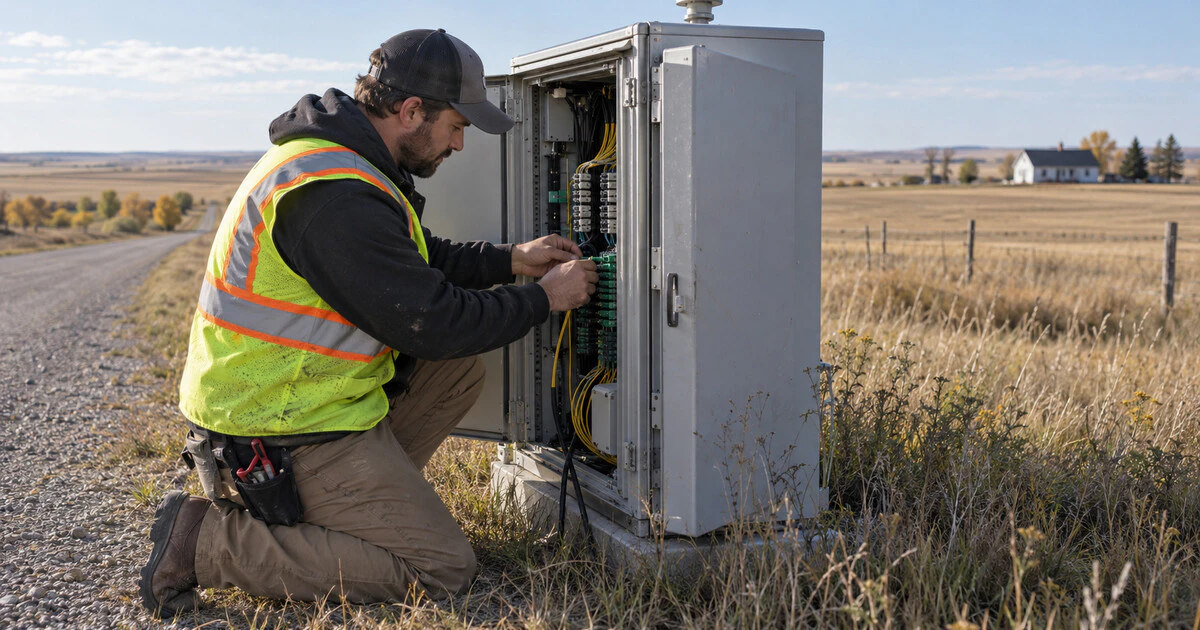
Alberta is putting another $24.8 million into rural broadband, with two projects expected to reach 1,833 households. That is useful progress, especially for communities where a weak connection can make remote work, online classes and virtual medical appointments needlessly difficult.
It is also a good moment to read the numbers carefully. A funded project is not the same thing as an active connection, and having infrastructure at the road does not guarantee that every household can afford or will subscribe to the service.
What Alberta announced
On September 14, the province said the two projects would connect rural and remote households as part of its larger agreement with the federal government. The announcement did not provide a community-by-community construction schedule, so residents should not assume service is imminent until the provider confirms an address, installation date and retail plan.
The province says 98.2 per cent of Alberta households currently have access to high-speed internet. In this program, high speed follows the federal target of at least 50 megabits per second for downloads and 10 Mbps for uploads. That 50/10 benchmark is much better than a slow legacy connection, but it can still feel tight in a busy home with video meetings, cloud backups and several streams running at once.
According to the provincial announcement, $646 million of a $780-million federal-provincial agreement has now been allocated to 82 projects. Alberta says those projects should eventually serve about 137,100 households. Of those, 21 projects serving roughly 20,600 households are complete, 46 are in progress and 15 remain in planning.
Why the 115 per cent figure needs context
The province also says more than 230,800 households have received or will soon receive high-speed access when federal, provincial and private projects are counted together. It describes that as 115 per cent of the original target.
That does not mean 115 per cent of Alberta homes have broadband. It means the combined programs now cover more locations than the roughly 201,000 underserved households estimated when the plan was built in 2022. Updated maps, new construction and changes in how locations are counted can all move that denominator.
The percentage that matters to a resident is much simpler: can the provider install service at this exact address, at the advertised speed and at a price the household can carry every month?
Access is only the first hurdle
Government broadband programs usually report premises passed or households given access. That is a necessary infrastructure measure, but it leaves several practical questions open:
- Installation: Is the connection ready now, or is the project still in planning or construction?
- Technology: Is the last mile fibre, fixed wireless or another system, and what performance should users expect during busy hours?
- Cost: What are the regular monthly price, installation charge, equipment rental and overage rules after any promotion ends?
- Upload speed: Is 10 Mbps the floor or the actual plan limit? Upload capacity matters for video calls, farm monitoring and sending large files.
- Reliability: What happens during a power failure, and does the provider offer a service-level commitment?
The Alberta Broadband Fund says its goal is universal access to reliable 50/10 service. Reaching that goal will take more than announcing funding. Providers have to finish construction, connect difficult properties and offer plans people can reasonably use.
What rural residents can check now
If your community appears in a project area, start with your street address rather than a broad coverage map. Ask the named provider whether the build is complete, whether your property needs a site survey and whether there is a separate drop or trenching fee. Get the normal price after promotions in writing.
It is also worth running speed tests at different times before replacing an existing connection. Save the results and note whether the device was connected by Ethernet or Wi-Fi. That gives you something concrete to compare if the new service underperforms.
The new funding should close real gaps for 1,833 households. The useful measure of success will come later: connected homes, predictable bills and service that holds up on an ordinary weeknight.
Tags: Alberta, Broadband, Rural Internet, Canada, Telecom