Apple’s EU App Fees Show What Canada Still Lacks
Matthew Leo · Published August 19, 2026 · Business & Policy
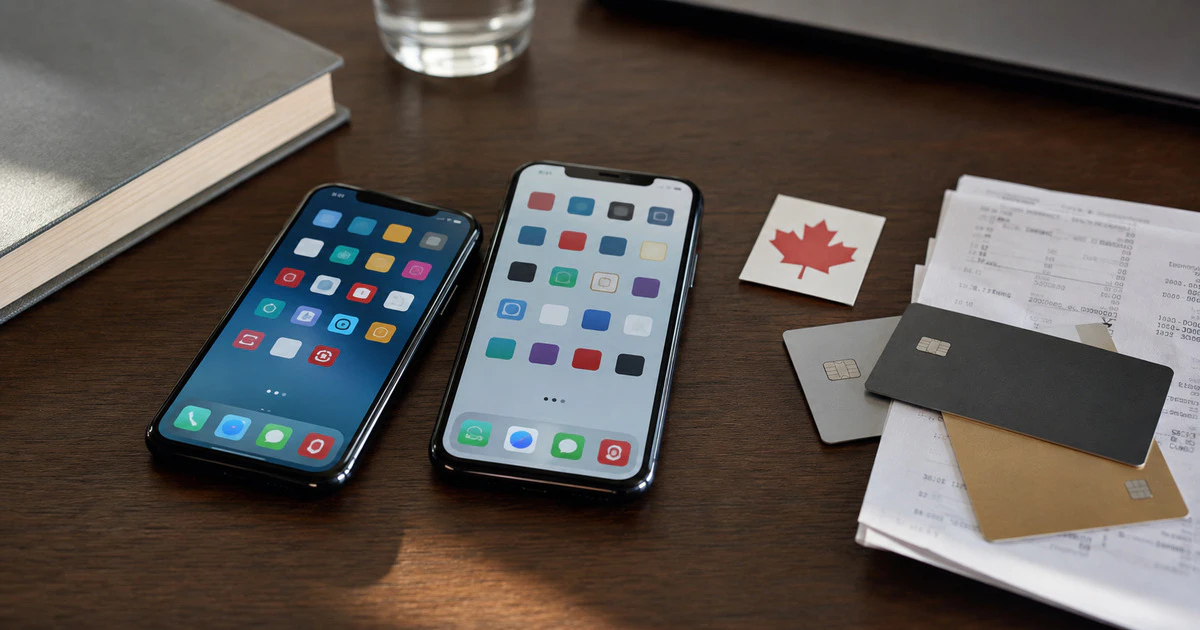
European iPhone users can install apps from outside Apple’s App Store, but “outside” no longer means outside Apple’s fee system.
Apple announced new European business terms on August 18 that replace its complicated Core Technology Fee with a 5% commission on covered digital transactions in alternatively distributed apps. App Store apps using other payment processors face a 20% commission, or 10% under the small-business programme.
The change may make costs easier to predict. It also shows what Canada lacks: an enforceable framework that lets consumers choose another iPhone marketplace and then measures whether the choice improves prices, access and innovation.
What Apple changed in Europe
Under the European Union’s Digital Markets Act, Apple must permit alternative app marketplaces and web distribution under defined conditions. Its updated developer terms say the new structure takes effect October 1, 2026.
The 5% Core Technology Commission applies to paid apps, digital goods and subscriptions distributed outside the App Store. It can also apply to a web purchase made within seven days after a user follows a promotional link from the app. Developers must report covered transactions to Apple.
Apple also removed its previous initial-acquisition and store-services fees. For App Store apps using alternative payments, the commission is generally 20%, with lower rates for qualifying small developers and some subscriptions.
Reuters reports that the European Commission welcomed the changes and will monitor implementation. Epic Games called the new commission a barrier and argued that the market remains insufficiently open.
A simpler fee is not necessarily a competitive fee
The old per-install charge created unusual risk for free apps that became popular without earning revenue. A percentage of transactions follows money instead, which is easier for many developers to model.
| Route in the EU | Headline Apple charge | Important condition |
|---|---|---|
| App Store with alternative payment | Generally 20% | Lower rates may apply to programme participants |
| Alternative marketplace or web distribution | 5% | Covers qualifying digital transactions and some linked web sales |
| Apple in-app purchase | Terms vary | Apple supplies payment and store services |
Developers still carry payment processing, fraud, tax, support and reporting costs outside Apple’s payment system. A 5% platform commission is therefore not the complete cost of alternative distribution.
Nor does a lower developer charge guarantee a lower subscription price. A company may keep the difference, spend it on customer acquisition or use it to subsidize another service. Regulators need to measure actual prices and entry, not assume that fee reform automatically reaches consumers.
Canadians do not get the European choice
Apple’s alternative iOS distribution is regional. A Canadian Apple Account and Canadian storefront do not gain European marketplace access simply because the phone is capable of it.
Canadians can sometimes subscribe on a developer’s website and then sign into an iPhone app. That is different from installing another app store or downloading an iOS app directly from the web.
The Competition Bureau has made digital competition a priority and has challenged Google’s advertising-technology conduct. Canada has also strengthened parts of the Competition Act. It has not created an equivalent to the EU rule requiring Apple to open iOS distribution.
Opening a store creates new consumer questions
Alternative distribution can give developers more control and reduce dependence on one approval process. It can also move payment disputes, refunds, family controls and subscription cancellation outside the familiar App Store system.
A useful Canadian policy would preserve informed choice. Phones should clearly identify who operates a marketplace, who processes payment, how updates arrive and where a refund request goes. Warnings should describe a real risk without making the alternative route deliberately frightening.
Security also needs measurable standards. Apple continues to notarize alternatively distributed European apps, but notarization is not a promise that an app is harmless or high quality. Marketplace operators need processes for malware, impersonation, privacy complaints and rapid removal.
Payment choice also affects household budgeting. A subscription bought outside Apple may not appear in the iPhone’s subscription list, so consumers need an equally clear record of renewal dates, price changes and cancellation routes. Competition that scatters recurring charges across several dashboards can save money while making accidental renewals harder to spot.
Judge reform by consumer outcomes
- Do new marketplaces attract useful apps rather than cloned catalogues?
- Do prices fall after payment and platform costs are included?
- Can small developers reach users without punitive reporting burdens?
- Are refunds and cancellations as clear as in the default store?
- How quickly are malicious apps removed and affected users warned?
- Can parents preserve purchase controls across stores?
Canada should study the European data before copying the exact rules. The lesson is not that every Apple fee is automatically abusive or that every alternative store is safe. It is that a market cannot demonstrate competition when consumers are legally and technically confined to one distributor.
Apple’s new 5% charge makes the European experiment easier to understand. Canadians are still watching that experiment through glass.
Tags: Apple, App Store, competition, Digital Markets Act, Canada