Apple and OpenAI Are Fighting Over the Next Device
Matthew Leo · Published August 4, 2026 · AI
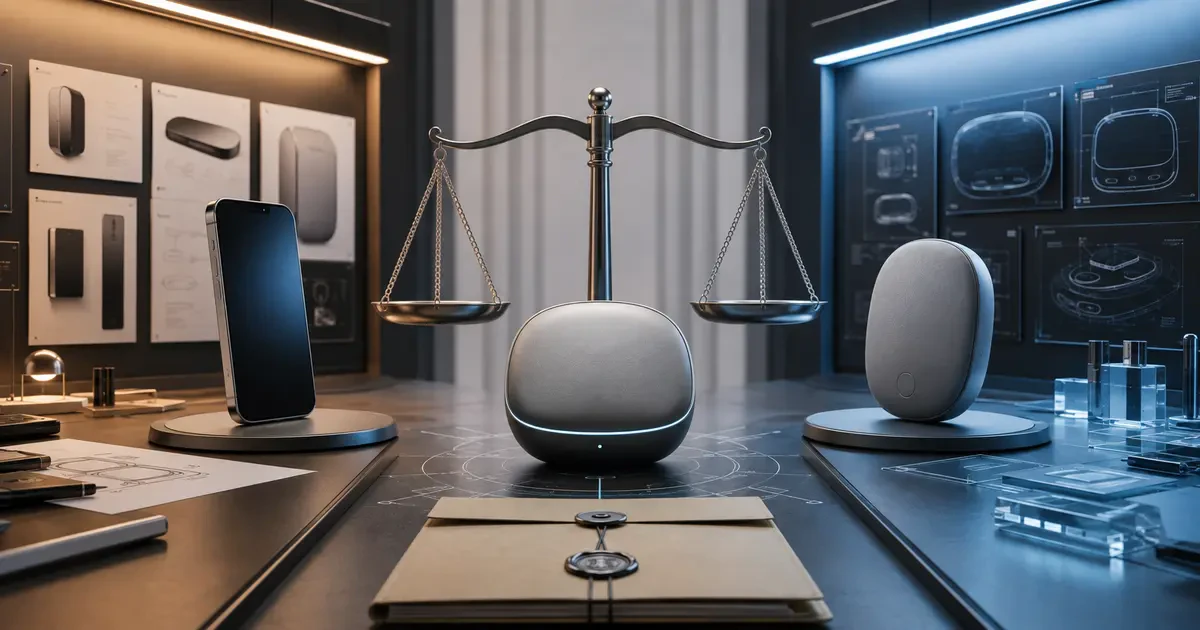
Apple and OpenAI are still partners on the iPhone, but they are now asking a federal judge to decide whether OpenAI’s hardware ambitions were built with Apple’s stolen secrets.
Apple filed its lawsuit in July against OpenAI and two former Apple employees who joined the AI company. On August 3, it asked for a preliminary injunction that would bar the defendants from accessing, using or disclosing the disputed information while the case proceeds.
OpenAI’s answer was unusually public. Rather than limiting its response to court filings, the company published emails and messages, called Apple’s account false and said it neither possesses nor wants Apple’s trade secrets.
No court has decided who is right. The established facts already reveal something important, though: Apple no longer views OpenAI as merely an intelligence supplier for Siri. It sees a potential hardware competitor.
What Apple is alleging
Apple’s complaint names former employees Chang Liu and Tang Yew Tan, along with OpenAI and its hardware subsidiary io Products. Apple alleges that confidential engineering, supplier and product-development information was improperly accessed or shared to accelerate OpenAI’s consumer-device work.
Those remain allegations. The public case docket confirms the lawsuit and its procedural history, not that misappropriation occurred.
Reuters reported on August 4 that Apple also requested expedited discovery. It wants documents and depositions from the former employees, OpenAI representatives and other people involved in the company’s hardware programme.
A preliminary injunction is not a final judgment. Apple is asking the court to prevent alleged continuing harm while the evidence is gathered and tested.
OpenAI says Apple has the story wrong
In a response titled “Apple is getting this wrong,” OpenAI said Apple had not raised the specific accusations during earlier communication between the companies. It also published correspondence that it says contradicts parts of Apple’s account.
OpenAI’s post is evidence of its position, not an independent finding. The company is a defendant with an obvious interest in presenting the events favourably, just as Apple has an interest in framing the dispute as an organized threat to valuable intellectual property.
The court will need to distinguish several things that public arguments often mix together: an employee’s general expertise, Apple information the employee was contractually required to protect, data that may have remained accessible accidentally and any confidential material allegedly obtained or used by OpenAI.
Hiring someone because they know how to build excellent hardware is lawful competition. Asking that person to bring a former employer’s protected designs is not. The case turns on evidence about where that line was crossed, if it was crossed at all.
The larger fight is over the interface after apps
OpenAI’s hardware project matters because the company is not simply building another application for Apple’s platform. Its work with former Apple design chief Jony Ive is widely expected to produce a dedicated AI device designed around conversation, context and assistance rather than a conventional grid of applications.
The final product has not been publicly demonstrated, and claims about its precise form remain speculative. It may fail commercially. Technology history contains a respectable graveyard of devices that were introduced as the thing after the smartphone.
Apple still has reason to take the threat seriously. The iPhone’s power comes from being the place where communication, photography, payments, applications and personal data meet. If an AI assistant becomes the main layer through which people complete those tasks, the manufacturer of the screen beneath it risks losing part of the relationship.
That is true even if the assistant never replaces the phone. A successful AI device could redirect attention, purchases and personal context away from Apple’s operating system.
The partnership now has an obvious limit
Apple integrated ChatGPT into its software because it needed a capable external model while developing its own AI features. OpenAI benefited from access to a vast base of Apple users.
That arrangement always contained tension. Apple controls the device, distribution and privacy interface; OpenAI wants the assistant to become the user’s primary destination. Cooperation works while each company strengthens the other’s current product. It becomes harder when OpenAI designs hardware that might reduce dependence on Apple.
Canadian users should not expect ChatGPT to disappear from Apple devices immediately because of the lawsuit. Neither company has announced the end of the integration, and litigation can continue for years while commercial relationships remain in place.
The practical risk is longer-term fragmentation. Features may be held back, integrations may become less ambitious and each company may steer users toward its own accounts, hardware and subscriptions.
A courtroom cannot decide whether the device is good
Even if Apple proves its allegations, that would not establish that OpenAI’s future device is useful. If OpenAI defeats the case, that would not guarantee that people want another object listening for requests throughout the day.
The product will still need to answer ordinary questions: What does it do better than a phone? How does it indicate when it is recording? Can the owner inspect or delete its memory? What happens when its network connection fails? Who repairs it, and how long will it receive security updates?
Those questions matter more to Canadian buyers than the corporate mythology surrounding either company.
Keep the allegations attached to their owners
Apple has made serious accusations and asked a judge for immediate restrictions. OpenAI has issued a detailed denial and accused Apple of constructing its request from incorrect information.
The responsible conclusion is not that one side has already exposed the other. It is that two companies which helped place generative AI inside the iPhone now see each other as competitors for whatever comes next.
The lawsuit may eventually establish whether protected information travelled with the people Apple lost. The existence of the fight already establishes how valuable both companies believe the next consumer interface could become.
Tags: Apple, OpenAI, AI hardware, trade secrets, consumer devices