Canada Put C$2.3B Behind Its Defence Drone Plan
Emmanuel Chidi · Published November 6, 2026 · Canada Tech
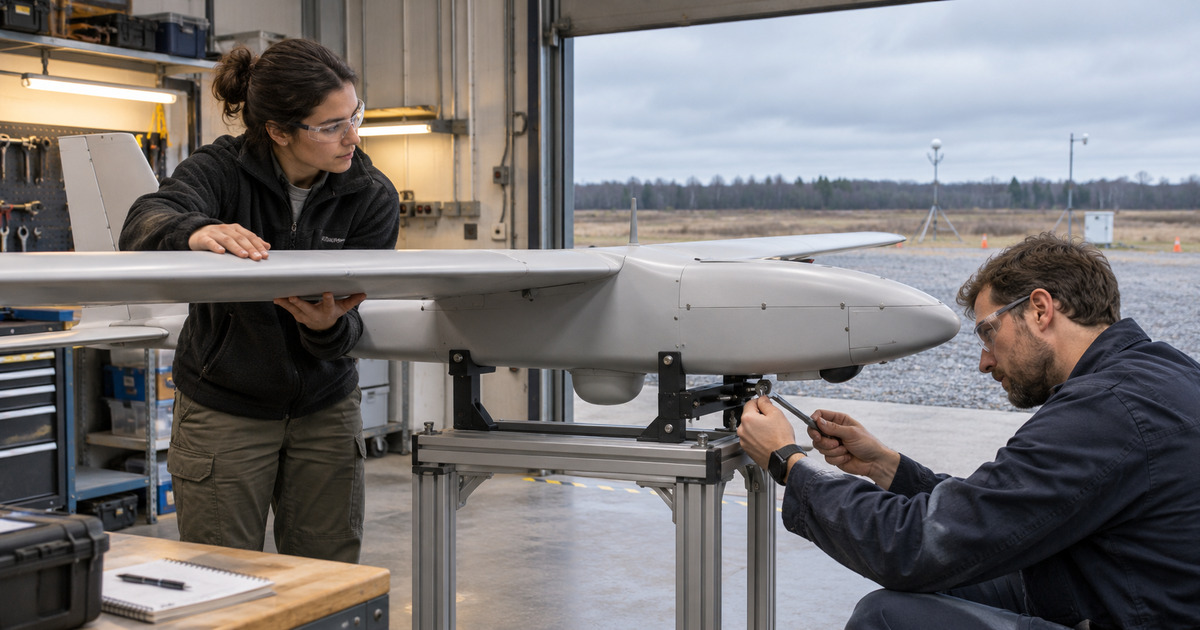
Canada’s Defence Drone Initiative now has a proposed five-year budget. Budget 2026 would provide C$2.3 billion starting in 2027–28 to accelerate the discovery, acquisition and deployment of uncrewed and counter-uncrewed systems.
This is a material step beyond the initiative’s July launch, which created a faster supplier pathway but did not guarantee contracts. The new budget measure gives the Department of National Defence a funding envelope, while noting that part of the money would come from funding already set aside in the fiscal framework.
What the initiative is designed to buy
National Defence’s program backgrounder identifies six initial capability areas:
- low-cost tactical intelligence, surveillance and reconnaissance drones;
- uncrewed ground vehicles for logistics and difficult terrain;
- uncrewed surface and underwater maritime systems;
- standardized drone payloads and interfaces;
- low-cost, low-collateral counter-drone interceptors; and
- technologies that could contribute to a long-range precision capability.
The last item is deliberately conditional. The government said in July that no acquisition decision had been made and that technical, legal, safety and policy work would be required. The new budget does not remove those gates.
C$2.3 billion is an envelope, not a contract list
Spread evenly, C$2.3 billion would average C$460 million a year. Actual cash flows are unlikely to be even, and the budget does not publish annual profiles, winning suppliers or quantities. Reuters’ independent budget summary confirms the five-year amount and the 2027 start.
The July supplier arrangement was designed to qualify Canadian companies for later competitions covering research, prototypes, testing, limited purchases and possible production. Qualification did not promise an order. That distinction remains important for startups announcing participation or investors trying to value the program.
Why the procurement model matters
Drone technology changes faster than conventional defence purchasing cycles. A useful marketplace must let operators test small batches, reject weak designs, update software and scale successful systems without locking the military into obsolete hardware.
Canada also needs to specify what “sovereign” means in practice. Airframes are only one layer. Secure radios, navigation, batteries, sensors, chips, software updates, training data and maintenance can each create foreign dependencies. The program’s backgrounder says cybersecurity, supply-chain integrity, ownership and control will be considered, but procurement documents will determine how those tests are applied.
Mapletechie recently covered North Vector’s counter-drone financing and the Bombardier–BAE combat-air partnership. The new initiative could strengthen that wider Canadian defence-technology base, especially for smaller firms that can demonstrate a working system but cannot wait through a decade-long acquisition cycle.
The budget moves the Defence Drone Initiative from an interesting process experiment toward a funded procurement channel. Its success will be measured by fielded capabilities, repeat orders and a resilient Canadian supply chain, not the size of the envelope alone.
Tags: Canada, defence technology, drones, manufacturing