Ottawa Is Backing an Aluminum-Fuel Generator in Sarnia
Matthew Leo · Published October 11, 2026 · Canada Tech
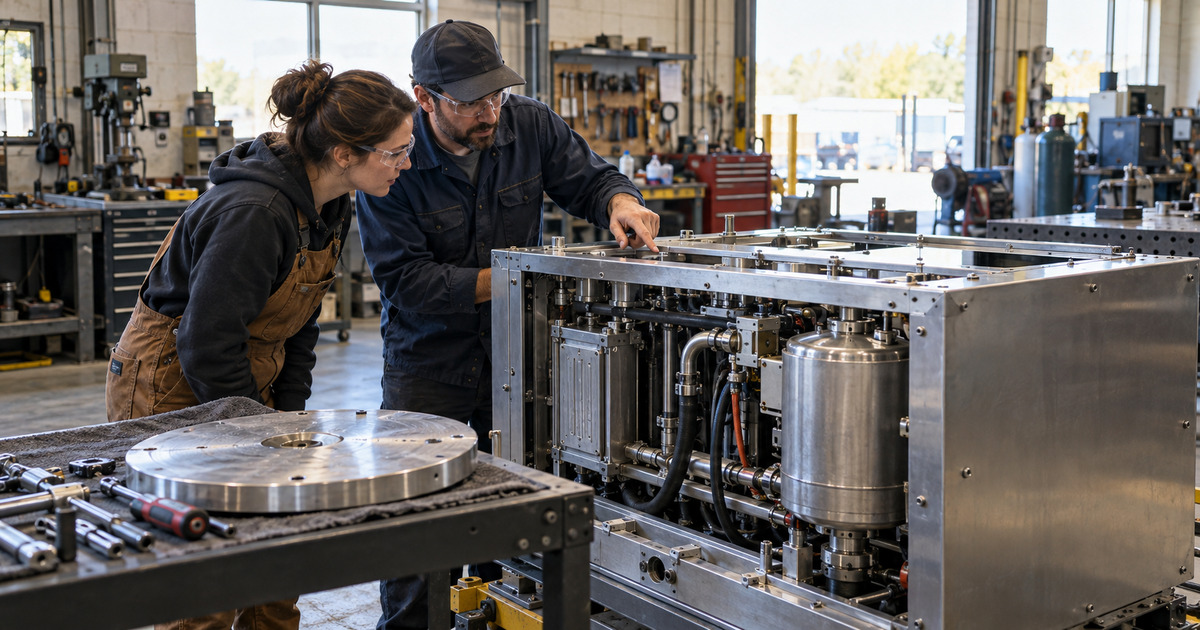
The federal government is investing $4 million in a Sarnia company that wants to commercialize portable generators fuelled by aluminum.
AlumaPower’s project has a stated value of $8 million, which means the FedDev Ontario contribution represents half of the announced project cost. The money comes through the Regional Defence Investment Initiative and is intended to move the technology toward defence and other grid-independent uses.
The October 9 federal announcement says the system uses recycled aluminum and is being developed for defence, industrial operations, microgrids, utilities and electric-vehicle charging. It does not publish a procurement contract, field-test result, unit price or independently verified performance figure.
What aluminum is doing here
This is not a conventional rechargeable battery that an owner plugs into the wall every night. AlumaPower describes a galvanic process in which prepared aluminum fuel is consumed to generate electricity. The spent material would need to be collected and recycled into new fuel.
That distinction changes the purchasing question. A customer would need to evaluate the whole fuel cycle: how much usable energy a cartridge produces, how the aluminum is manufactured, stored and replaced, what by-products remain, and how efficiently those materials return to a recycling stream.
Company demonstrations and government descriptions support the basic development claim, but they do not establish total lifecycle emissions, field reliability or cost per kilowatt-hour. Those figures should come from repeatable tests with clearly stated assumptions.
Why defence is interested
The government announcement emphasizes portable, long-duration and grid-independent power. AlumaPower’s chief executive also says defence users need generation that is safe, reliable and difficult to detect in the field.
Those are meaningful requirements. Diesel generators create noise, heat, exhaust and a fuel-supply burden. A system that reduces some of those signatures could be useful for remote sensors, communications, temporary command posts or emergency power. It would still have to prove durability, output under changing loads, performance in cold weather, fuel logistics, maintenance needs and safe handling.
The funding is therefore best understood as commercialization support, not evidence that the Canadian Armed Forces has selected the product. The federal release says “potential defence applications” and positioning for global supply chains.
The questions that should follow the grant
- Net output: What continuous and peak power can the system provide, and for how long, under a published test profile?
- Fuel logistics: What does a fuel unit weigh, how is it stored, and how much space does it replace compared with diesel plus a generator?
- Cold-weather operation: What happens at temperatures relevant to northern Canada?
- Lifecycle accounting: How much energy and carbon are involved in preparing the aluminum fuel and recycling the spent material?
- Acoustic and thermal signature: Are “difficult to detect” claims supported by standardized measurements?
- Cost: What is the delivered electricity cost after fuel preparation, transport, service and recycling?
What Canada gains even before a sale
The project puts commercialization work in Sarnia, a region with industrial skills, energy infrastructure and manufacturing capacity. If the technology clears technical and economic testing, that local base could matter as Canada tries to build more of its defence supply chain domestically.
The disciplined next step is evidence. Public support can help a company cross the difficult gap from prototype to production, but buyers and taxpayers still need published performance boundaries, lifecycle assumptions and independent field results before “clean” or “reliable” becomes more than a development goal.
Tags: AlumaPower, clean technology, Canadian defence, energy storage