Canada and France Plan Shared Space Infrastructure
Matthew Mbaka · September 22, 2026 · Canada Tech
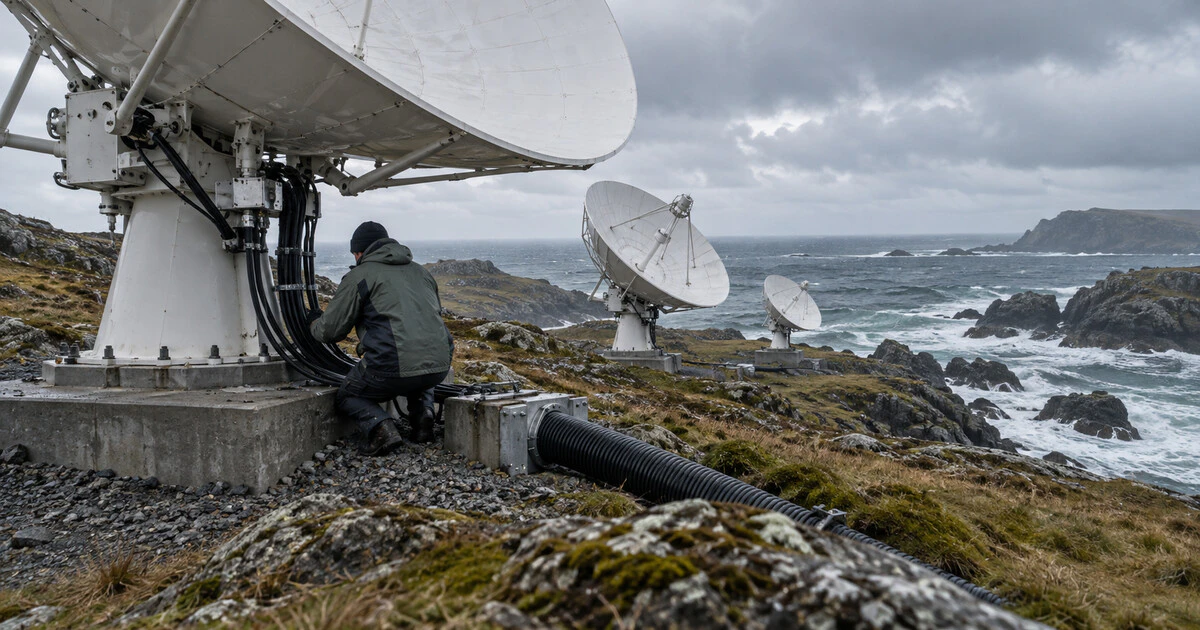
Canada and France want their space agencies and defence departments to work together on launch systems and satellite ground stations. The countries are also talking about telecommunications and emerging technology.
Prime Minister Mark Carney announced the space work with French President Emmanuel Macron in Saint-Pierre-et-Miquelon on September 20. Reuters reported that the two governments have tasked their space agencies and defence ministries with jointly developing launch systems and ground reception facilities.
The announcement is important, but it is still an outline. No public project list, budget, construction site or delivery schedule has been released.
Why ground stations deserve attention
A satellite is only useful when it can send information to Earth and receive instructions. Ground stations handle those links. Their location affects coverage, latency, resilience and which jurisdiction controls the equipment and data.
Canada's geography makes that especially important. Arctic monitoring, weather observation, navigation, defence communications and remote connectivity all depend on reliable links across large areas. France brings launch experience, a sizeable space industry and territories on both sides of the Atlantic and beyond.
Shared facilities could give both countries more options when a commercial provider fails, a cable is damaged or access to foreign infrastructure becomes politically complicated. They could also create new dependencies if one country supplies the launch vehicle while the other supplies the site, network or data processing.
The communications part needs specifics
Satellite ground stations still depend on terrestrial networks. The data they receive must travel to processing centres, government users, researchers or commercial customers. Fibre routes, power and secure backhaul can be as important as the dish itself.
The useful question is what the new telecommunications cooperation would add. It could mean shared ground infrastructure, better links between Atlantic Canada and Saint-Pierre-et-Miquelon, coordinated research or more resilient backhaul. It could also remain a broad promise unless a future agreement identifies the actual network.
More routes can improve resilience, but two links are not automatically independent. They may share a power supply, terrestrial backhaul or maintenance contractor. A failure at that common point can still take both paths down.
Digital sovereignty is not the same as isolation
Carney has argued for reducing Canada's dependence on the United States. Space and cable infrastructure can support that goal by giving Canada more partners and routes. It does not mean disconnecting from American networks or moving all Canadian data to Europe.
The earlier Mapletechie analysis of Canada-Europe digital trade found that political ambition has been running ahead of technical detail. The same caution applies here. A project can strengthen Canadian control only if procurement, ownership, data handling, maintenance and emergency access are written clearly.
Those choices also affect privacy. A ground station or cable landing site may carry commercial traffic, government data or defence communications. Each category needs rules for who can operate the equipment, where logs are stored, when foreign personnel can access it and which country's law applies.
What a serious plan would include
Before treating the announcement as a new transatlantic network, look for five things:
- Named projects and locations.
- Committed Canadian and French funding.
- Ownership and procurement rules.
- Data-security and lawful-access terms.
- Construction, launch and service dates.
Local and Indigenous consultation will also matter if facilities or terrestrial cable routes cross northern or coastal communities. Infrastructure built in Canada should not be presented as a sovereignty win while the people living beside it see little benefit or control.
The Canada-France plan has a sensible strategic shape. Ground stations, launch capability and network links are the physical layer beneath talk of digital independence. We will know more when the two governments name projects, costs and locations that Canadians can inspect.
Sources: Reuters; Associated Press.
Tags: Canadian space, France, satellites, telecommunications, digital sovereignty