Canada’s German Submarine Choice Cannot Sideline Korea
Matthew Leo · Published July 28, 2026 · Business & Policy
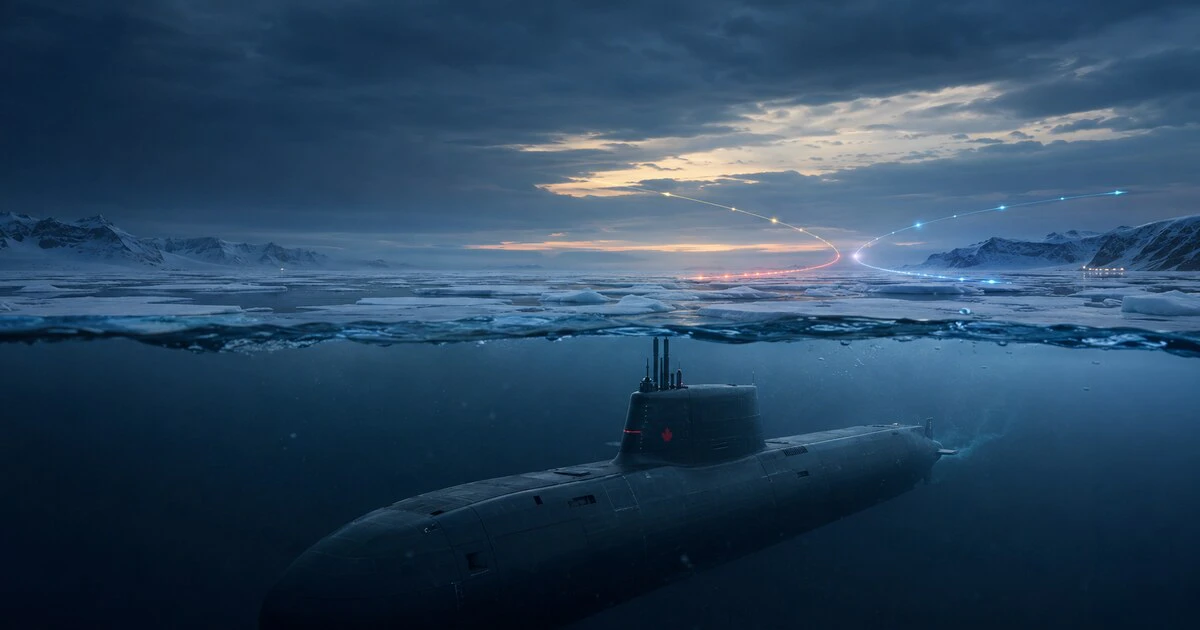
Canada’s submarine decision is being discussed as if Ottawa compared German and South Korean warheads and picked the deadlier option. That is not what happened.
On July 6, Canada selected Germany’s Thyssenkrupp Marine Systems, or TKMS, as the preferred supplier for up to 12 new submarines. South Korea’s Hanwha Ocean was designated the reserve supplier.
The choice begins contract negotiations. It is not a completed purchase, and it certainly is not public proof that Germany offered superior weapons.
First, this was not a warhead contest
A warhead is the explosive component inside a weapon such as a torpedo or missile. A submarine is the much larger platform that carries sensors, propulsion systems, communications equipment, a combat-management system and whatever weapons Canada eventually approves.
Ottawa has not publicly announced the Canadian fleet’s final weapons package or released the detailed scoring of the two bids. There is therefore no factual basis for claiming that Germany won because it produces “better warheads.”
What the government has announced is a plan for up to 12 conventionally powered, under-ice-capable submarines. These are not nuclear-powered ballistic-missile submarines.
The public comparison was primarily about the submarines themselves, their delivery schedules, their ability to operate across Canada’s three oceans, industrial benefits and the strategic partnerships attached to each bid.
Why Germany had a credible advantage
Prime Minister Mark Carney described the decision as a close competition between two qualified suppliers. He said the German Type 212CD was optimized for Arctic waters and fully interoperable with NATO systems.
The Type 212CD is being developed through a joint German–Norwegian programme. Adding Canada would give three NATO navies a common platform around which they could share elements of training, maintenance, logistics and future development.
That is a meaningful advantage. Interoperability is not simply a flag painted beside a hatch. It affects how submarines exchange information, train with allies, obtain replacement parts and participate in joint operations.
The Arctic argument is also difficult to dismiss. Canada needs boats capable of operating in cold, remote waters while remaining submerged for extended periods. A design connected to Norway—an Arctic country with extensive North Atlantic experience—offered Ottawa a strategically comfortable path.
South Korea did not offer a weak submarine
Hanwha Ocean’s loss should not be rewritten as evidence that the KSS-III was an inferior machine.
Hanwha marketed its Canadian KSS-III with lithium-ion batteries, fuel-cell air-independent propulsion and an open-architecture mission system. The company said it could have delivered the first submarine in 2032 and four by 2035 if it received a contract in 2026.
Those were Hanwha’s own performance and delivery claims, not independently demonstrated results for a Canadian configuration. They nevertheless show why the Korean proposal reached the final round and made the decision difficult.
South Korea also offered more than hulls. Hanwha signed memorandums of understanding with Canadian companies including Algoma Steel, Telesat, MDA Space, Cohere and PV Labs. The proposed work covered steel, satellite communications, artificial intelligence, space systems and electro-optical sensors.
Because several of those agreements were explicitly connected to the submarine bid, Canada should now determine which partnerships can continue independently. Allowing every useful industrial relationship to disappear with the losing proposal would be remarkably shortsighted.
Canada chose NATO integration on this file
The Asia Pacific Foundation of Canada describes the decision as a trade-off between deeper transatlantic integration and a broader Indo-Pacific industrial partnership.
That assessment fits the evidence better than a simple Germany-good, Korea-bad comparison.
Ottawa appears to have valued the shared German–Norwegian submarine ecosystem, Arctic specialization and NATO alignment more heavily than the Korean bid’s production capacity and wider industrial package. The government has not published enough of its evaluation to declare that one submarine was objectively superior in every category.
Choosing the European option may still have been the correct procurement decision. Canada’s submarine shortage is immediate, its Arctic responsibilities are growing, and its NATO commitments are under scrutiny.
But Canada is also a Pacific country. It cannot afford to behave as though every serious defence, technology and supply-chain relationship must run through Europe or the United States.
South Korea remains too important to neglect
In 2025, two-way merchandise trade between Canada and South Korea reached $25 billion. South Korea was Canada’s seventh-largest merchandise trading partner.
The relationship already covers batteries, automobiles, critical minerals, artificial intelligence, aerospace and advanced manufacturing. It is much larger than one submarine competition.
Canada and South Korea also established a Security and Defence Cooperation Partnership in 2025. It calls for more joint exercises, defence research, industrial collaboration, supply-chain cooperation and work involving military AI, cybersecurity, space and undersea infrastructure.
Ottawa now needs to use that agreement instead of treating it as diplomatic wallpaper.
What Canada should do next
First, the government must negotiate the German contract without becoming dazzled by the size of the announcement. Canada says contracting will be completed by the end of 2027, with the first four submarines arriving in 2034.
The final agreement needs enforceable delivery milestones, cost protections and clear Canadian access to technical data, software, spare parts, training and future upgrades. “Sovereign sustainment” means little if Canadian technicians remain dependent on foreign permission to maintain essential systems.
Second, Ottawa should ask Hanwha and its Canadian partners which proposed technology projects remain commercially viable without the submarine contract. Secure satellite communications, defence AI, advanced sensors and shipbuilding cooperation still have value.
Third, Canada should accelerate the existing defence-research, naval-exercise, critical-minerals and advanced-manufacturing work it has already agreed to pursue with South Korea. A losing procurement bid should not be allowed to become a referendum on the entire relationship.
The bottom line
Germany may prove to be the right submarine partner for Canada. The Type 212CD offers a serious Arctic and NATO proposition, and a common programme with Germany and Norway could reduce long-term operational risk.
That does not prove Germany offered better warheads, nor does it make South Korea strategically expendable.
Canada can buy a German submarine without choosing Europe over Asia. If Ottawa secures a strong Type 212CD contract while deepening technology and defence cooperation with Seoul, it gets the best strategic outcome available.
If it allows the South Korean relationship to cool simply because Hanwha lost one competition, that would be a separate—and entirely avoidable—Canadian failure.
Tags: Canada, submarines, South Korea, Germany, Arctic defence