Locked Phones Are Back in Canada—For Two Days
Matthew Leo · Published August 17, 2026 · Canada Tech
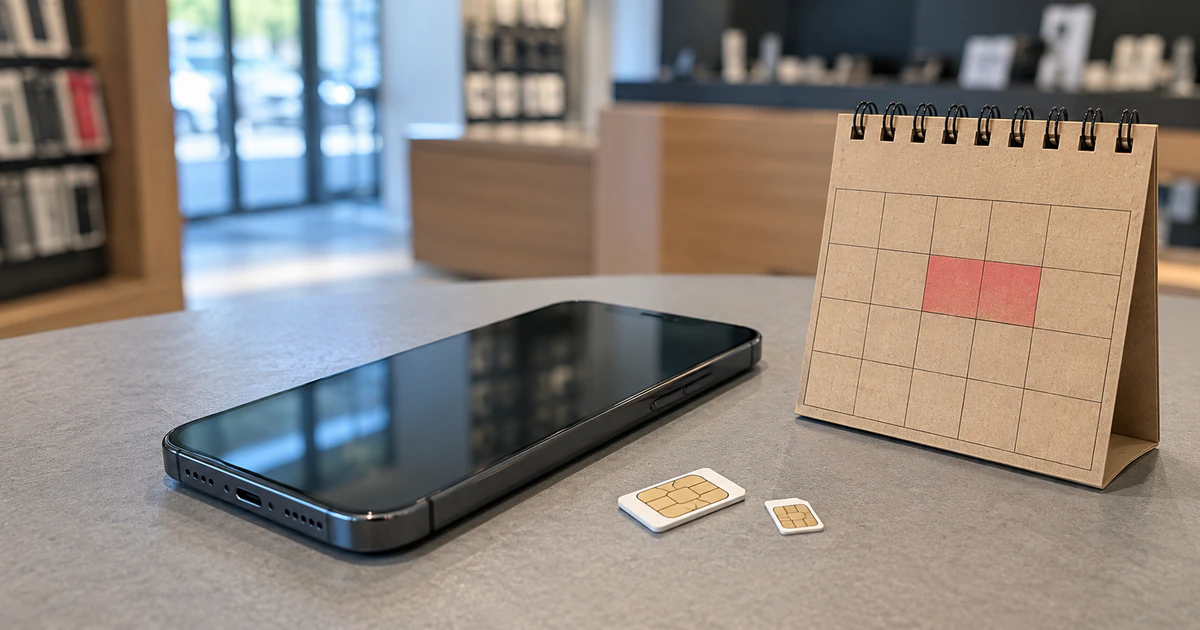
A Canadian phone bought from a carrier may now be locked briefly, but the temporary window is two business days—not the 60-day lock some carriers wanted.
The CRTC opened a public proceeding on August 14 to examine device locking and related enforcement issues. The immediate consumer effect is narrow but important: a newly activated handset may not accept another carrier’s SIM or eSIM until the temporary lock expires. That can disrupt a quick carrier switch, a same-weekend trip or a plan to test the phone on another network.
Canada’s unlocked-phone rule has been easy to take for granted since 2017. The new proceeding does not erase that history, but it does show the regulator is willing to reconsider how anti-fraud controls and customer freedom should fit together.
What changed on August 14
The CRTC’s device-unlocking proceeding asks Bell Canada to explain why its device-locking practice complies with the Wireless Code and invites broader comments on locking as an anti-fraud measure. Public interventions are due September 14, with replies due September 24.
Canadian telecom coverage of the decision reports that the regulator permitted an industry-wide interim lock of no more than two business days while it considers the larger policy. The temporary measure is distinct from a 60-day proposal advanced by carriers.
| Question | What the current record indicates |
|---|---|
| Can a new carrier phone be locked? | Temporarily, for no more than two business days under the interim approach. |
| Did Canada adopt a 60-day lock? | No. The longer proposal remains part of the dispute, not the interim rule. |
| Is unlocking supposed to cost money? | No. Canada’s Wireless Code has required free unlocking since 2017. |
| Is the final policy settled? | No. The CRTC is collecting evidence and has not issued a final decision. |
Why carriers want a lock
Carriers argue that immediately unlocked, high-value phones are attractive to fraud rings. A device can be obtained with stolen credentials or false account information and then moved quickly to another network or resale market. A short lock gives the provider time to identify suspicious activation activity before the handset becomes easier to move.
That concern is not imaginary. The U.S. Federal Communications Commission relaxed a separate Verizon unlocking requirement in January after evidence of large losses and organized trafficking. Reuters reported Verizon’s estimate of 784,703 devices lost to fraud in 2023.
The Canadian question is proportionality. A control aimed at fraudulent accounts also affects every legitimate customer whose phone is locked. The CRTC must decide whether a short delay meaningfully reduces crime, whether carriers can apply it reliably, and what happens when the automated unlock fails.
Two business days can become a long weekend
“Two business days” does not always mean 48 hours. A phone activated late on Friday before a holiday could remain restricted well into the following week depending on how the carrier counts the period and processes the unlock.
That matters in ordinary situations. A customer may discover weak reception at home and want to test a competitor during the trial period. A traveller may buy a phone just before departure and expect to install a local eSIM. A small business may need to move a line immediately after an employee’s handset fails.
The lock should not prevent emergency calls, but it can prevent normal service on a second network. Buyers should treat network freedom as something to verify, not assume, during this interim period.
What to check when buying a phone
- Ask in writing whether the handset will be locked at activation and when the lock will be removed.
- Confirm whether the unlock is automatic or requires a call, app request or store visit.
- Record the phone’s IMEI, receipt, activation time and promised unlock deadline.
- If travel is imminent, buy early enough to test the destination eSIM before departure.
- Do not cancel an old line until the new service and any number transfer are complete.
- Test another compatible SIM or eSIM after the deadline if network flexibility matters.
An iPhone can show a carrier-lock status under Settings, General, About. Android manufacturers expose the information inconsistently, so a real SIM test or carrier confirmation may be more reliable. A network lock is different from an account lock, screen PIN or device blacklist.
If the phone stays locked
Start with the carrier that sold or activated the device. Provide the IMEI and proof of purchase, and ask for a case number plus a written completion time. Do not pay an online “unlocking” service for a problem the carrier is responsible for resolving.
If the carrier does not fix the problem, preserve chat transcripts, emails and screenshots. The Commission for Complaints for Telecom-television Services handles unresolved complaints about participating Canadian service providers, while the CRTC sets the underlying Wireless Code.
A factory reset will not reliably remove a carrier lock and can erase personal data. Resetting should not be the first troubleshooting step.
The final rule needs measurable evidence
The regulator should require carriers to disclose how many fraudulent activations a lock actually prevents, how often legitimate phones fail to unlock on time and how quickly customers receive a remedy. Without those numbers, “fraud prevention” can become a permanent explanation for a restriction whose benefits cannot be checked.
A two-day lock is less intrusive than 60 days, but it still shifts inconvenience onto every buyer. If it remains, the unlock should be automatic, free, visible in the contract and backed by a fast escalation route.
Canada’s 2017 reform made network freedom the default. Any retreat from that principle should be limited by evidence, not simply by the calendar.
Tags: CRTC, wireless, phone unlocking, consumer rights, Canada