Cogeco Fibre Decision Exposes a Competition Gap
Matthew Leo · Published August 15, 2026 · Canada Tech
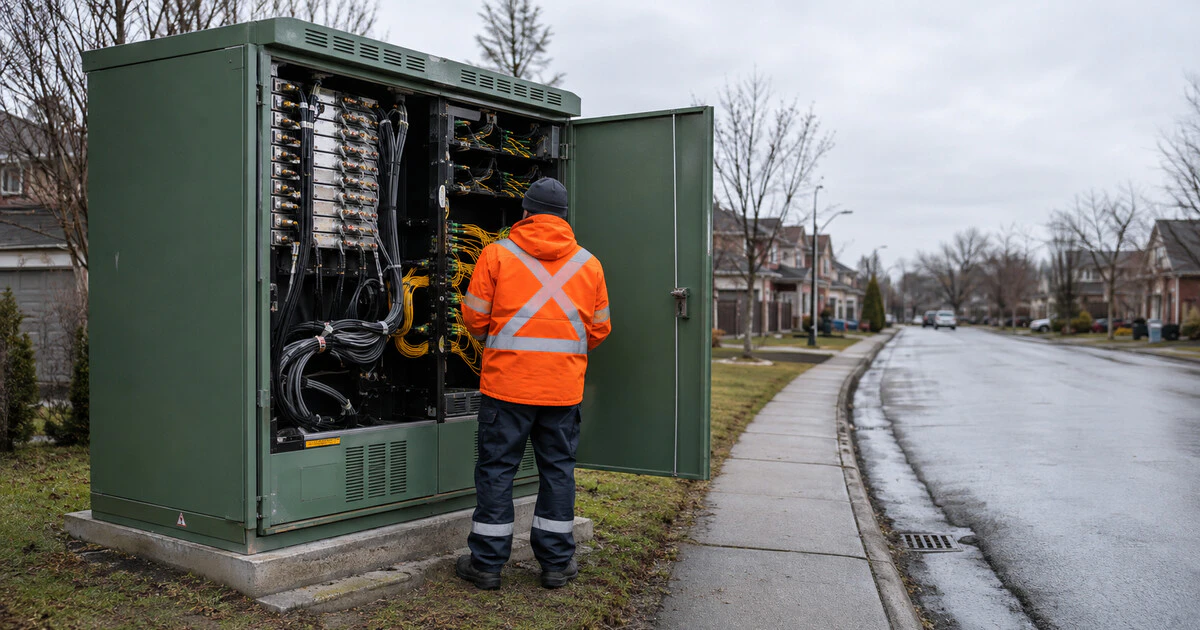
A faster fibre network is not much of an upgrade if it quietly leaves customers with fewer Internet providers.
That tension sits at the centre of CRTC Telecom Decision 2026-208, released August 14. The regulator rejected TekSavvy's request to stop Cogeco from retiring parts of its older hybrid fibre-coaxial network in Chatham, Windsor, Burlington and Kingston, Ontario.
Independent providers use regulated wholesale access to Cogeco's cable network. Cogeco's replacement fibre-to-the-premises network is not subject to the same wholesale requirement in those areas, so a technical modernization can also remove the regulated path that kept an independent competitor connected.
What TekSavvy asked the CRTC to do
TekSavvy wanted Cogeco to maintain the legacy network until regulated fibre access became available, or to provide access to the new fibre on regulated terms. It argued that customers in the affected communities would otherwise lose a competitive option.
The company told the CRTC that it could not retain most customers affected by earlier migrations in Windsor and Chatham. Cogeco countered that maintaining the old network would be costly, operationally difficult and unnecessary because alternatives existed.
The decommissioning dates considered by the regulator were April 1 for Chatham and Windsor, June 2 for Burlington and September 1 for Kingston. The decision records extensions and notices around the transition, but it ultimately allows Cogeco's plan to proceed.
Why the CRTC said no
The Commission found that Cogeco had not given itself an undue preference or subjected TekSavvy to an unreasonable disadvantage. It pointed to two alternatives: regulated wholesale access to Bell's fibre network and a commercial wholesale offer from Cogeco.
The CRTC also noted that wholesale fibre obligations for cable companies apply only after they reach five per cent of homes passed with fibre in their serving territory. Cogeco remained below that threshold. In the regulator's view, requiring access here would effectively impose an obligation before the established trigger.
That reasoning follows the current rules. It also reveals their weak spot.
A theoretical alternative is not the same service
Bell wholesale fibre may provide TekSavvy with another way to serve some addresses. It does not make the transition automatic. The independent provider needs operational integration, compatible ordering and support systems, address coverage, workable economics and enough notice to move customers.
Cogeco's commercial offer creates another possibility, but commercial terms are not the same as regulated terms. The public decision does not establish that every affected customer can be moved at the same price, speed and conditions.
| Regulatory question | Consumer reality |
|---|---|
| Does another wholesale network exist? | Can the customer's exact address be transferred without a service gap? |
| Is a commercial offer available? | Does it support a competitive retail price and comparable speed? |
| Was notice provided? | Was there enough time to choose and install a replacement? |
| Is the new network faster? | Can independent providers sell service over it? |
A competition policy that counts networks without testing usable retail choice can look healthier on paper than it feels at the address level.
The five-per-cent trigger creates an awkward transition
The threshold is intended to avoid imposing a wholesale obligation on a cable company's early fibre deployment. That can support investment while the footprint is small.
The trouble begins when the company retires regulated cable service inside that footprint. The old wholesale obligation disappears at individual addresses before the new fibre network reaches the threshold for a replacement obligation. Customers experience the gap first; the percentage catches up later.
The CRTC could address this without freezing old networks indefinitely. A transition rule could require equivalent wholesale access, a workable migration agreement or a longer preservation period whenever retirement would remove an existing independent service. The obligation would follow the customer transition rather than wait for a territory-wide percentage.
What affected customers should check
Anyone receiving a network-migration notice in the four communities should treat it as a service decision, not routine maintenance.
- Ask the current provider for the exact disconnection date at the address.
- Confirm whether it can migrate the service over Bell fibre or another network.
- Compare the final monthly price, speed, installation fee and modem cost.
- Check whether changing service affects an email address, home phone or bundle.
- Book installation early enough to overlap services if Internet access is essential for work or health equipment.
- Keep the notice and any written promises in case a complaint becomes necessary.
The CRTC's complaint information explains where consumers can take unresolved telecom problems. Billing and service disputes may also go through the Commission for Complaints for Telecom-television Services after the provider has had an opportunity to fix them.
Fibre policy must count choice as part of the upgrade
Cogeco should not be required to operate obsolete equipment forever. Fibre is generally more capable and cheaper to maintain over time. The public interest, however, includes more than the physical quality of the cable entering a home.
The CRTC's decision applies its existing framework and identifies alternatives that may help TekSavvy continue serving some customers. It does not prove that the competitive effect is harmless at every address.
Canada has spent years trying to make wholesale Internet competition work. Network modernization should not create a recurring interval in which the fibre arrives before the competition rules do.
Tags: CRTC, Cogeco, TekSavvy, internet competition, ontario