Flock’s Camera Backlash Is Becoming a Bipartisan Tech Problem
Matthew Leo · Published August 29, 2026 · Business & Policy
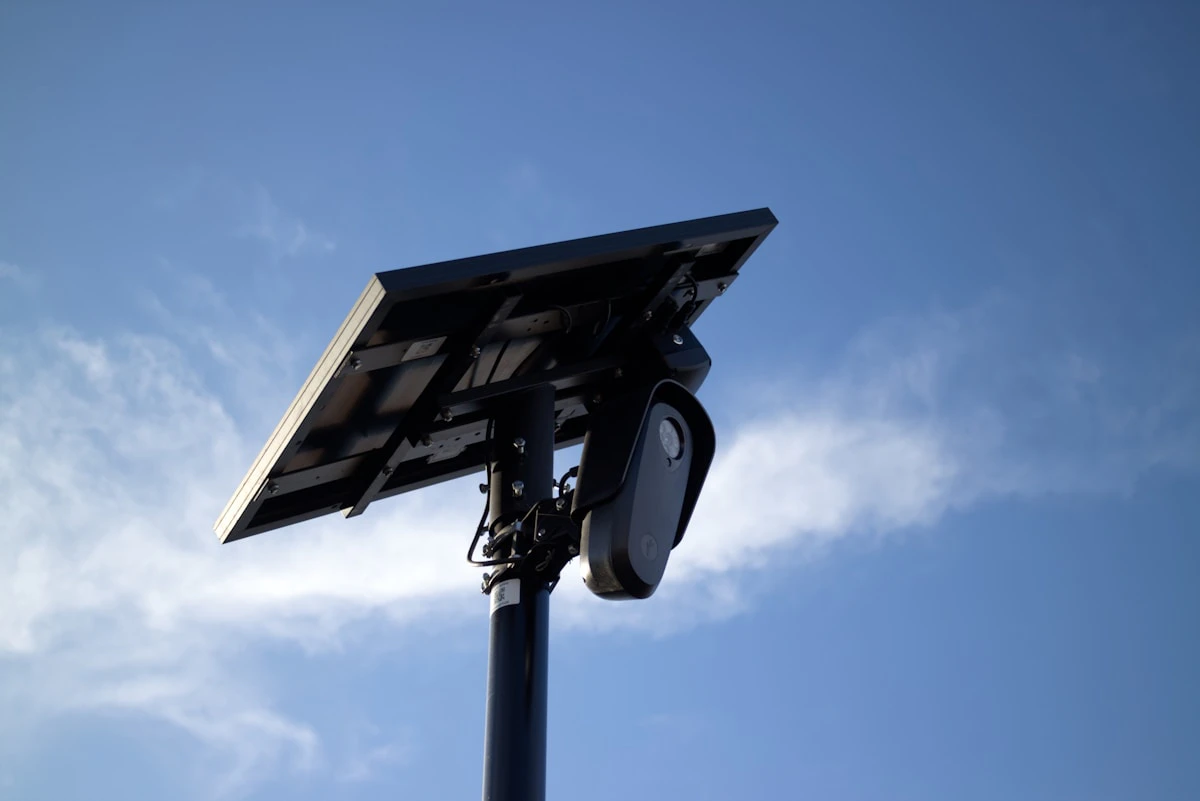
Flock Safety’s automated license-plate cameras have spent years spreading quietly across American roads. By August 23, the backlash was no longer quiet, and it was no longer coming from one side of politics.
Flock CEO Garrett Langley is now publicly calling for a “compromise” between privacy and safety as criticism grows over police misuse, data sharing and the sheer scale of a camera network that can reconstruct where vehicles have travelled.
The important story is not whether license-plate readers can help solve crimes. They can. It is whether a surveillance system becomes too powerful when thousands of cameras, cross-jurisdiction searches and years of policy drift turn a local policing tool into something much closer to a national movement database.
The political coalition against Flock is unusually broad
TechCrunch reported on August 23 that Langley has been doing a series of interviews as criticism intensifies. Democratic politicians have attacked Flock as mass surveillance, while Republicans have introduced legislation aimed at limiting federal purchases of automated surveillance systems including license-plate readers.
That is notable in a technology-policy environment where most fights become partisan almost immediately.
Privacy objections to Flock cut across ideological lines because the same infrastructure can worry different groups for different reasons: immigration enforcement, government overreach, police abuse, warrantless tracking or simply the idea that a private company can help agencies search where millions of ordinary people have driven.
The misuse cases are not hypothetical
Flock’s defenders often make a legitimate point: a camera does not abuse anyone by itself. The problem is how people use the access.
Recent investigations have identified officers accused of searching Flock systems for personal purposes, including cases involving spouses, partners or ex-partners. Those incidents have made it much harder to dismiss abuse concerns as theoretical.
Flock has responded with new safeguards. In an August 13 update, the company said it was reducing its recommended default retention period from 30 days to seven, requiring case codes for law-enforcement searches by the end of the year, expanding abnormal-use detection and adding automatic account lockouts when suspicious behaviour is flagged.
Those are meaningful controls. They also arrive after the network became enormous.
Seven-day retention helps, but local agencies can still choose differently
Flock says seven days is now its recommended default retention period for new deployments, while existing customers can keep retention periods approved under their local policies.
That means the privacy experience can vary widely by jurisdiction.
Flock is also introducing an Evidence Mode that lets agencies preserve specific records for active investigations. That makes operational sense. A murder or missing-person case may remain open far longer than seven days.
The harder policy question is whether ordinary location data should be collected first and deleted later, or whether law enforcement should need a stronger legal basis before searching broad historical movement records.
A shorter retention period reduces the amount of history available. It does not answer the warrant question.
The network effect is what makes Flock different
A single camera at the entrance to a parking lot sees one location.
A large interoperable network can answer a very different question: where has this vehicle appeared across many cities?
That capability can be enormously useful when police are looking for a kidnapped child or fleeing suspect. It can also create a level of location surveillance that communities never consciously approved when they voted to install a few cameras for stolen-car investigations.
The governance problem grows faster than the hardware count because each new participating agency can make the existing network more valuable to every other participant.
That is why local procurement decisions can produce national consequences.
Flock’s strongest argument is that auditability beats invisible abuse
Langley has argued that Flock did not create police abuse and that detailed audit logs help expose misconduct that might otherwise remain hidden.
There is truth in that.
A system that records who searched, why they searched and what they accessed is easier to investigate than a database with weak logging. Mandatory case codes and abnormal-use detection can make improper searches riskier for an officer.
But auditability is a backstop, not permission to build unlimited surveillance.
A well-logged system can still collect too much information, share it too broadly or operate under policies the public never meaningfully debated.
Canada should pay attention before the technology scales here
Automated licence-plate recognition is not uniquely American. Canadian police agencies and other organizations also use plate-reading technologies for enforcement and investigations.
The U.S. Flock debate offers a useful warning before similarly connected systems become more pervasive here.
Canadian deployments should have clear rules around retention, cross-agency sharing, audit access, purpose limitations and when a warrant or other judicial authorization is required. Those rules are easier to establish before thousands of cameras are operational than after agencies have built workflows around years of stored data.
Procurement should also include the public. A surveillance network should not arrive as a routine equipment purchase that residents discover only after the poles are installed.
The compromise needs rules, not just better public relations
Langley is right about one thing: communities do not have to choose between solving crimes and protecting privacy as if only one can exist.
The compromise cannot simply be “keep the cameras and trust better software safeguards,” though.
Real balance means limits that remain enforceable when a police department, company or future government would prefer broader access. It means short default retention, meaningful audit trails, narrow sharing, consequences for misuse and democratic approval for expansion.
Flock’s technology is powerful precisely because connecting thousands of ordinary cameras creates something far more capable than any one camera.
The rules need to scale with that power.
Tags: Flock Safety, surveillance, privacy, AI, Business & Policy