Grok 4.5 Review: Why Its Speed and Price Matter
Matthew Leo · Published July 22, 2026 · AI

Grok 4.5 Is Not the Smartest AI. That May Be Its Biggest Advantage.
Elon Musk has never met a product launch he could not make sound like the arrival of a new civilisation.
So when the company behind Grok released Grok 4.5 and described it as fast, powerful, cheap and “maximally truth-seeking,” scepticism was the healthy response.
Musk’s volume knob only has one setting.
But behind the usual noise, Grok 4.5 makes a serious argument.
It does not appear to be the smartest AI model in every category. It does not sweep every benchmark. It does not make Claude, ChatGPT or Gemini suddenly useless.
What it may do is more disruptive.
Grok 4.5 could make businesses question why frontier AI needs to be so expensive or so slow.
That is a much bigger threat than winning one more leaderboard.
The best model does not always win.
Sometimes, the model that wins is the one people can afford to use all day.
What Is Grok 4.5?
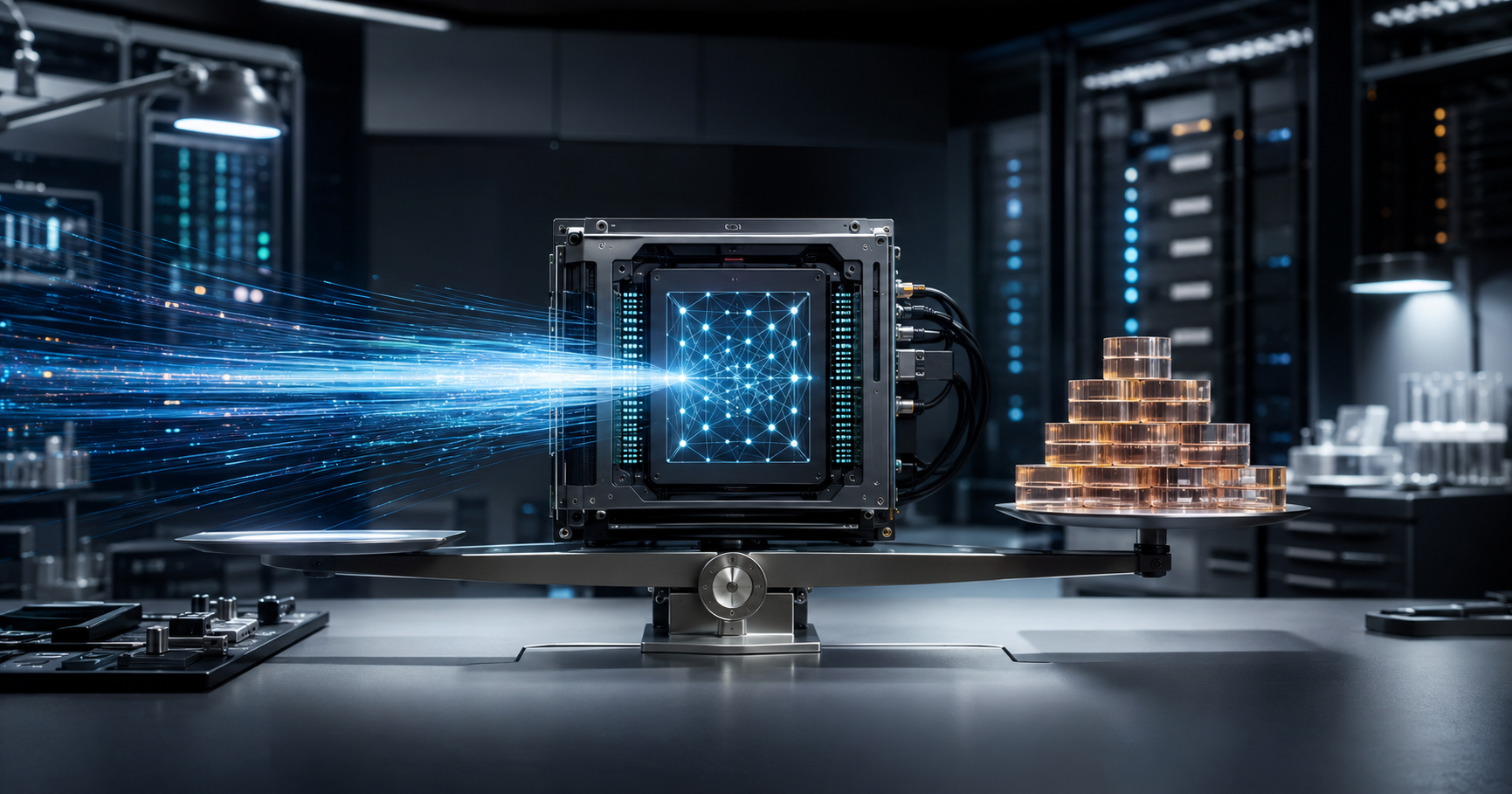
Grok 4.5 is the latest flagship model from SpaceXAI, the company behind Grok.
It was publicly announced on July 8, 2026, with a focus on coding, engineering, research, office work and tasks that require an AI agent to use tools and complete several steps. It supports a 500,000-token context window and can use web search, X search, code execution and external functions. Users can also control how much reasoning effort the model applies to a task.
In normal language, this means Grok 4.5 is not being presented mainly as a funny chatbot for arguing with strangers on X.
It is being sold as a worker.
It can inspect code, fix bugs, build applications, research information, create spreadsheets and help produce PowerPoint and Word documents. It is currently available through the SpaceXAI API, Grok Build, Cursor and several business platforms and office add-ins.
That difference matters.
The Grok most people know lives on X and answers public questions.
Grok 4.5 is aimed much more directly at the places where companies spend money.
The Number Everyone Is Talking About
SpaceXAI says Grok 4.5 produces responses at around 80 tokens per second.
A token is a small piece of text. It may be a full word, part of a word or a punctuation mark. The exact number of tokens per word varies, but more tokens generally mean more text being processed or produced.
Eighty tokens per second is fast enough to make the model feel responsive even when it is producing long technical answers.
SpaceXAI also claims Grok 4.5 uses roughly half as many reasoning steps as comparable leading models when solving similar tasks. On one software engineering benchmark, the company reported that Grok used an average of 15,954 output tokens per task, compared with 67,020 for Claude Opus 4.8 at its maximum setting. That would make Grok about 4.2 times more token-efficient in that particular test.
Those are company-provided numbers.
They should not be treated like commandments carved into stone.
But they point toward the real strategy behind Grok 4.5.
SpaceXAI is not merely selling speed.
It is selling less waiting and less waste at the same time.
Speed Is More Important Than It Sounds
People sometimes treat AI speed like a minor convenience.
Nobody enjoys waiting twenty seconds for a chatbot to finish thinking, but waiting is not the main business problem.
Speed becomes far more important when AI is completing hundreds or thousands of tasks.
Imagine a coding assistant that needs to search files, inspect an error, change the code, run a test, read the result and try again.
A single job may require several model responses.
Now multiply that across an entire engineering team.
A model that saves five seconds once is mildly pleasant.
A model that saves five seconds across 50,000 actions is infrastructure.
The same applies to customer support, research, document processing and office automation. Faster responses allow companies to complete more work with the same hardware, the same time and the same budget.
That is why the excitement around Grok’s speed is not merely impatient developers celebrating that the words appear quickly.
Speed changes what businesses can afford to automate.
The Price Is Even More Important
Grok 4.5 costs US$2 per million input tokens and US$6 per million output tokens through the API.
Input tokens are the information sent to the model.
Output tokens are what the model generates in response.
For comparison, Anthropic’s Claude Opus 4.8 was priced at US$5 per million input tokens and US$25 per million output tokens at the time of Grok 4.5’s launch. OpenAI’s cheaper GPT-5.6 Luna tier was priced at US$1 for input and US$6 for output, while its more powerful Sol model cost substantially more.
That places Grok 4.5 in an interesting position.
It is not the cheapest model available.
It is trying to offer near-premium ability at a price closer to a cheaper everyday model.
That middle ground could be extremely valuable.
Most companies do not need the smartest AI in human history to write a support response, inspect routine code or prepare a sales report.
They need something reliable enough to complete the work without turning every task into a small financial decision.
AI becomes far more useful when employees do not have to wonder whether every prompt is burning through the monthly budget.
The Sticker Price Is Only Half the Story
A model can have a low token price and still be expensive.
If it produces enormous answers, repeats itself or spends thousands of tokens thinking through simple tasks, the final bill can rise quickly.
This is why Grok 4.5’s claimed token efficiency may matter more than its advertised price.
Using SpaceXAI’s own software benchmark numbers, Grok produced about 15,954 output tokens per task. At US$6 per million output tokens, that works out to roughly ten cents of generated text.
Claude Opus 4.8 reportedly used 67,020 output tokens on the same benchmark. At US$25 per million output tokens, that would cost roughly US$1.68 for the generated tokens.
That is a dramatic difference.
It does not prove every real task will be 17 times cheaper. The figures come from SpaceXAI’s own comparison, input costs are not included and different models may produce different-quality solutions.
Still, it reveals why developers are paying attention.
A cheaper model is useful.
A cheaper model that also finishes the job using fewer tokens can completely change a company’s budget.
Grok 4.5 Does Not Win Everything
This is where the hype needs adult supervision.
SpaceXAI’s own published benchmarks do not show Grok 4.5 defeating every leading model.
On one DeepSWE software engineering test, Grok 4.5 scored 62 per cent. That placed it behind Anthropic’s Fable model at 66.1 per cent and OpenAI’s GPT-5.5 at 64.31 per cent.
On another version of the same test, Grok scored 53 per cent, behind several leading competitors.
However, it led the models listed by SpaceXAI on the SWE Marathon benchmark, resolving 29 per cent of tasks compared with 26 per cent for Opus 4.8 and 24 per cent for Fable. It also performed competitively on terminal and software engineering tests without consistently taking first place.
That is not failure.
It may actually be the point.
Grok 4.5 does not need to defeat the most expensive model on every difficult task.
It needs to remain close enough that the price difference becomes uncomfortable.
If one model scores 66 and another scores 62, but the second model is faster and significantly cheaper, many businesses will choose the 62.
Benchmark winners receive headlines.
Cost-performance winners receive contracts.
The AI Race Is Becoming a Price War
For the past few years, AI companies have competed by announcing larger models, longer context windows and better benchmark scores.
Every launch was presented as a new level of intelligence.
That race is not over.
But another race is becoming just as important.
Who can provide useful intelligence for the lowest cost?
OpenAI, Anthropic, Google and SpaceXAI are spending extraordinary amounts of money on chips, electricity, data centres and talent.
They need customers to pay enough to support those costs.
At the same time, every new competitor pushes prices downward.
Grok 4.5 places particular pressure on Anthropic because SpaceXAI is openly comparing it with Claude’s Opus family. Musk called Grok 4.5 an “Opus-class” model that is faster, more efficient and less expensive.
That comparison is marketing, not neutral science.
But it is smart marketing.
Anthropic has positioned Opus as a premium model for demanding work. Grok is now telling businesses they may be able to get something close to that experience without paying premium prices.
Even companies that never switch to Grok could benefit.
Competition gives customers leverage.
Nothing encourages an AI company to lower its prices quite like another AI company showing up with a calculator.
Grok Is Quietly Growing Up
Grok originally became known for its personality, its connection to X and its willingness to answer questions other AI systems might avoid.
That helped it gain attention.
It did not necessarily make it the obvious choice for serious business work.
Grok 4.5 feels like an attempt to change that reputation.
SpaceXAI emphasises coding, office work, engineering and tool use. The model is the default inside Grok Build and is available through Cursor, Word, PowerPoint and Excel integrations.
That is a much less glamorous story than an AI chatbot making jokes on social media.
It is also where the money is.
Businesses do not need another AI personality.
They need software that can help ship a product, prepare a report, inspect a spreadsheet and finish tasks before the deadline.
Grok 4.5 is trying to become boring in the most profitable possible way.
There Is One Important Confusion
A lot of the Grok 4.5 conversation is happening on X, so ordinary users may assume the model has simply replaced the version of Grok they currently use on the platform.
That was not how SpaceXAI described the initial release.
The company specifically listed Grok Build, Cursor and its developer API as the places where Grok 4.5 was available. It also highlighted integrations for business and office work.
That means many of the people praising its speed are testing it through coding tools, developer platforms or specialised products.
The model may eventually spread more widely across Grok’s consumer services, but readers should not assume every Grok reply they see on X is being generated by Grok 4.5.
The buzz is real.
The rollout is more complicated than the buzz.
Fast and Cheap Can Still Be Wrong
Speed is not always a virtue.
A model that reaches the wrong answer quickly has simply made failure more efficient.
This becomes especially important with AI agents.
Grok 4.5 can search the web, search X, execute code and call other tools. Those abilities allow it to do more than write an answer. It can take steps toward completing a task.
That makes accuracy and reliability more important, not less.
If Grok writes a weak paragraph, a human can edit it.
If it changes production code, updates a spreadsheet or carries out an automated business process, the cost of a mistake can be much larger.
Companies should therefore test Grok 4.5 on their own work instead of relying entirely on benchmark screenshots and excited X posts.
Does it understand the company’s code?
Does it follow instructions consistently?
Does it know when it is uncertain?
Does it save enough time to justify the review it still requires?
The cheapest model is not cheap when employees spend hours correcting it.
“Truth-Seeking” Is Still a Marketing Claim
SpaceXAI describes Grok as maximally truth-seeking.
That sounds impressive.
It is also difficult to measure.
Every major AI company now uses a noble phrase to describe what its model is meant to represent.
Helpful.
Honest.
Safe.
Truthful.
Responsible.
The words are easy.
The real test is whether the model can separate truth from a loud post on X, a confident but false website, manipulated information or its own invented answer.
Grok’s access to X search can be valuable because it allows the model to find breaking conversations and public reactions quickly. It can also expose the model to one of the most chaotic information environments ever built.
Real-time access is not the same as real-time truth.
Sometimes it simply gives an AI faster access to people being wrong.
Should Developers Switch to Grok 4.5?
They should test it.
That is not the same as moving everything immediately.
Grok 4.5 looks particularly attractive for:
High-volume coding tasks
Automated code review
Repetitive engineering work
Research that uses web and X search
Office document creation
Businesses that care heavily about token costs
AI agents that need fast responses across many steps
However, teams handling sensitive, complex or high-risk work should compare it with Claude, ChatGPT and Gemini using their own tasks.
A benchmark cannot tell a company which model understands its private codebase best.
A viral post cannot measure how often a model fails after the fiftieth step of a long workflow.
And a cheap API price cannot measure the cost of human review.
The right question is not:
Is Grok 4.5 the best AI?
The right question is:
Is Grok 4.5 good enough to do this particular job better, faster or cheaper than the alternatives?
That question is less exciting.
It is also how serious technology decisions should be made.
Grok 4.5’s Real Achievement
Grok 4.5 may not remain the fastest model for long.
Its price may be undercut.
Its benchmark position will change as OpenAI, Anthropic, Google and Chinese AI companies release newer systems.
That is the nature of this market.
But Grok 4.5 has already made one important point.
Frontier-level AI does not have to feel painfully slow or frighteningly expensive.
SpaceXAI is arguing that intelligence should be measured not only by how many problems a model can solve, but by how quickly and cheaply it solves them.
That is a much healthier way to judge AI than treating every benchmark increase like the discovery of fire.
Businesses do not buy intelligence as a trophy.
They buy results.
Final Thoughts
Grok 4.5 is not interesting because Elon Musk says it is.
It is interesting because its economics could force every major AI company to respond.
At US$2 per million input tokens and US$6 per million output tokens, served at around 80 tokens per second, Grok 4.5 is making a direct argument against the idea that premium AI must always come with premium waiting times and premium bills.
Its benchmark performance looks competitive rather than unbeatable.
That may be enough.
Most technology markets are not won by the product with the highest possible performance.
They are won by the product that reaches the point where performance, price and convenience finally make sense together.
Grok 4.5 may not be the smartest AI in the room.
But if it can do almost the same work, finish faster and cost much less, businesses may eventually stop caring.
The model that changes the AI market may not be the one that thinks the deepest. It may be the one companies can afford to keep thinking all day.