Lenovo’s Record Quarter Warns of Pricier PCs
Matthew Leo · Published August 13, 2026 · Gadgets
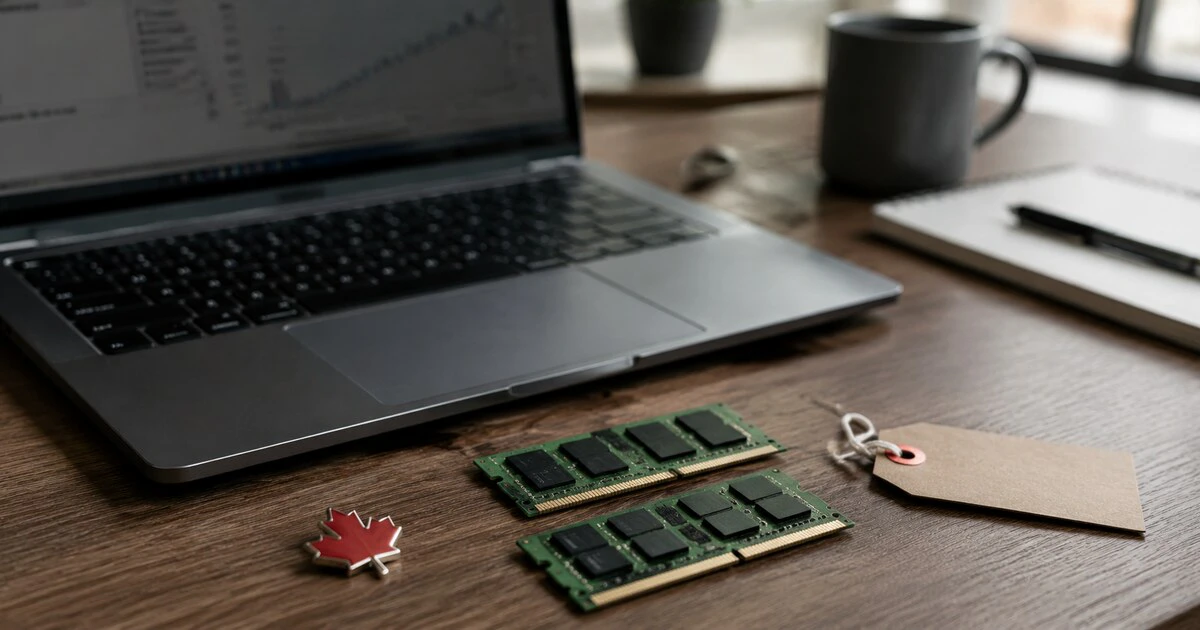
Lenovo’s strongest quarter in years carries an awkward message for laptop shoppers: PC companies can sell fewer machines and still collect more money when memory shortages push prices upward.
The world’s largest PC maker reported US$26.9 billion in quarterly revenue on August 13, a 43 per cent increase from a year earlier. AI-related revenue reached US$9.3 billion, while the division containing PCs, tablets and smartphones grew 27 per cent.
Those numbers make an excellent corporate presentation. For a Canadian buying a laptop before school or work, the important line is simpler: Lenovo says it has already raised PC prices twice this year because DRAM and NAND memory costs have climbed.
Revenue rose while PC shipments fell
Lenovo’s fiscal first-quarter results describe record group revenue, adjusted net income of US$1.1 billion and a 60 per cent increase in AI-related revenue. The company also reported a US$54-billion pipeline for AI servers.
The headline net result needs context. Lenovo recorded a US$609-million loss attributable to shareholders, primarily because a higher share price increased the accounting value of warrants issued in 2025. Adjusted net income, which excludes that non-cash revaluation and other items, rose sharply.
Reuters reported that global PC shipments fell two per cent in the second quarter as memory costs pressured the market. Lenovo still held a 25.6 per cent share and said it was shifting buyers toward premium models as average selling prices increased.
That combination explains why revenue growth does not necessarily mean more affordable computers. Higher component costs, richer configurations and a greater share of expensive machines can lift sales even when unit demand weakens.
Memory is the part buyers cannot casually fix later
A laptop advertised as an “AI PC” may include a neural processing unit for certain local tasks, but the label does not guarantee enough working memory for ordinary use. Browsers, video calls, office applications, development tools and creative software still depend heavily on RAM.
Many thin laptops now have memory soldered to the motherboard. The buyer who chooses 8 GB to save money may be unable to upgrade when the machine begins struggling. A replaceable solid-state drive is more common, although not universal.
| Use | Practical starting point | What to verify |
|---|---|---|
| Web, documents and streaming | 16 GB RAM, 512 GB storage | Whether memory or storage can be upgraded |
| Heavy multitasking or coding | 32 GB RAM | Virtual-machine and development-tool needs |
| Photo and video work | 32 GB or more | Application guidance and GPU memory |
| Local AI models | Workload-specific | Model size, RAM, GPU/NPU support and software compatibility |
These are purchasing baselines, not promises of performance. A weak processor, slow storage or poor cooling can still make a generously equipped laptop disappointing. The point is to avoid paying a premium for a fashionable label while accepting a memory ceiling that shortens the useful life of the computer.
Canadian shoppers need the final configuration price
US component trends reach Canada through exchange rates, distribution costs and manufacturer pricing. Promotions can temporarily hide an increase, while a familiar model name can return with less memory or storage at the same advertised price.
Compare the complete configuration, including RAM, storage, screen, processor, warranty and charger. A discounted 8 GB model is not directly comparable with a 16 GB version merely because both share the same product family.
Also check whether the price is in Canadian dollars and whether the seller is Canadian. Importing can change warranty service, keyboard layout, electrical accessories and the cost of returns. Marketplace listings deserve particular care when the seller is not the manufacturer or an authorized retailer.
Do not buy early solely because of a shortage headline
Memory prices can change quickly, and PC makers compete aggressively during back-to-school and holiday periods. A shortage does not make every current deal good, nor does it guarantee that every model will cost more next month.
Buy when the existing computer no longer meets a real need, then compare the same configuration across several sellers. If the purchase can wait, track the exact model instead of a broad percentage discount; some retailers calculate savings from a price that was rarely charged.
Lenovo’s results show a company navigating supply pressure extremely well. Buyers should be just as disciplined. The useful response to rising memory costs is not panic. It is refusing to purchase too little memory twice.