Meta's Alberta Data Centre Needs More Answers
Matthew Leo · Published August 6, 2026 · AI
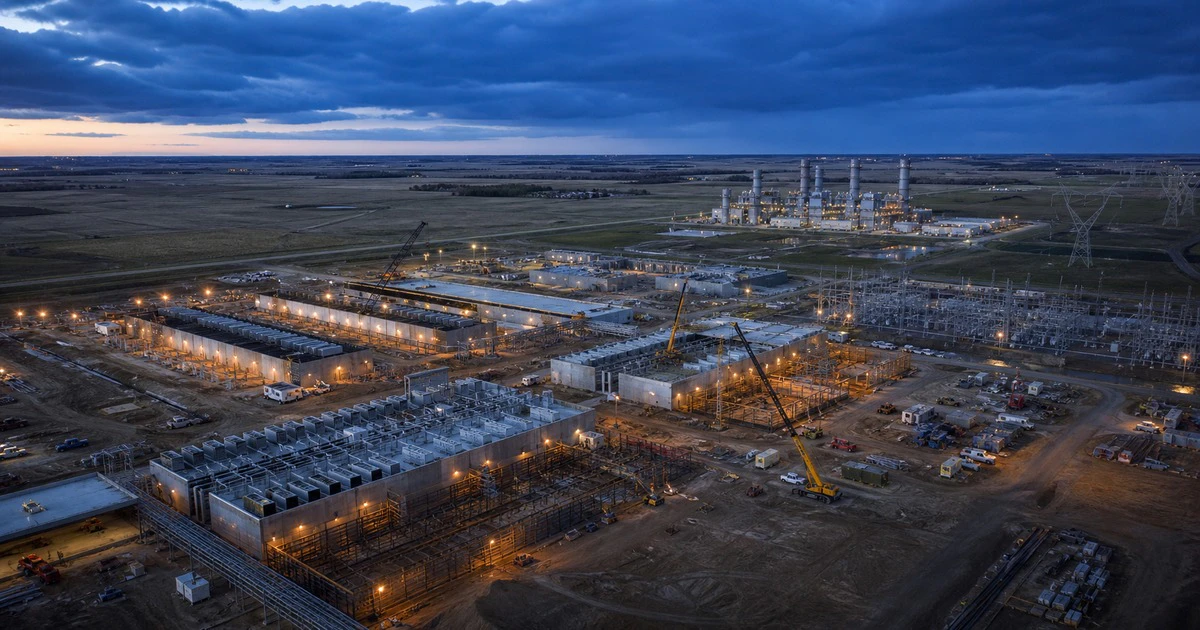
Meta is explaining why it builds its own AI data centres, but Albertans need a much more local answer: who carries the cost of keeping one running?
The company broke ground in July on a planned one-gigawatt campus in Sturgeon County, north of Edmonton. Meta calls it a C$13-billion investment and its first data centre in Canada. It expects roughly 3,000 construction workers at the peak and more than 300 operational jobs.
Those are large numbers. They do not, by themselves, tell residents what the project will mean for electricity, gas, water, roads and emissions over its full life.
What Meta says the project will bring
Meta says the campus will support its services and growing AI needs. The company says it will contribute C$60 million toward local infrastructure and work to match the data centre's electricity use with 100 percent clean and renewable energy.
Meta also says the site will use a closed-loop liquid-cooling system. In that design, cooling liquid circulates rather than being constantly replaced. Alberta's major-projects listing says the campus will not draw water from surrounding water bodies.
These are useful commitments. The job numbers and infrastructure money are also real benefits if they arrive as promised. A large construction project can support trades, suppliers and municipal revenue before the first server turns on.
One gigawatt changes the scale of the conversation
A gigawatt is not an ordinary commercial load. Meta says this would be its largest data centre outside the United States. Alberta's project listing says a natural-gas power plant is planned to supply it.
The Alberta Electric System Operator has already warned that proposed large-load projects exceed what the grid can quickly connect. In 2025, AESO said it had received requests for 29 large-load projects representing more than 16,000 megawatts, while Alberta's peak demand was just over 12,000 megawatts. Its interim plan made up to 1,200 megawatts available for large loads by 2028.
Meta's project is expected later than that, but the comparison shows the pressure. Alberta cannot treat each data centre as if it arrives alone. Roads, transmission, gas supply and backup arrangements have to work across the whole system.
Clean-energy matching needs a clearer definition
"Matching" electricity use with clean energy is not always the same as running directly on clean power every hour. A company can buy renewable electricity or environmental attributes at other times or locations to balance annual consumption.
That may help finance cleaner generation. It can also hide the hours when a gas plant is providing the actual power. Meta should explain whether its claim is annual, monthly or hourly; which projects supply the match; when they come online; and whether they are new.
Albertans should also see estimates for gas use and greenhouse-gas emissions from the dedicated power supply, including a clear method for counting any offsets or credits. A simple annual dashboard would let the public compare the promise with performance.
Closed-loop cooling does not end the water question
A closed loop can use less water than an open evaporative system, and avoiding direct withdrawals from nearby water bodies matters. But a project still has a water footprint through construction, equipment, maintenance and the production of its electricity.
Meta's new corporate explanation says site design considers local water conditions and cooling efficiency. For Alberta, that should become a site-specific water budget: expected withdrawals, source, discharge, drought plan and annual result.
Without those figures, residents are left comparing a technical phrase with a very large building.
Three hundred permanent jobs need context
More than 300 operational jobs would be welcome. But they should be weighed against a C$13-billion campus and its long-term energy needs. The peak construction workforce is much larger because building the site is labour-intensive; operating it is not.
The public discussion should separate temporary construction work, permanent Meta positions and jobs at contractors. It should also show how many roles will be filled locally, what training is required and what wage range is expected.
Alberta can use the project to build electrical, cooling, networking and AI-infrastructure skills. That requires agreements with local colleges, apprenticeship programs and Indigenous communities, not just a total job number.
What transparent approval should include
Before the campus is fully operating, the province, municipality and Meta should publish:
- annual and peak electricity demand;
- the source and emissions of the power used each hour or month;
- the exact clean-energy matching method;
- annual water use and drought plans;
- public infrastructure costs and Meta's share;
- construction and permanent employment results; and
- how emergency curtailment or grid stress would be handled.
Commercial details can remain private without making the public impact invisible. The project is large enough to deserve a permanent reporting page, not a collection of launch announcements.
Canada needs the computing capacity
The answer is not to reject every data centre. Canada needs secure computing infrastructure, and AI demand will not disappear because the power questions are difficult. Building here can create expertise and keep more of the digital economy in Canada.
But competition for AI investment should not become competition to ask the fewest questions. Mapletechie's analysis of the AI speed-and-price race shows how quickly computing demand is growing. Infrastructure policy has to move with the same seriousness.
Meta deserves credit for explaining more about its data-centre design. The Alberta campus is where that general story must become measurable. A C$13-billion project should leave a legacy larger than a groundbreaking photo: reliable public data about what it consumes, what it creates and who pays for the difference.