Meta’s Alberta Data Centre Has a Power Problem
Matthew Leo · Published July 26, 2026 · News
Meta’s Alberta Data Centre Has a Power Problem
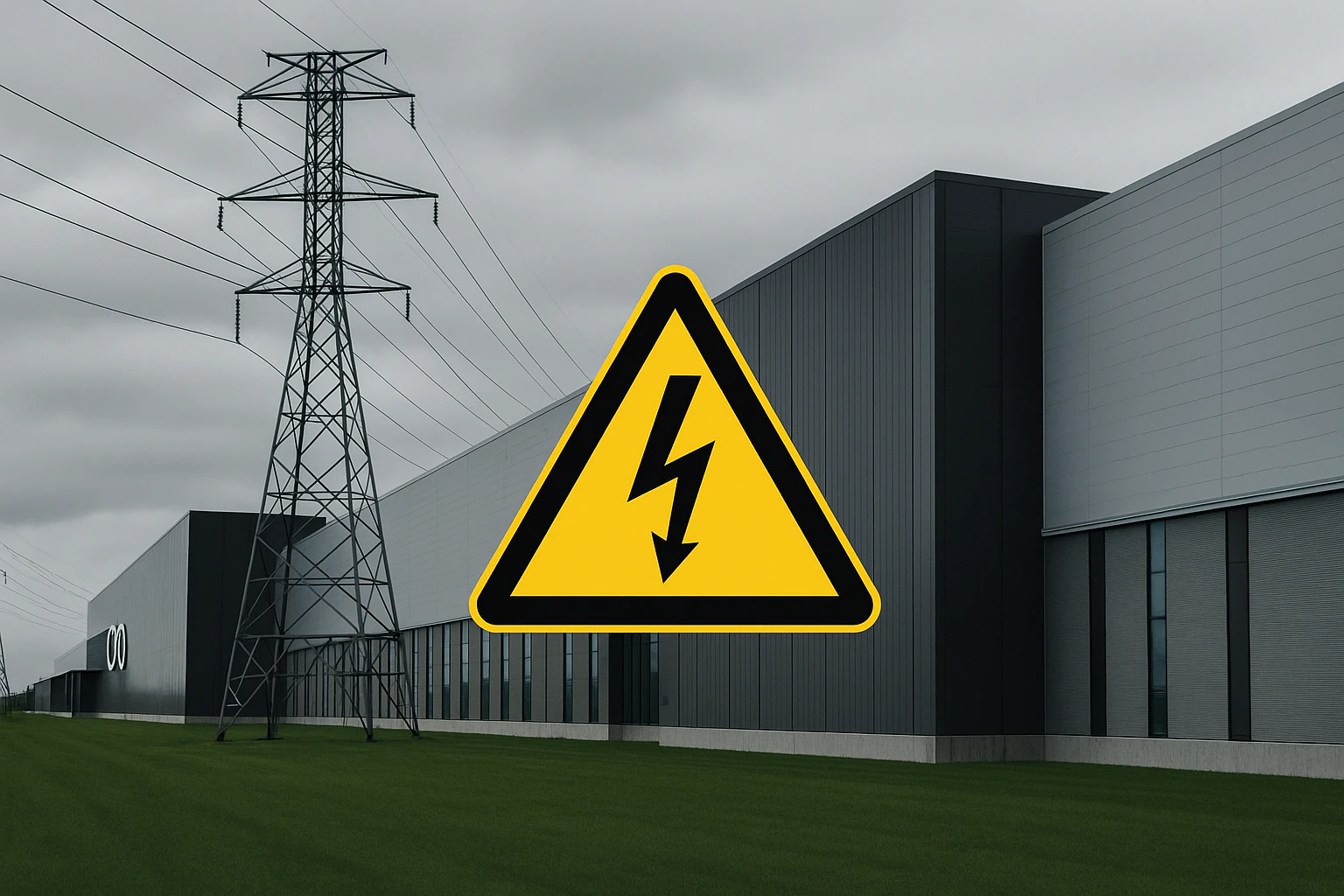
Meta’s new Alberta data center will use roughly as much electricity as 800,000 homes while creating just over 300 permanent operational jobs.
That does not automatically make it a bad deal.
It does mean Alberta should examine the project with more care than the C$13 billion price tag normally receives.
Meta has broken ground on its first Canadian data center in Sturgeon County, northeast of Edmonton. The one-gigawatt facility will become the company’s 33rd data center globally and its largest outside the United States. It is being built specifically for the enormous computing demands of artificial intelligence and Meta’s products, including Facebook, Instagram, WhatsApp and its growing collection of AI services.
The investment is significant. So are the construction jobs, tax revenue and infrastructure that will come with it.
But data centers are unusual economic projects. They consume the land, electricity and capital of a major industrial facility without employing anything close to the same number of people once construction ends.
Alberta should welcome the investment.
It should not confuse a very expensive building with a very large employer.
C$13 Billion Does Not Mean 13,000 Jobs
Meta says construction will support more than 3,000 workers at its peak. Once the campus is operating, however, it expects to support slightly more than 300 permanent jobs. The company will also spend approximately C$60 million on local roads, water infrastructure and grants for community organizations.
Three hundred permanent positions are still valuable.
They will likely include technicians, engineers, electricians, security staff, facility managers and other skilled workers. Contractors and nearby businesses may also benefit from maintenance, transport and service work that does not appear in Meta’s direct employment figure.
The concern is not that 300 jobs are meaningless.
It is that public announcements often place the temporary construction number beside the permanent investment value, creating the impression that C$13 billion will produce an enormous long-term workforce.
Most of the people building the center will eventually finish building it.
The computers will remain.
That is the nature of data centers. Their value is concentrated in equipment and computing capacity rather than thousands of employees working inside.
Alberta’s government estimates the project will generate approximately C$250 million each year through royalties, taxes, levies and fees. That is a stronger long-term argument than the job count, although the province should publish enough detail for the public to understand how that estimate was calculated and which revenues are guaranteed rather than projected.
The Electricity Demand Is Difficult to Comprehend
Meta’s campus will initially require one gigawatt of power and could eventually scale as high as 1.8 gigawatts. Reuters reported that the first stage alone will consume approximately as much electricity as 800,000 homes.
This is not a large office building with an unfortunate electricity bill.
It is an industrial power demand comparable to a major generating station.
Alberta’s existing grid cannot casually absorb several projects of this size. The province is therefore using a “bring your own power” approach that requires large data-center developers to secure or build new generation rather than expecting ordinary customers to carry the entire load.
Meta says it will fully fund the new generation and grid infrastructure needed for the facility. Alberta says the arrangement could reduce provincial transmission costs by as much as 6% because some new infrastructure will benefit the wider system.
Those commitments are important.
They should also be independently tested after the center begins operating.
A promise that customers will not be negatively affected is not the same as proof that they were not.
Alberta should publicly track the project’s effect on transmission charges, electricity prices, reserve capacity and grid reliability. If residents receive the promised savings, the numbers should show it clearly.
The Data Centre Is Getting Its Own Gas Plant
Much of the project’s electricity will come from the Greenlight Electricity Centre, a new 932-megawatt natural-gas-fired plant being developed by Pembina Pipeline, Morgan Stanley Infrastructure Partners and Kineticor.
The plant will provide power behind the meter, meaning much of its output will serve the data-center customer directly rather than first entering the general market. It will use combined-cycle turbines, which capture waste heat to generate additional electricity more efficiently than a basic gas plant.
Greenlight is expected to begin operating during the second half of 2030. Until then, Capital Power is expected to provide an initial 250 megawatts from its existing natural-gas fleet. The full project could require approximately 150 million cubic feet of natural gas every day.
For Alberta, this is part of the attraction.
The province has abundant natural gas, established pipelines and an energy sector looking for new customers. An AI facility that consumes gas for decades creates demand for producers while turning that fuel into a technology investment rather than exporting all of it elsewhere.
But calling the project an AI investment does not change what comes out of the power plant.
The servers may be advanced.
The electricity will still be largely generated by burning fossil fuel.
Matching Renewable Energy Is Not the Same as Using It
Meta says it will match the data center’s electricity use with 100% clean and renewable energy.
That sounds as though the facility will be powered entirely by wind, solar or hydroelectricity.
The physical arrangement is different.
The dedicated Greenlight plant is powered by natural gas. Meta’s renewable commitment means it plans to support or purchase enough clean-energy production to match the amount of electricity the center consumes over a given period.
Renewable matching can help finance cleaner generation.
It does not make the gas plant disappear.
A data center can be matched with renewable electricity on paper while still relying on gas generation at the time and place where its servers are running.
That distinction should not be used to dismiss Meta’s renewable investments. New clean generation has value.
It should be used to describe the project honestly.
Alberta is building a gas-powered AI campus whose electricity consumption will be balanced through clean-energy investments.
That is different from a renewable-powered data center.
Water May Be the Project’s Strongest Environmental Feature
Water consumption has become one of the largest concerns surrounding AI data centers.
Servers create heat, and many traditional cooling systems use substantial amounts of water to remove it.
Meta says the Sturgeon County center will use a closed-loop liquid-cooling system combined with dry cooling. The company says this design will require no operational water for cooling, limiting the facility’s direct water use to domestic needs, equipment maintenance and fire protection.
That is a meaningful design decision.
Alberta should require Meta to publish the facility’s actual annual water use after operations begin, as the company says it does across its data-center fleet.
“Water efficient” should be a measurable result, not a permanent slogan copied from the launch announcement.
The center will still have indirect water effects through electricity and fuel production, construction and its supply chain. But avoiding large volumes of cooling water removes one of the most immediate local risks.
Alberta Says Meta Will Pay Its Own Way
Alberta has created a 2% levy on computer hardware used by large data centers.
The province says the levy ensures projects begin contributing revenue immediately. However, the amount is deductible against Alberta corporate income tax, meaning it can eventually reduce the company’s tax bill once the data center becomes profitable.
That does not necessarily make the levy weak.
It functions partly as a minimum early contribution before normal corporate taxes become substantial.
But the structure should be described accurately. The levy is not simply a permanent extra tax collected on top of everything else.
Alberta also says Meta will pay for its land, electricity, water requirements and necessary infrastructure upgrades. The site lies within Alberta’s Industrial Heartland, on designated industrial land rather than active farmland or a residential neighborhood.
Those conditions are better than offering a technology company cheap land, subsidized electricity and a ceremonial pair of scissors while taxpayers quietly absorb the cost.
The next step is transparency.
Albertans should be able to see:
The value of any tax credits or incentives
Actual annual tax and levy payments
Power and water consumption
Emissions from the dedicated gas plant
Permanent local employment
Infrastructure costs paid by Meta
Any costs eventually carried by municipalities or ratepayers
A company saying it will pay its own way is reassuring.
Audited numbers would be better.
Does This Make Alberta an AI Leader?
Hosting computing infrastructure is useful.
Canadian companies, researchers and governments increasingly need access to enormous amounts of computing power. Building data centers in Canada can create domestic expertise, improve network capacity and reduce some dependence on facilities located in other countries.
But a data center owned by an American company is not automatically Canadian technological sovereignty.
Meta will own the servers.
Meta will decide which systems run on them.
Meta will control access to the computing power.
Most of the economic value from the AI products created there may still flow to Meta’s global business.
Alberta will host the physical infrastructure, supply the energy and collect taxes. That is worthwhile, but it is not the same as creating a Canadian Meta.
The project becomes more valuable to Alberta if it builds a wider local ecosystem.
That means training workers, supporting provincial universities, purchasing from Canadian suppliers and making meaningful computing capacity available to Canadian organizations.
Otherwise, Alberta risks becoming the machine room for somebody else’s AI economy.
The Project Can Be Good Without Being Perfect
It is easy to fall into one of two lazy positions.
The first is that any C$13 billion investment must be celebrated without difficult questions.
The second is that any gas-powered data center must be rejected regardless of its economic value.
Neither position is serious.
Meta is bringing private investment, construction employment, skilled permanent jobs, local infrastructure and potentially hundreds of millions of dollars in annual public revenue. It says it will fund the power infrastructure it needs and use a cooling design that avoids operational water consumption.
The center will also consume an extraordinary amount of energy, depend heavily on natural gas and create relatively few permanent jobs compared with the size of the investment.
Both descriptions are true.
The job of government is not to choose the flattering version.
It is to make sure the public receives enough value to justify the resources being used.
Alberta Should Judge the Results, Not the Announcement
Meta’s data center may become one of the most important industrial projects in Alberta’s modern economy.
It may help the province diversify beyond exporting raw energy by using that energy to support computing and AI.
It may also become an example of a familiar deal: a multinational company receives speed, land and political enthusiasm while the public is asked to trust that the benefits will eventually arrive.
The difference will be determined by evidence.
Did Meta really pay the complete cost of its electricity infrastructure?
Did power bills fall as promised?
Did the province collect C$250 million a year?
Were permanent jobs filled locally?
Did water consumption remain low?
Were emissions honestly reported?
Did Alberta’s universities and technology companies gain anything beyond proximity to the buildings?
C$13 billion is an impressive number.
One gigawatt is an even more important one.
Alberta should welcome Meta’s investment, but it should measure the project by what remains after construction ends: jobs, revenue, infrastructure, emissions and opportunities that belong to Albertans.
A data center that can power the future should not require the public to accept its benefits on faith.