Nokia and ICEYE Want Governments to Own Satellite Networks
Matthew Leo · Published October 2, 2026 · Business & Policy
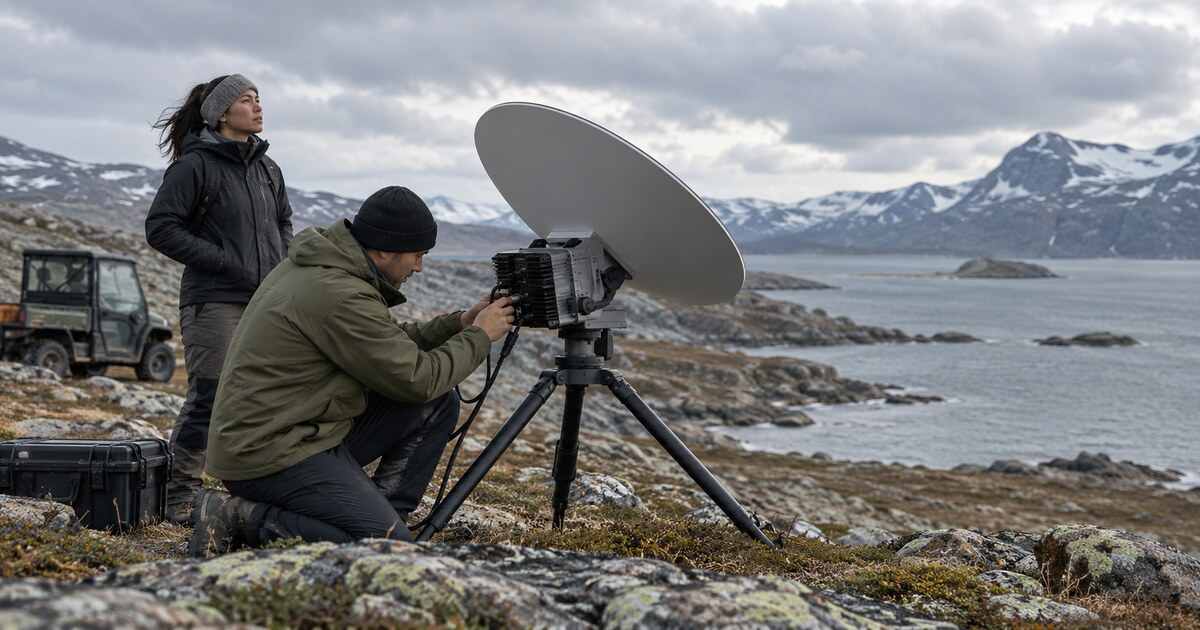
Nokia and ICEYE are developing low-Earth-orbit communications systems that governments can own and control rather than buy as a normal commercial satellite service. The first satellites are expected to launch in 2028.
The partnership is aimed at defence, border security, emergency response and disaster recovery. For Canada, the timing is notable: Ottawa has already committed billions of dollars to a Canadian-built Arctic military communications system, giving it a useful comparison for what “sovereign” satellite service actually means.
What Nokia and ICEYE announced
Under the agreement announced October 1, ICEYE will provide the satellite platform and space operations while Nokia supplies networking, ground infrastructure and user terminals. The companies say customers will be able to own and control the satellites, ground segment and terminals.
That is different from simply purchasing bandwidth on a commercial constellation. A national operator can decide where its data is processed, how the network is configured and who controls capacity during a crisis. Nokia and ICEYE also say the system will be designed for compatibility with existing terrestrial and satellite networks.
The announcement does not name a launch provider, customer, contract value or number of satellites. It is a development plan, not an operating network. Reuters independently confirmed the partnership and the 2028 target, but performance and resilience claims remain promises until hardware reaches orbit and customers test it.
What “sovereign” means in this market
Satellite providers use the word in several ways. A government might own the spacecraft, reserve capacity on someone else's constellation, operate only the ground stations or require that data stay under domestic legal control. Those arrangements are not equivalent.
Nokia and ICEYE are pitching the more comprehensive option: a customer-controlled mission rather than a standard subscription. That could reduce dependence on a commercial operator's priorities, but it also leaves the government responsible for procurement, staffing, security and long-term upgrades.
Owning a small constellation does not automatically make it resilient. Coverage depends on orbit, fleet size, ground stations and available spectrum. A system also needs protection against jamming, cyberattacks and the loss of individual satellites. The companies have not yet published enough technical detail to judge those points.
Canada has already chosen Telesat for the Arctic
Canada's current plan centres on Telesat Lightspeed. On August 4, the federal government announced an initial contract worth about C$2.3 billion before tax for military Ka-band communications under the Enhanced Satellite Communications Project – Polar.
The Canadian contract is intended to support the Armed Forces in the Arctic and other high-latitude regions. Ottawa says it will improve interoperability with NORAD and NATO while supporting Canadian suppliers and jobs.
That makes a direct Canadian purchase from Nokia and ICEYE less obvious in the near term. The new European system could still become relevant as an allied network, a backup route or a specialized service. Nothing in the announcement says Canada is a customer, and it should not be read as a Canadian procurement decision.
The useful comparison for Canadian buyers
Ottawa should judge competing satellite offers by control and redundancy rather than by the word sovereign alone. The practical questions include:
- Asset control: Does Canada own spacecraft and terminals, or only reserved capacity?
- Operational control: Can Canadian personnel prioritize traffic and reconfigure the network during an emergency?
- Data jurisdiction: Where are traffic, telemetry and encryption keys stored and managed?
- Allied access: Can NORAD and NATO partners connect without giving a foreign vendor control of Canadian missions?
- Failure planning: What happens if a ground station, launch or satellite is lost?
Canada also needs to avoid treating one system as a complete answer. Commercial networks are expanding quickly—the recent Starlink V3 deployment shows the pace—but military users need different assurances about priority access, security and control.
What happens next
The first useful milestones will be a named customer, a defined fleet size and a launch contract. Technical details about frequencies, terminal compatibility and anti-jamming measures will matter more than the partnership announcement itself.
Nokia and ICEYE have made the ownership model clear. They have not yet shown what a national network will cost or how it will perform. Canada already has a large domestic project under way, so the European proposal is best treated as a benchmark and possible allied option, not a replacement that Ottawa has selected.
Tags: Nokia, ICEYE, satellite communications, Canadian defence, Arctic