Nvidia Says AGI Is Here. The Label Still Tells Us Little
Matthew Leo · Published August 30, 2026 · AI
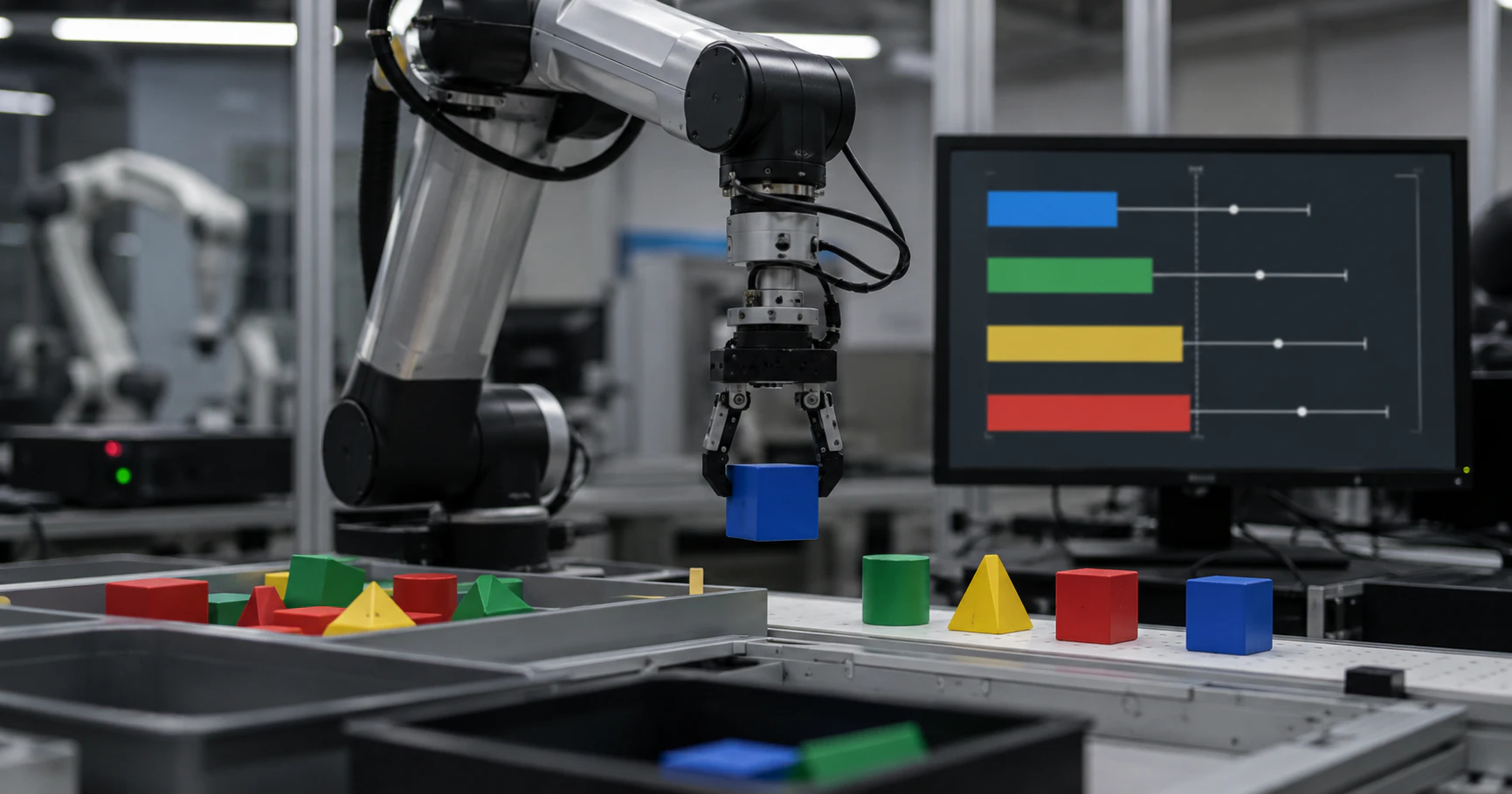
Nvidia CEO Jensen Huang used the company’s latest earnings call to make a striking claim: artificial general intelligence has effectively arrived. Then he undercut the usefulness of the label almost immediately.
That tension is the interesting part. The argument over whether a model has reached “AGI” increasingly tells us less about what a system can actually do than the benchmarks, reliability and economics behind it.
AGI has no agreed finish line
Artificial general intelligence is usually meant to describe a system that can perform a broad range of intellectual tasks at or beyond human level. The trouble is that there is no universally accepted test for crossing that line.
Different labs have used different definitions. Some emphasize economic value, some general problem-solving, some autonomy and others the ability to learn unfamiliar tasks. A system can look extraordinary under one definition and clearly incomplete under another.
That makes declarations of AGI unusually hard to falsify. If the finish line moves with the speaker, the term becomes closer to branding than measurement.
Nvidia’s numbers are more useful than the slogan
The company’s financial results offer a much clearer picture of what is changing. Nvidia reported quarterly revenue of $96.22 billion and has forecast continued rapid growth as cloud providers, AI labs, enterprises and sovereign buyers spend heavily on accelerated computing. Reuters reported that Nvidia expects roughly 70% sales growth in its next fiscal year, while memory supply and component costs remain constraints.
Those facts do not prove AGI. They prove that advanced AI has become economically important enough to drive one of the largest infrastructure buildouts in technology.
For businesses, that distinction matters. A company deciding whether to deploy an AI system needs to know its error rate, cost per task, latency, security model, data requirements and where a human still needs to intervene. “AGI” answers none of those questions.
A better way to judge the next model
Instead of asking whether a new model is AGI, ask five narrower questions:
- Can it complete the task reliably without hidden human cleanup?
- Can it handle unfamiliar variations rather than memorized patterns?
- What does a successful task cost at production scale?
- How often does it fail in ways that are difficult to detect?
- Can its actions be constrained, audited and reversed?
Those questions are less dramatic, but they are measurable. They also travel better across industries. A model that is excellent at software engineering may still be a poor fit for medical decisions, financial approvals or autonomous infrastructure.
The AGI debate is becoming an economic debate
There is another reason the terminology matters. Contracts, investment narratives and competitive positioning can attach real financial consequences to how companies define advanced AI. When a technical term also carries strategic value, everyone has an incentive to define it in a convenient way.
Huang’s broader point is therefore more useful than the headline claim: productive capability matters. If AI systems continue becoming cheaper, more reliable and capable of longer sequences of useful work, their economic impact can be enormous whether the industry ever agrees on the day AGI arrived.
Sources: Reuters on Nvidia’s outlook and Nvidia’s quarterly earnings discussion.
Tags: Nvidia, AGI, artificial intelligence, Jensen Huang