Nvidia’s Reported 15% Server Hike Exposes AI’s Memory Problem
Matthew Leo · Published August 29, 2026 · AI
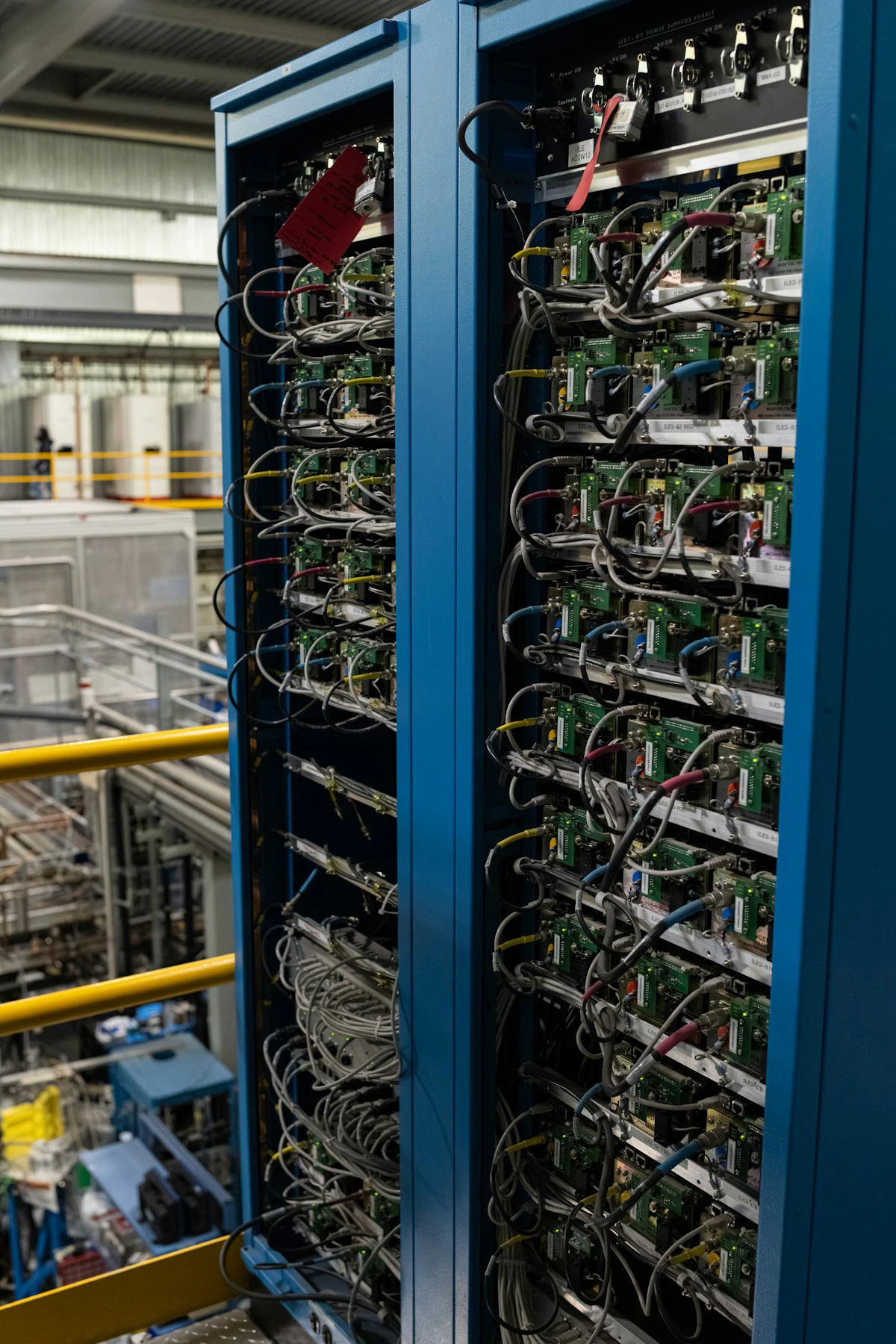
The AI boom is running into a decidedly unglamorous constraint: memory is getting expensive enough that even Nvidia’s biggest customers are reportedly being warned about double-digit server price increases.
Reuters reported on August 22, citing Bloomberg, that major server makers had notified customers of increases above 15 percent on systems containing Nvidia’s leading AI processors. The changes are expected to affect shipments early next year and vary by chip generation and memory configuration.
Nvidia did not comment on the report. That caveat matters, but the broader pressure is not hard to see. AI systems consume enormous amounts of high-bandwidth memory, and the same demand surge that has made GPUs scarce is now pushing harder on the components surrounding them.
This is not simply Nvidia charging more because it can
The reported increases are tied largely to memory costs rather than a new list price slapped directly on a standalone GPU. Modern AI servers combine accelerators with high-bandwidth memory, networking, CPUs, cooling and storage in tightly integrated systems.
That means the price of the “GPU server” depends on much more than the GPU itself.
In its August 22 report, Reuters said systems based on Nvidia’s Vera Rubin and Grace Blackwell processors were among those affected. The exact increase depends on the system and memory configuration.
The useful takeaway is that the AI infrastructure bottleneck is broadening. For a while, the story was simply “there are not enough Nvidia GPUs.” Now the constraint includes the memory needed to feed those chips fast enough.
Why AI is so hungry for expensive memory
Training and serving large models requires moving huge amounts of data between compute units and memory. Ordinary server RAM cannot always supply that data quickly enough, which is why high-end accelerators rely on high-bandwidth memory, or HBM.
HBM is more complicated and expensive to manufacture than conventional memory. It stacks memory dies vertically and packages them close to the processor so data can move at very high speeds.
When AI companies order hundreds of thousands of accelerators, they are therefore consuming not only leading-edge chip capacity but also advanced packaging and premium memory capacity.
That pressure can spill into other markets. Memory manufacturers naturally prioritize products with the strongest demand and margins, which can tighten supply elsewhere.
The cost will not stay inside data centres
Most people will never buy an Nvidia rack-scale AI server. They can still end up paying for it.
Cloud providers recover infrastructure costs through the prices they charge for GPU instances, AI APIs and enterprise services. Software companies then fold those costs into subscriptions or usage fees. Businesses that build their own systems face the capital expense directly.
A 15 percent increase in a server does not translate cleanly into a 15 percent increase in ChatGPT, Copilot or cloud pricing. Providers negotiate at scale, depreciate hardware over years and constantly improve utilization.
But rising hardware costs make the economics harder. Every AI company promising cheaper inference has to produce efficiency gains fast enough to outrun component inflation.
Canada has a particular reason to care
Canada is spending heavily to expand domestic AI compute and data-centre capacity. Projects that looked affordable when budgets were written can become more expensive if memory, storage, power equipment and accelerator systems all rise together.
That does not mean Canadian AI infrastructure projects suddenly become uneconomic. It does mean public and private buyers should stop treating accelerator prices as the only hardware variable.
A sovereign-compute strategy is also a supply-chain strategy. If a country wants dependable access to AI capacity, it has to think about memory, networking, power, cooling and replacement parts, not just which logo appears on the GPU.
Rubin makes the memory issue even more important
Nvidia’s Vera Rubin platform is designed around rack-scale systems with very high memory bandwidth and dense interconnects. The company has described configurations containing up to 144 GPUs in a rack for some scientific-computing systems.
That architecture is powerful precisely because it treats the rack as one coordinated computing system rather than a collection of independent cards. It also means buyers are purchasing a larger bundle of expensive components at once.
If memory prices remain elevated, next-generation systems can become more expensive even while performance per dollar improves. Those two things are not contradictory: a machine can deliver better economics per unit of compute and still require a much larger cheque upfront.
The hardware market is becoming the hidden AI tax
AI companies spend a lot of time talking about model intelligence, context windows and agents. The bills still arrive in very physical forms: chips, memory modules, cooling loops, transformers and electricity.
That is why this reported price increase is worth more attention than another benchmark victory. It shows where the next constraint may sit.
If memory supply catches up, the pressure can ease. If demand continues to grow faster than production, higher server prices will ripple through cloud infrastructure and eventually into the products built on top of it.
The AI race is often described as a software competition. Increasingly, the winners will be the companies and countries that can secure the boring hardware around the glamorous chips.
Tags: Nvidia, AI infrastructure, memory, data centres, Analysis