The $500 Billion AI Chip Deal Needs an Asterisk
Matthew Leo · Published July 27, 2026 · Business & Policy
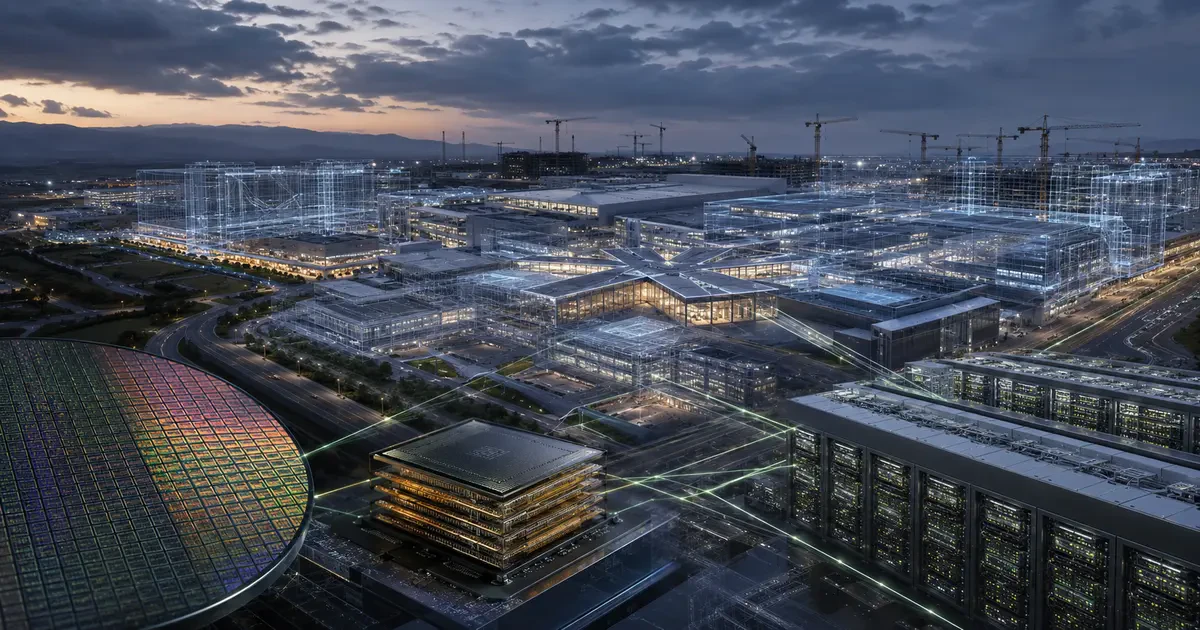
A $500-billion AI deal deserves attention—but it also deserves an asterisk large enough to see without zooming in.
On July 24, Nvidia and South Korea’s SK Group announced what they described as a $500-billion-plus AI initiative. The plan covers large AI data centres, Nvidia computing systems and a long-term memory partnership with SK Hynix.
The number is enormous. The legal footing is more preliminary: the companies said they signed letters of intent to formalize the agreement.
What is being proposed
SK Telecom plans to build an AI factory with capacity of up to two gigawatts, using Nvidia’s Vera Rubin systems and SK Hynix HBM4 memory. The first facility is planned to come online in 2027.
Nvidia and SK Hynix also intend to jointly develop and optimize future high-bandwidth memory. HBM is one of the critical components placed alongside AI accelerators, and supply has become strategically important as companies build larger computing clusters.
Reuters corroborated the announcement and reported that it formed part of $950 billion in newly announced South Korean AI initiatives involving SK Group, Samsung and American technology companies.
The headline number is not money already spent
This distinction matters. A letter of intent records what companies currently plan to pursue; it is not the same as a closed transaction or a completed capital project.
The eventual spending, construction schedule and commercial terms can still change. Nvidia’s own announcement contains forward-looking language and describes several elements as plans or aims.
That does not make the deal fictional. A proposed two-gigawatt AI facility and a long-term Nvidia–SK Hynix memory arrangement would be consequential even if the final total came in below the headline figure.
South Korea is selling an entire AI supply chain
The larger story is that South Korea is not pitching itself only as a place that manufactures memory chips. It is combining memory, foundry capacity, packaging, telecommunications infrastructure, data centres and government support.
Canada should pay attention. Countries competing in AI increasingly need more than research grants and model announcements. They need power, construction, chips, data-centre capacity and customers willing to buy the resulting compute.
The correct response to this announcement is neither disbelief nor breathless celebration. It is to recognize the industrial ambition while keeping the asterisk attached until contracts are finalized and facilities are actually built.