Ontario Wants Data Centres to Pay Their Full Power Cost
Matthew Leo · Published August 17, 2026 · Last updated September 29, 2026 · Business & Policy
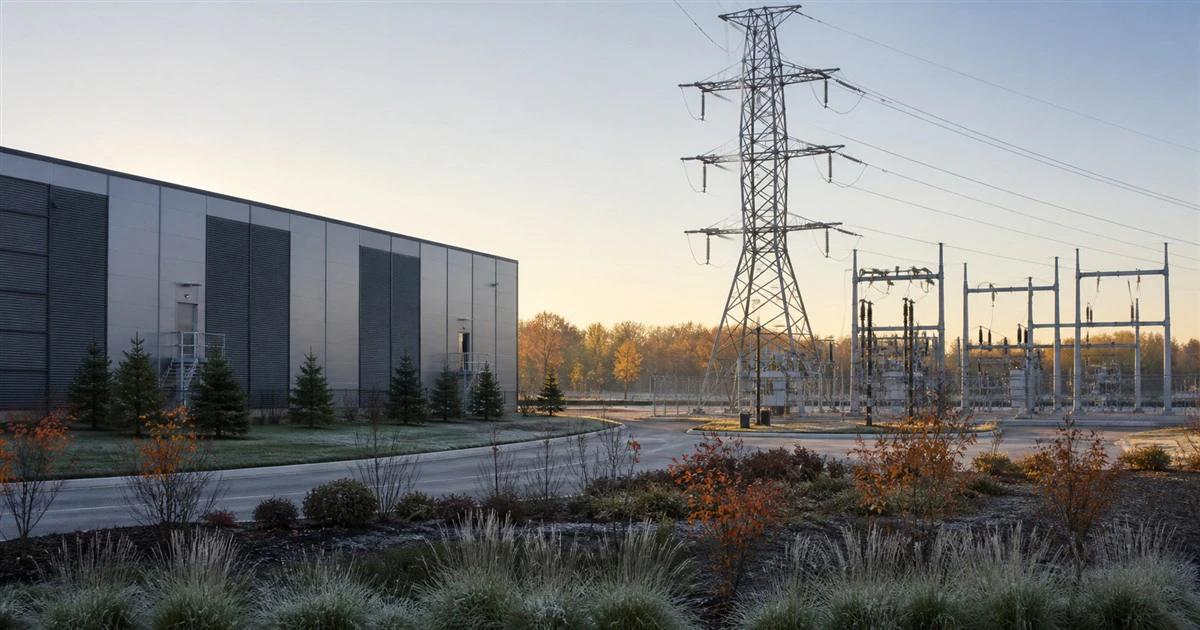
Ontario has a simple message for the next wave of AI data centres: bring jobs and investment, but do not put the power bill on everyone else.
The province released a draft Data Centre Playbook on August 13, 2026. It would help decide which large new data centres may connect to Ontario's electricity grid. The proposal looks at economic value, digital sovereignty and community benefits, while a separate electricity-rate plan would make large projects cover their full power costs.
That is a stronger starting point than treating every data centre as an automatic win. Still, the important details are not final. Ontario is taking public comments until September 12, and the rules will only be useful if the province turns broad promises into measurable conditions.
The power requests are enormous
Ontario's Environmental Registry proposal says data centres seeking connections could together ask for more than 10,000 megawatts. Recent peak demand in Ontario has been about 25,000 megawatts.
Those numbers are not a forecast that every proposed project will be built. Connection requests can overlap, change or disappear. They do show why the province cannot approve projects one at a time without considering the whole grid. A collection of speculative requests can reserve scarce capacity that manufacturers, homes and other businesses also need.
The draft would give the government a role in deciding which regulated data centres can connect or reconnect. The size threshold is not settled, but the consultation gives an example of projects above one megawatt. Existing data centres would stay under the current electricity framework.
Ontario wants a separate electricity rate
The province is considering a new rate class for large new data centres. Those facilities would not take part in the Industrial Conservation Initiative, a program that lets qualifying large customers reduce a portion of their electricity costs by lowering demand during Ontario's five highest peak hours.
Instead, the new class would be designed around full cost responsibility. The draft playbook says data centres should pay for the electricity and the generation or transmission upgrades their operations require. It also says other ratepayers should not carry those costs.
The direction is sensible, but “full cost” needs a transparent definition. A connection can require more than a wire to one property. It may affect substations, transmission, backup capacity and the timing of future generation. The final rate should explain which costs are direct, which are shared and what happens if a promised facility is delayed or cancelled after grid work begins.
The playbook would rank projects on three pillars
Power is only one part of the proposal. Ontario also wants a strategic assessment based on three pillars.
Economic development: high-quality jobs, capital investment, tax revenue, local suppliers and useful computing capacity for Ontario businesses.
Data security and digital sovereignty: protection of sensitive information and critical infrastructure, with a preference for Canadian ownership and operation.
Community benefit and public trust: local training, apprenticeships, infrastructure investment, public engagement and reduced environmental effects.
What proof should Ontario require?
Economic development: job counts, capital spending, local purchasing and milestones that can be checked after approval.
Digital sovereignty: ownership, legal jurisdiction, encryption-key control, administrators and important subcontractors.
Community benefit: water, noise, heat, backup-power and municipal-cost estimates tied to enforceable limits.
These are good questions. They are not yet a scoring system. A developer can promise local jobs, efficient cooling and Canadian data storage in a press release. Ontario needs to say how it will verify those claims, how much each pillar matters and what consequences follow when a project misses its commitments.
Digital sovereignty is more than a postal address
The draft prefers Canadian-owned and operated facilities and alignment with federal digital-sovereignty planning. That could strengthen domestic control over important infrastructure. But a server located in Ontario is not automatically controlled by Canadians.
Ownership, corporate jurisdiction, encryption, access to keys, software control and subcontractors all matter. A foreign cloud company can run hardware in Ontario while retaining broad administrative control. A Canadian operator can also rely on foreign software and remote support. The province should assess the control chain, not only the building address.
Water, noise and heat need measurable limits
The playbook identifies water use, noise, heat, emissions, backup generators and electronic waste as possible environmental effects. It points to closed-loop or waterless cooling, direct-to-chip liquid cooling, noise controls and waste-heat recovery as better approaches.
Those technologies can help, but the final rule should ask for project-specific numbers. Residents need to know expected annual water use, maximum noise at the property line, backup-generator testing hours, energy efficiency and whether waste heat has a real customer. “Designed for heat recovery” means little if no nearby building can use it.
Municipal capacity also matters. A town may need staff, roads, water, sewers and emergency planning long before a data centre creates tax revenue. The proposal says projects should not overwhelm local technical or financial capacity. That should become an enforceable cost agreement, not a hopeful sentence.
The consultation is the moment to ask for proof
Ontario's public comment period closes at 11:59 p.m. on September 12, 2026. The province asks whether the three pillars are right, how projects should prove alignment, what is missing and how a new electricity rate should work.
A useful final playbook should publish the scoring method, require independently checked power and environmental estimates, disclose ownership and control, attach conditions to grid approval and report whether promised benefits arrive. It should also prevent projects from holding scarce grid capacity without firm milestones.
Ontario does not need to choose between banning data centres and accepting every proposal. It needs to select projects that pay their way and deliver benefits that can be checked after the ribbon is cut.