OpenAI Recording-Device Charge Shows a Physical Security Gap
Matthew Leo · Published October 23, 2026 · News
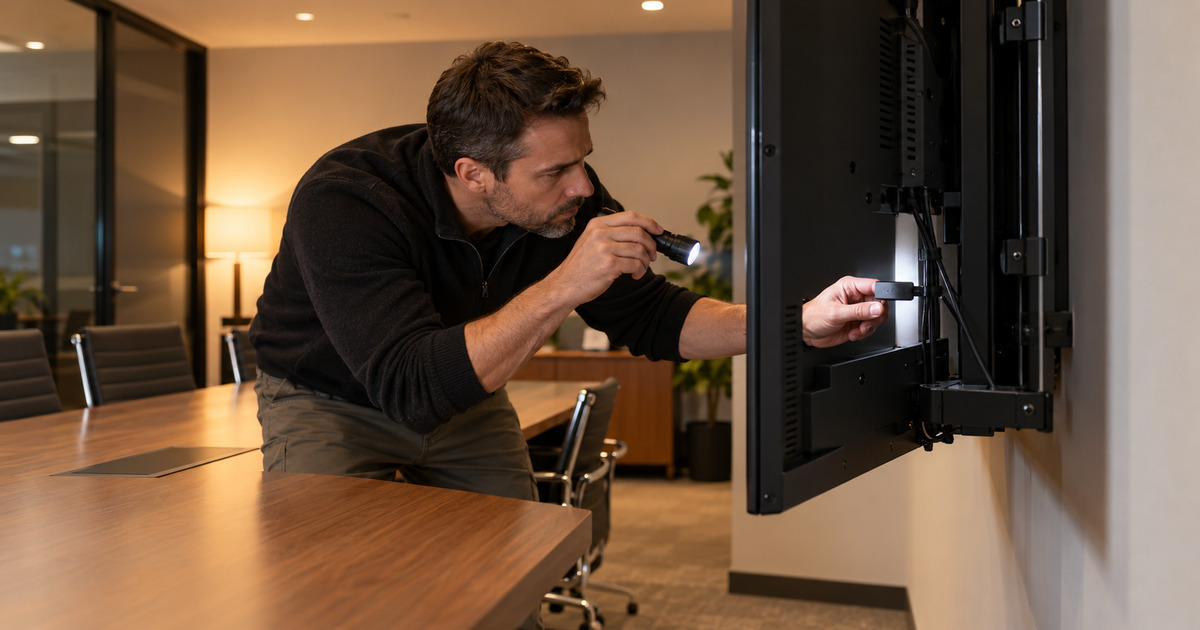
US prosecutors have charged an OpenAI engineer with allegedly installing a concealed audio recorder in an executive conference room at the company’s San Francisco office.
The allegation is not a finding of guilt. The Department of Justice says Abdulrahman Alfozan was arrested on October 9 and made an initial court appearance on October 13. He is presumed innocent unless proven guilty.
What the complaint alleges
According to the complaint summarized by the Justice Department, OpenAI personnel found a recording device on September 30. It had allegedly been inserted into a USB port on the back of a television and concealed inside toilet paper.
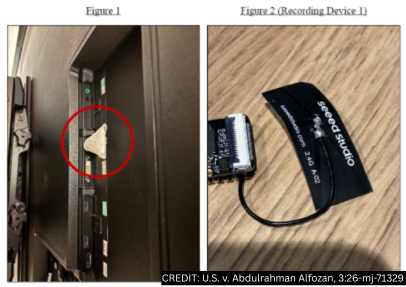 The recording device described in the criminal complaint. Official photograph: US Department of Justice.
The department says the conference room was used for confidential technical, commercial and strategic discussions. The complaint also alleges that building footage placed the accused near the room on several dates and that company security later found a second similar device in his unattended bag.
Prosecutors further allege that a chatbot account associated with the accused’s spouse made queries about building a continuous audio recorder, wireless connectivity, live listening, storage encryption and details matching the device. Those claims are allegations from a complaint; the evidence has not yet been tested at trial.
The control failure is broader than one USB port
Meeting rooms often contain televisions, video bars, hubs, chargers and cables that receive little routine scrutiny. A small device can blend into that clutter. Security teams should treat executive and research rooms as systems, not furniture.
- Inventory connected equipment: record approved devices, cables and adapters behind displays and inside table boxes.
- Inspect after sensitive meetings: use a short physical check that includes USB ports, power strips, ceiling fixtures and under-table mounts.
- Limit room access: compare badge permissions with meeting and maintenance needs, then review unusual entries.
- Separate evidence from rumour: preserve video, access logs and devices through a documented chain of custody.
- Coordinate teams: facilities, corporate security and cybersecurity should have one escalation path for unfamiliar hardware.
What Canadian organizations should take from it
Canadian technology companies, research labs and public agencies hold valuable intellectual property without the security budgets of the largest US firms. Their highest-value conversations may happen in ordinary boardrooms shared with vendors, cleaners and contractors.
The practical response is not a theatrical sweep of every office. Start with rooms where unreleased designs, acquisitions, government work or security incidents are discussed. Establish a known-good equipment baseline, inspect it regularly and record who may service it.
The Justice Department release contains the government’s detailed allegations and the device photograph. Reuters independently reported the arrest and charge.
Tags: OpenAI, physical security, insider threat, corporate security, AI labs