PlayStation Is Killing Physical Games. Gamers Should Be Furious.
Matthew Leo · Published July 22, 2026 · Gaming
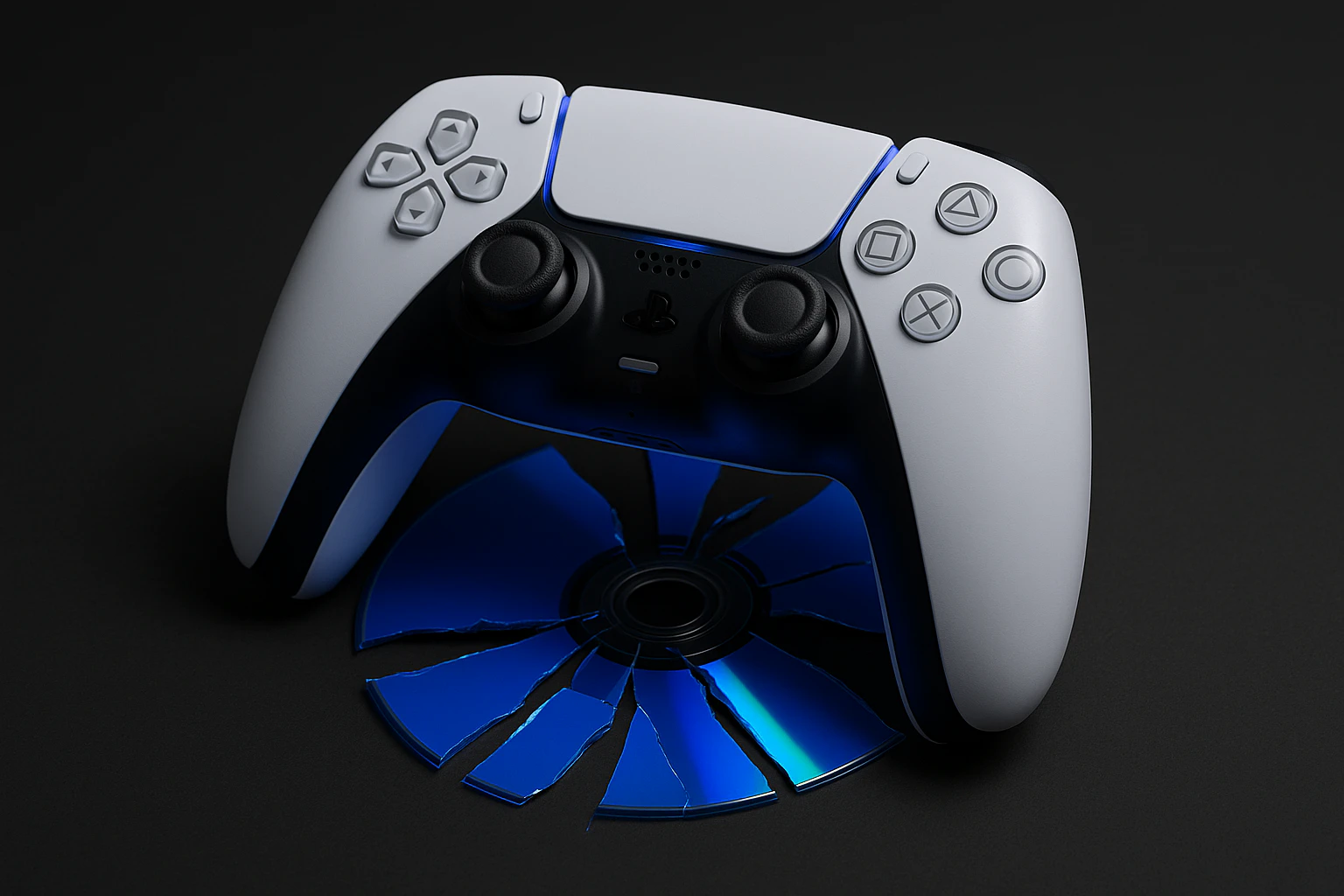
PlayStation Is Killing Physical Games. Gamers Should Be Furious.
Sony says players chose this.
It is not entirely wrong.
Digital downloads accounted for 78% of full-game sales on PlayStation during Sony’s 2025 financial year. In the final quarter, that figure reached 85%. Most PlayStation customers are already choosing downloads over discs.
But choosing convenience is not the same as agreeing to have every other option removed.
Beginning in January 2028, Sony will stop producing physical discs for all new games released on PlayStation consoles. Games already released, or scheduled for a disc release before then, will not be affected. Future titles will be sold through the PlayStation Store and by retailers in digital formats only.
Sony describes this as a natural response to customer habits.
It is also a decision that gives Sony more control over where PlayStation games are sold, how they are priced and what customers can do with them after purchase.
That part deserves far more attention than the convenience of avoiding a trip to the store.
Sony’s Business Case Makes Sense
Physical games cost money to manufacture.
Discs must be printed, packaged, transported, stocked and sometimes discounted when they fail to sell. Unsold copies take up space. Retailers take a share of every sale.
Digital distribution removes much of that.
Sony can sell a game through its own store without producing a case, shipping a box or worrying about leftover copies. An industry analyst told Reuters that removing discs should improve Sony’s margins, although larger digital libraries will also increase customers’ need for expensive storage.
Sony’s own numbers show why the company is willing to make the change. Digital games already dominate PlayStation sales, while physical software represented a much smaller part of its gaming revenue in 2025. Even so, physical software still generated about ¥125.1 billion in revenue that year.
This is not a dying format with twelve collectors keeping it alive in a basement.
Roughly one in five full-game purchases was still physical.
Sony looked at that group and decided it could live without their preference.
That may be good business. It is not good for consumers.
A Disc Gives You Options
A physical game can be sold when you finish it.
It can be lent to a friend.
It can be given to a sibling.
It can be bought second-hand years after release.
A retailer can discount it to clear stock. A private seller can charge less than the official store. A local game shop can build a business around used copies.
Digital games do not work that way.
A game tied to your PlayStation account cannot normally be transferred to another person. You cannot finish it and recover part of the purchase price. You cannot walk into a second-hand shop and find a cheaper copy. You cannot permanently lend it to a friend.
The Electronic Frontier Foundation argues that physical media protects important rights to share, resell and preserve copies, while digital-only distribution pushes customers towards a culture where access remains controlled by the platform.
Sony is not merely replacing a plastic disc with a download.
It is replacing a product you can move through the world with a licence locked to an account.
You Are Buying a Licence
PlayStation’s Canadian software agreement says it plainly:
The software is licensed to you, not sold.
The licence is personal, limited and non-transferable.
Most customers do not read software agreements before clicking “Buy.” They see a price, press a purchase button and reasonably believe they have bought a game.
Legally, what they receive is more limited.
Their access depends on an account, compatible hardware, Sony’s systems and the continued availability of the content. Sony’s terms also state that the availability of PlayStation services and content can change.
The distinction rarely matters while everything works.
It becomes very important when an account is suspended, a licensing agreement ends, a store closes or a company decides that maintaining old content is no longer worth the trouble.
A physical disc does not solve every one of those problems. Modern games often require large updates, online authentication or downloads that are not fully included on the disc.
But a disc still gives the customer something a digital purchase does not: a transferable copy that exists outside their PlayStation account.
Removing that option makes the customer more dependent on Sony, not less.
Sony Has Already Shown Why This Matters
The timing of Sony’s announcement could hardly have been worse.
Days earlier, PlayStation customers in parts of Europe were informed that hundreds of StudioCanal films they had previously purchased would be removed from their digital libraries because of an expired licensing agreement. The affected catalogue reportedly included more than 500 titles.
Those were films rather than games, and the dispute concerned specific regional licensing agreements. It does not mean Sony is preparing to delete everyone’s PlayStation collection.
It does prove something more basic:
A company can place a “Buy” button beside digital content and later discover that it no longer has the legal ability or business interest to keep providing it.
Sony is also closing the PlayStation Store on PS3 and PS Vita systems worldwide in July 2027. Customers will no longer be able to make new purchases, although Sony says previously bought content will remain downloadable for the foreseeable future.
“For the foreseeable future” is not the same as forever.
Digital libraries can last for decades. They can also disappear through licensing disputes, ageing systems, business closures or policy changes.
The customer does not control any of those decisions.
Digital-Only Means Less Price Competition
When a physical game launches, several retailers may compete to sell it.
One may offer a discount. Another may include a gift card. Used copies eventually appear. Friends trade games. Prices fall as stock ages.
In a digital-only system, Sony sits in the middle of every purchase made on its platform.
Sony says retailers will still be able to sell games in digital formats after 2028. That could mean download codes remain available outside the PlayStation Store.
But a code is still not a disc.
Once redeemed, it becomes tied to one account. It cannot create a used-game market. Retailers cannot buy it back. Customers cannot exchange it among themselves.
Sony may continue offering regular sales, and publishers can lower their digital prices. The problem is not that every digital game will always be expensive.
The problem is that customers will have fewer ways to find a better price without waiting for Sony or the publisher to approve one.
A used copy competes with a new sale.
A redeemed download does not.
That difference is extremely convenient for publishers.
This Will Hurt Some Canadians More Than Others
Digital games require storage and dependable internet access.
Many major releases already demand tens or hundreds of gigabytes. A customer who deletes one game to make room for another may later need to download the entire thing again.
Canada has made real progress on broadband access. The CRTC reports that 96.4% of Canadian households can access internet service offering at least 50 Mbps download speeds, 10 Mbps upload speeds and unlimited data. However, rural, remote and First Nations communities remain more likely to be underserved.
A national figure of 96.4% still leaves people behind.
Even where high-speed service is technically available, it may be expensive, unreliable or slower than advertised. Large downloads can be a mild inconvenience in Toronto and a full-day project elsewhere.
A disc does not eliminate updates. It can still reduce how much must be downloaded, depending on how much of the game is stored on it.
Sony’s decision assumes that every future PlayStation customer has reliable internet, enough storage and no problem depending entirely on an online storefront.
That may describe most players.
It does not describe everyone.
Physical Games Were Never Perfect Ownership
There is a tendency to romanticize discs as though every physical game is a permanent, complete object.
That has not been true for years.
Some discs contain unfinished versions that need major patches. Some provide only part of the game. Online-only titles become useless when their servers close. A damaged disc can stop working. Consoles may require internet access to pair accessories or verify software.
Sony’s own current detachable PS5 disc drive requires an internet connection during its initial pairing with the console.
Physical media is not a magical shield against modern gaming’s worst habits.
It is simply better than having no alternative.
The fact that discs are imperfect does not justify removing them. It is an argument for improving physical releases, not ending them.
This Is About Control, Not Nostalgia
Some people will dismiss the backlash as collectors being emotional about plastic boxes.
That misses the issue.
This is not mainly about admiring cover art or building a shelf that impresses visitors who did not ask.
It is about whether a customer should be able to resell, lend, preserve or shop competitively for a game that may cost $90 or more.
Digital downloads are genuinely convenient.
They are available instantly. They cannot be scratched or misplaced. Switching between games is easier. Preloading allows people to play the moment a title launches.
None of that required Sony to abolish discs.
Players already had the choice between physical and digital. Sony is not adding convenience in 2028. It is removing the format that gives customers more control.
The people who prefer digital lose nothing when discs exist.
The people who prefer discs lose everything when they disappear.
Gamers Helped Build This Future
Sony is making a corporate decision, but customers helped make it possible.
Digital sales did not reach 78% because Sony forced every purchase. Players chose the convenience. They preordered through the PlayStation Store, stopped visiting game shops and bought consoles without disc drives.
Those choices were understandable.
Digital games are easy, and during frequent sales they can be affordable.
The mistake was assuming digital and physical could remain equal options forever.
Once physical sales became small enough, Sony no longer needed to compete with them. The company could remove the format while claiming it was merely following its customers.
Consumer habits sent Sony a clear message:
Most players will accept a digital-only future.
Sony listened.
Now the remaining question is whether players will also accept fewer ownership rights, less resale value and more dependence on one company’s servers.
What Sony Should Have Done
Sony did not need to manufacture the same number of discs forever.
It could have reduced production.
It could have limited physical editions to major releases.
It could have used on-demand manufacturing or partnered with specialist publishers.
It could have charged slightly more for discs if production costs became difficult to justify.
It could have committed to physical editions for first-party games while allowing smaller publishers to choose.
Any of those options would have preserved some level of consumer choice.
Instead, Sony chose a complete cutoff for all new PlayStation releases.
That is the easiest solution for Sony and the most restrictive one for customers.
Gamers Should Be Furious
Not because the world owes us plastic cases.
Not because downloading games is inherently bad.
Gamers should be furious because Sony is taking a market that already offered convenience and turning it into one that offers dependence.
From 2028, every new PlayStation game will exist on terms controlled by digital storefronts, accounts and licensing agreements. You may be able to choose which retailer sells you the code, but you will not be able to resell the finished game, buy it used or pass your copy to another person.
Sony will save money on manufacturing and distribution.
Publishers will lose competition from used copies.
The PlayStation Store will become even more important.
And customers will be told this is progress because most of them were already buying downloads.
It is progress for Sony’s margins.
For everyone else, it is a reminder that convenience often begins as a choice and ends as the only option left.
Sony is not killing physical games because digital ownership is better. It is killing them because digital control is better for Sony.