Satellite SOS in Canada: Which Phones Work in 2026?
Matthew Leo · Published August 9, 2026 · Gadgets
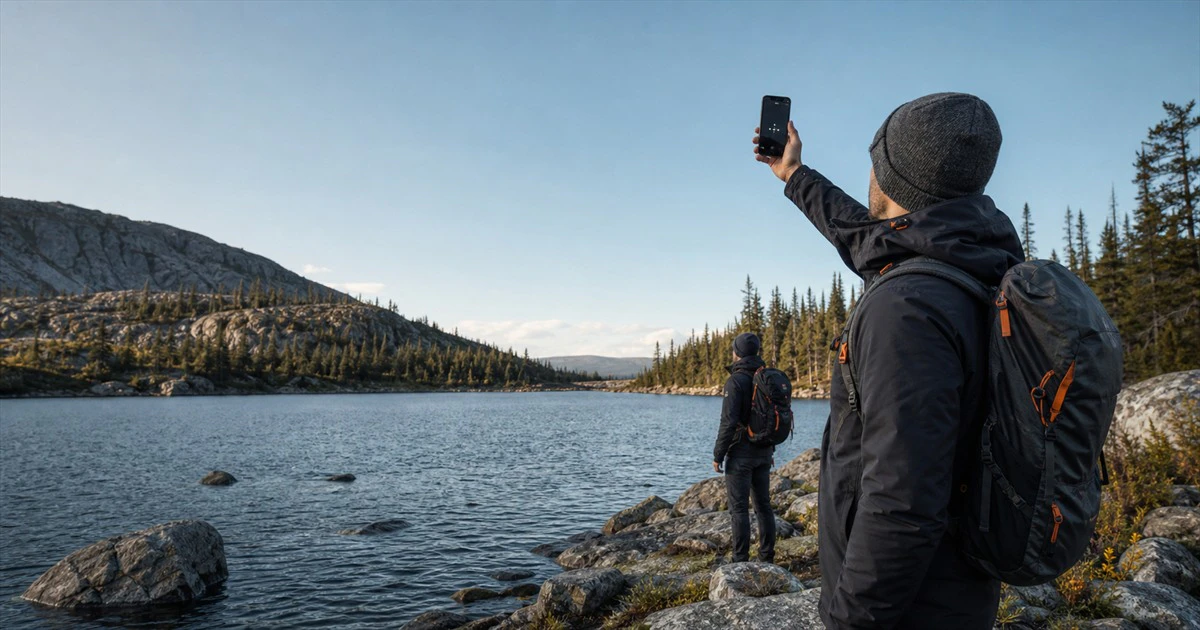
A phone with no bars is no longer always a dead phone in Canada.
Recent iPhones and Pixels can contact emergency help through satellites, and satellite features are beginning to reach select Samsung Galaxy phones through carrier partnerships. The logos make the feature sound similar. The reality is more complicated: some phones support emergency messages, some also support ordinary texts, and some depend on a carrier rollout that may not be active on every model.
Before paying for a phone because it says “satellite,” check the exact device, service and Canadian availability.
iPhone has the broadest consumer feature set
Apple supports Emergency SOS via satellite on every iPhone 14 model and later. In Canada, it can connect a person to emergency services when cellular and Wi-Fi networks are unavailable.
With iOS 18 or later, supported iPhones can also send iMessages or SMS messages through satellite in Canada. Apple says Messages via satellite is free for two years after activation. It is intended for keeping in touch, not for replacing Emergency SOS during a crisis.
Apple also lets users share a location through Find My in supported conditions. Roadside Assistance via satellite exists, but Apple’s current Canadian support page lists availability in Australia, the United States and the United Kingdom, not Canada. Do not assume the roadside option will appear simply because Emergency SOS works here.
The Apple Watch Ultra 3 adds another option. Apple says it can use Emergency SOS via satellite in Canada even without an active carrier plan, and the feature is free for two years after the watch is activated.
Pixel Satellite SOS now works in Canada
Google’s current support page says Satellite SOS is available in Canada on all Pixel devices since the Pixel 9, except the Pixel 9a. It is an emergency service, not a general off-grid chat feature.
The phone first tries the normal emergency number. If cellular and Wi-Fi are unavailable, the dialler offers Satellite SOS. The user answers a short questionnaire, points the phone using on-screen directions and exchanges text with an emergency service provider.
Google Messages must be the default messaging app. Google also warns that the feature activates after the necessary software, service registration and satellite components are ready, so owners should check its status in Settings before a trip.
Samsung support depends more heavily on the carrier
Samsung announced in May that satellite communication is expanding to select Galaxy phones, including the Galaxy S26 series. Its Canadian announcement lists Rogers among supported North American carriers, while warning that features may roll out according to each carrier’s plan.
That is not the same as a universal promise for every Galaxy S26 owner. Samsung says device compatibility, message types, market availability and the required One UI version can vary. Some partnerships support emergency service, while others add texting or data.
If satellite capability is a buying reason, check the carrier’s device page and the phone’s settings before the return period ends. A specification sheet that lists satellite hardware does not prove that the service is active on your Canadian plan.
What all three systems have in common
Satellite contact works best outside with a clear view of the sky and horizon. Trees, cliffs, mountains and buildings can block or slow the connection. Messages may take minutes rather than seconds.
The systems use short text because a phone-to-satellite link has much less capacity than a normal mobile network. They are for a place where cellular and Wi-Fi service are unavailable, not a faster route around a congested network.
No phone maker guarantees coverage in every part of Canada. Google says its country list does not guarantee coverage, and Apple notes that satellite features rely on third-party networks and regulatory approvals.
Prepare before leaving coverage
- Install updates. Satellite features depend on current system software and service components.
- Open the settings page. Confirm that the feature is active on the exact phone and plan.
- Run the demo. Apple and Google provide practice modes that temporarily simulate the connection process.
- Add emergency contacts. Complete Medical ID or the phone’s emergency profile before the trip.
- Charge the phone. Bring a protected power source and a cable that works.
- Share a trip plan. Tell someone the route, destination and time to call for help if you do not return.
Do not wait for an accident to learn where the satellite menu is. Stress, cold and poor weather make a new interface much harder to use.
A smartphone is useful, not absolute
Parks Canada warns that phones and satellite devices cannot be relied on completely. Deep backcountry trips may still justify a dedicated satellite communicator or a registered 406 MHz personal locator beacon, along with the skills and supplies to wait for help.
A dedicated communicator can offer longer battery life, tracking and two-way messages on plans designed for remote travel. A phone has the advantage of being the device most people already carry. The right choice depends on how remote the route is and what happens if the phone is broken, wet, lost or empty.
Which option is best in Canada?
For the widest mix of emergency and personal messaging, a supported iPhone currently has the clearest Canadian offer. A compatible Pixel is a strong emergency-only option without a carrier-specific promise. Galaxy support is expanding, but buyers need to verify the exact Rogers rollout, model and service.
Mapletechie’s Gadgets coverage looks past the badge on the box to the feature that will actually work after the road loses signal.
Satellite SOS is becoming a real safety tool, not a science-fiction extra. Its value begins before the emergency: check it, practise it and know what it cannot do.