SpaceX Is Building a $100B Second Starbase in Louisiana
Matthew Leo · Published August 29, 2026 · News
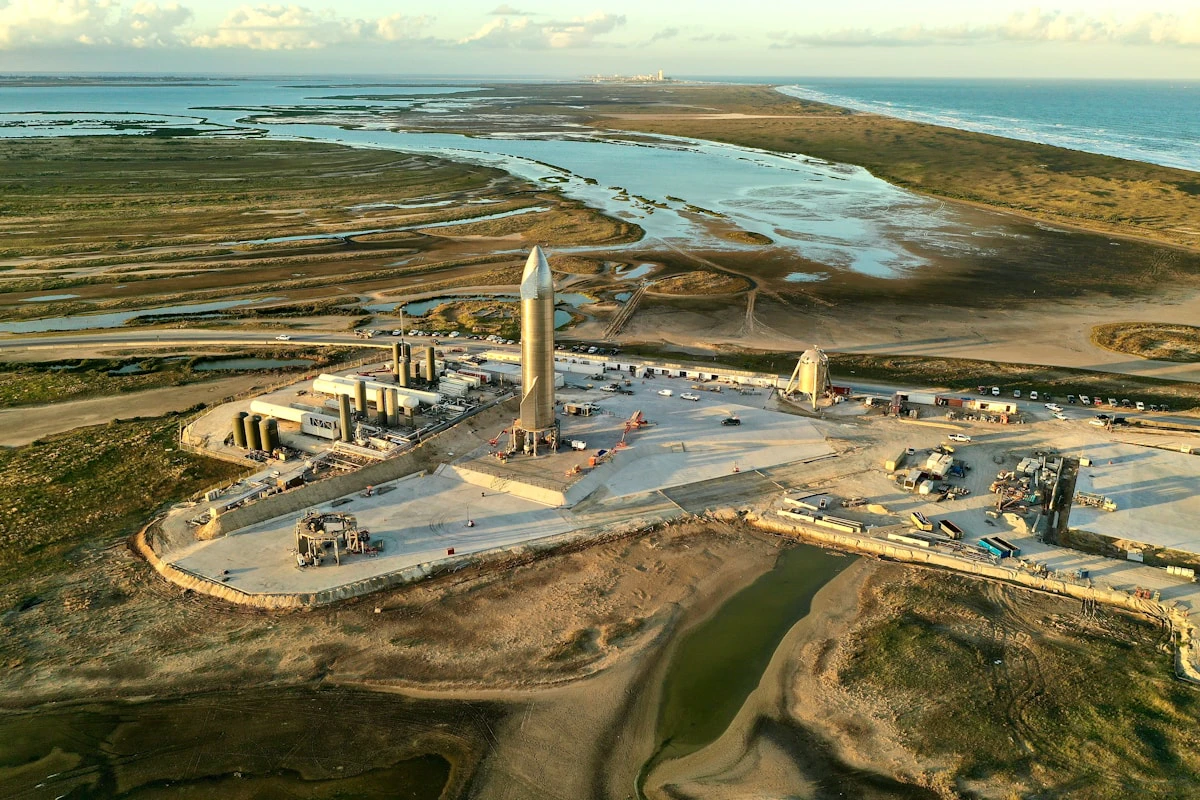
SpaceX says it will spend $100 billion building a second Starbase in Louisiana, turning a former Exxon site on the Gulf Coast into a launch complex for Starship.
The August 25 announcement is huge even by SpaceX standards. Construction is expected to begin in 2027, with SpaceX targeting a first launch in 2029 while Louisiana officials give a more conservative timeline that puts initial operations in 2030.
The project also tells us how aggressively SpaceX is planning around a future where Starship is not an occasional test vehicle but the backbone of the company’s launch business.
The second Starbase will be in Vermilion Parish
The new site will sit in Vermilion Parish along Louisiana’s Gulf Coast. TechCrunch reported that SpaceX ended a seven-year search for a location with deep-water access, room for expansion and enough industrial infrastructure to support Starship.
SpaceX describes the project as a self-sustaining spaceport with propellant production, power generation, deep-water shipping, vehicle-processing facilities and an airport. Louisiana Economic Development says the buildout is expected to create 3,000 direct jobs over 10 years and tens of thousands of construction jobs at peak activity.
Those figures are projections attached to the announcement, not jobs that already exist.
The $100 billion number needs context
A $100 billion investment headline naturally sounds like SpaceX is writing one cheque tomorrow. Large industrial projects do not work that way.
The spending would occur over years as the site is built, expanded and equipped. The final amount will depend on how Starship development progresses and how quickly SpaceX can scale launch cadence.
That matters because Starship still has technical milestones to clear. The rocket has made major progress through repeated flight tests, but SpaceX has not yet demonstrated the fully reusable, rapid-turnaround system required for its most ambitious business model.
The Louisiana project is therefore a bet on future capability, not proof that Starship has already reached routine operations.
SpaceX is planning for life after Falcon
Elon Musk has said SpaceX plans to retire Falcon 9 and Falcon Heavy once Starship can fly multiple times per week.
That would be a profound change. Falcon 9 is currently one of the most successful launch vehicles ever built and supports Starlink, commercial satellites, government missions and human spaceflight.
Replacing it only makes economic sense if Starship can launch more payload at a much lower marginal cost while remaining reliable enough for customers that cannot tolerate repeated delays.
A second giant launch complex suggests SpaceX believes the answer will eventually be yes.
Starlink and AI satellites raise the capacity requirement
Starship is central to SpaceX’s plans for larger Starlink deployments. The company has also discussed dedicated satellite infrastructure for AI processing, another concept that would require enormous launch capacity if it moves beyond early plans.
One launch site can become a bottleneck when a company wants to fly very large rockets several times per week. Weather, maintenance, environmental restrictions and accidents can all stop activity at a single location.
A second Starbase gives SpaceX redundancy and more room to scale. It also spreads the environmental and political risks across two states rather than concentrating everything in South Texas.
Louisiana is inheriting the hard parts too
SpaceX’s Texas Starbase has generated jobs and investment, but it has also faced criticism over worker safety, environmental effects and the relationship between the company and the surrounding community.
The Louisiana project will have to navigate similar issues from the beginning.
Large launch vehicles create noise, debris risks, road closures and impacts on coastal habitats. The company says it is already working with Louisiana wildlife and coastal agencies on habitat protection and erosion projects.
Those commitments will matter more once construction begins and regulators have to decide how frequently Starship can operate.
This is infrastructure for a different scale of spaceflight
Traditional launch sites are built around rockets that fly occasionally. SpaceX’s long-term Starship vision looks more like transportation infrastructure: vehicles launching repeatedly, returning, being inspected and flying again.
If SpaceX reaches that cadence, one giant factory and launch complex was never going to be enough.
The Louisiana Starbase is therefore less interesting as a real-estate project than as evidence of what SpaceX thinks its own launch volume will become.
The company is spending as if Starship’s remaining technical problems are solvable.
Canada has a stake in cheaper launch capacity
Canadian satellite companies, researchers and government programs depend heavily on foreign launch providers. More launch capacity and lower costs could make it easier for smaller Canadian missions to reach orbit.
The benefit is indirect because the new site is American infrastructure and SpaceX controls access and pricing. Still, a successful second Starbase could increase launch availability in a market where SpaceX already has enormous influence.
It could also deepen that influence. If Starship succeeds and Falcon retires, even more of the commercial launch market could depend on one company’s infrastructure.
The schedule is more uncertain than the ambition
SpaceX says first launch in 2029. Louisiana says initial operations in 2030. Both dates should be treated as targets.
Starship development, environmental reviews, construction and regulatory approval all have the ability to move the schedule.
What is less uncertain is the direction. SpaceX is no longer planning Starship as a single-site experimental rocket. It is building the industrial network it would need if Starship becomes the high-frequency launch system Musk has promised.
A $100 billion second Starbase is an expensive way to say the company believes that future is close enough to start pouring concrete.