How to Spot a Fake Online Store Before You Pay
Matthew Leo · Published August 8, 2026 · Guides
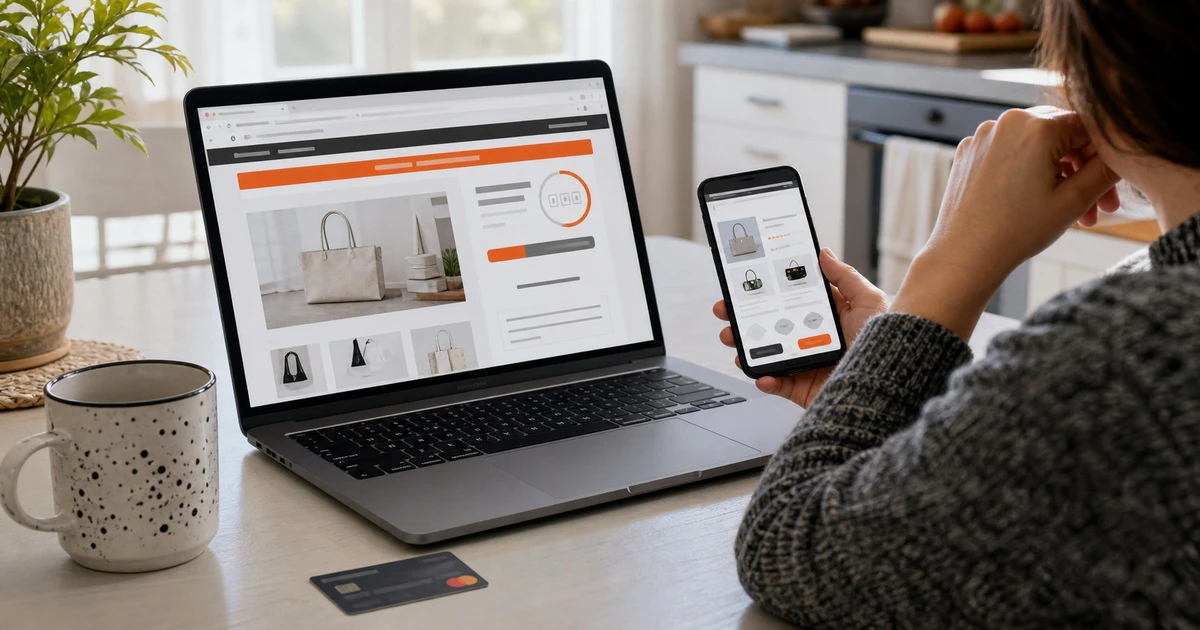
A polished website can be built in an afternoon, which means a professional look is no longer proof that a store is real.
Fake online shops copy product photos, reviews and checkout pages from legitimate retailers. Some buy sponsored search or social ads so they appear exactly where a careful shopper expects to find a deal. The site may take your money and send nothing, ship a poor imitation or collect card and identity details for another fraud.
Canadians do not need special software to catch many of these stores. They need a short pause and a few checks that are harder for a fake business to copy.
Start with the address, not the design
Read the full domain name in the browser bar. Scammers use misspellings, extra words and unusual endings that look close to a familiar brand. A sponsored result can still lead to an impostor, so do not assume the ad platform verified the seller for you.
Type the retailer's known address yourself or reach it from a trusted bookmark. If the store is unfamiliar, search the domain name with words such as “review,” “scam,” “complaint” and “return.” Look beyond the star rating shown on the store's own page.
You can also use ICANN's registration-data lookup for many non-.ca domains. A domain created days ago for a store claiming a long history is a serious warning. Privacy-protected registration is common and is not proof of fraud, while an old domain is not proof of honesty. Treat registration data as one clue.
A .ca address helps, but it is not a guarantee
A person or organization registering a .ca domain must meet Canadian-presence requirements. That gives a .ca name a real connection to Canada, but it does not mean CIRA has approved the store or checked every product.
Confirm the business in other ways. Does the contact page provide a full Canadian address and a working phone number? Does the address match a real business location on a map? Is the company name consistent across the site, receipt and card statement?
A fake store often has a contact form but no accountable business behind it. An email address alone is not enough when you are about to spend hundreds of dollars.
Pressure is a warning, not a deadline
Fake countdown clocks, “only two left” messages and claims that other shoppers are watching the same item are meant to stop you from checking. Canada's Competition Bureau warns that false urgency cues can be deceptive marketing.
Refresh the page or return later. If the timer resets, the stock never changes or the supposedly final sale continues for days, the pressure is not trustworthy. A legitimate discount can wait long enough for you to check the seller.
Price is another clue. One low price may be clearance. A whole store offering current, high-demand products at 70 or 80 per cent off is more likely to be bait. Compare the exact model and shipping cost with two established retailers.
Read the pages scammers usually neglect
Open the shipping, returns, privacy and terms pages. Watch for:
- a different company name copied into the policy;
- poorly translated sentences or sections that contradict each other;
- no return address or a requirement to send returns overseas at your cost;
- delivery promises that do not match the checkout page;
- a privacy policy that says nothing about payment or customer data; and
- links to social accounts that are empty, newly created or unrelated.
Perfect grammar does not prove a store is real. Generative AI makes clean copy cheap. The stronger test is whether the policies are specific, consistent and usable.
Do not trust the padlock alone
HTTPS encrypts the connection between your device and the site. That protects data while it travels, but it does not prove that the person receiving the data is honest. Scam sites can obtain valid security certificates too.
The real question is whether you trust the business at the other end. Check reputation, identity, policies and payment options together.
Use a payment method that gives you options
For an unfamiliar seller, a credit card usually offers a clearer dispute process than an e-transfer, wire transfer, gift card or cryptocurrency payment. The Competition Bureau recommends being cautious when a seller tries to move payment outside a trusted marketplace or auction system.
Never send an e-transfer because a stranger says the card machine is broken. Do not install remote-access software to “verify” a payment. If the checkout unexpectedly asks for a banking password, leave.
Consider using a virtual card number if your bank provides one, and do not let the store save your card. These steps reduce exposure, but they do not turn a bad purchase into a good one.
A two-minute checkout test
- Read the domain letter by letter.
- Search the domain and business name outside the store.
- Check when the domain was registered.
- Verify the address and phone number.
- Read the return policy and look for a real return location.
- Compare the price with established Canadian sellers.
- Pay by credit card and save the confirmation page.
If two or three checks fail, leave. A scarce product is not worth giving a doubtful site your card, address and phone number.
If you already paid
Take screenshots of the product, checkout page, policies, messages and order record. Contact the card issuer or payment provider quickly and ask about a dispute. Change any password you reused on the store, and watch the card for small test charges.
Report the site to the platform that showed the ad or hosted the marketplace listing. Canadians can also report fraud to the Canadian Anti-Fraud Centre and deceptive marketing to the Competition Bureau. If money or identity information was stolen, contact local police as well.
Mapletechie's practical guides focus on checks people can finish before a small doubt becomes an expensive problem.
The best fake stores are designed to make you feel late. The best defence is to be willing to miss the deal.