Virgin Media O2’s Fibre Halt Has a Canadian Lesson
Matthew Leo · Published November 6, 2026 · News
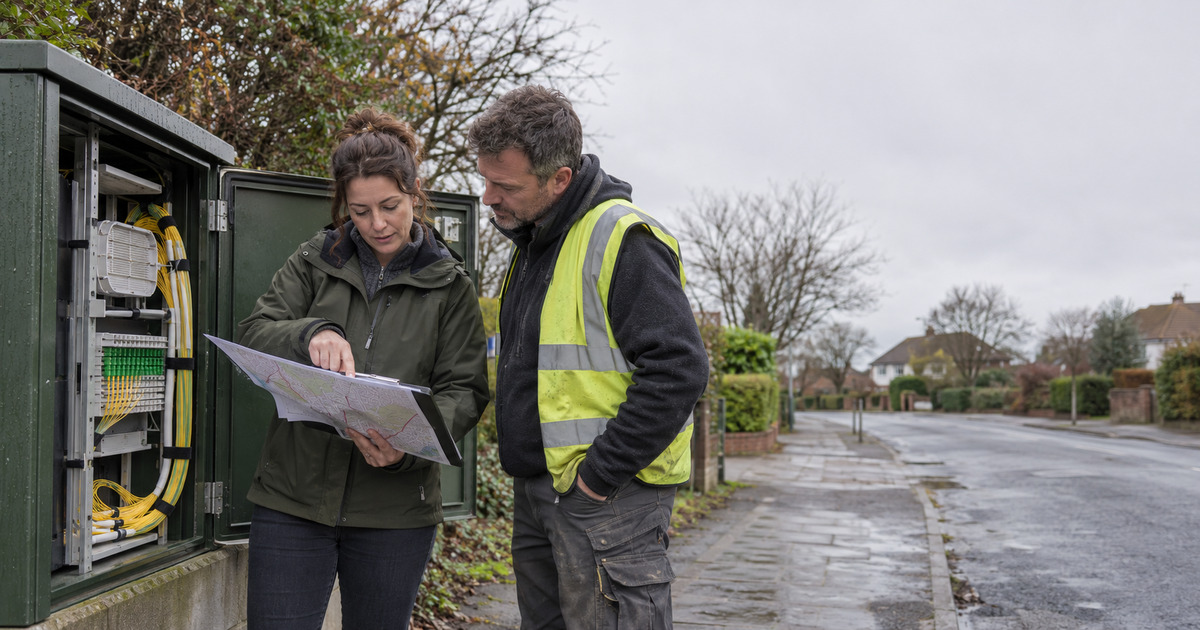
Virgin Media O2 is stopping further fibre upgrades beyond commitments already made to partners and exploring wholesale access outside its own footprint. The British operator's decision is a useful counterweight to a familiar telecom promise: more infrastructure does not automatically mean more competition if every provider must rebuild the same last mile.
The company said on November 3 that market economics do not support three overlapping fibre networks. Its new strategic outline halts additional upgrades beyond existing commitments, keeps a lower-cost plan to deliver 2 Gbps over most of its hybrid fibre-coaxial network in 2027 and leaves future fibre investment for selected areas where it can be financed off the balance sheet.
Reuters independently reported the fibre halt, job reductions and discussions about using BT's Openreach network. Virgin Media O2 says it is still exploring wholesale arrangements; no final Openreach agreement was announced.
This is a cash decision as much as a network decision
Virgin Media O2 is targeting roughly £800 million in annual run-rate savings by 2029, including about £300 million from workforce reductions over two years. Its third-quarter revenue fell 5.7 per cent to £2.4 billion and adjusted core earnings fell 2.6 per cent to £995 million, according to Reuters.
The company also lost 23,300 fixed-line customers in the quarter, leaving about 5.5 million. Against that backdrop, replacing usable coaxial access lines with fibre has to compete with debt reduction, mobile investment, customer retention and the cost of running overlapping networks.
The halt does not mean the network stops improving. DOCSIS technology can increase speeds over hybrid fibre-coaxial systems without replacing every line to the home. That is cheaper and faster, but it may not offer the same upload capacity, latency or long-term headroom as fibre-to-the-premises. Customers should judge the delivered service, not the material named in the advertisement.
Wholesale access separates service competition from construction
If Virgin Media O2 sells service over Openreach in places it does not reach, two companies can compete for the same customer without digging two trenches. The infrastructure owner earns wholesale revenue; the retail provider can expand without building an entire access network.
The trade-off is dependence. A wholesaler controls repair processes, installation capacity and part of the cost base. A retailer needs workable rates and service-level commitments to offer a meaningfully different product. Wholesale access can produce more storefront choice while leaving the underlying network concentrated.
Canada is making the same policy bet
Canada's telecom policy increasingly relies on wholesale access to large carriers' fibre networks. Ottawa's new competition roadmap presents that model as a way for smaller providers to reach more customers without duplicating every local line.
The British decision shows both why the model is attractive and what Canadian regulators must measure. If parallel construction becomes uneconomic, wholesale access may be the only practical route to additional retail competitors. If the rates or technical terms are poor, those competitors will not survive long enough to discipline prices.
Mapletechie's analysis of Canada's Telecom Competition Roadmap argued that access rules are promises until customers can buy better offers. Virgin Media O2 provides a live test of the same economics in a larger market.
What Canadian regulators should publish
- Wholesale participation: how many independent providers actually use fibre access in each region.
- Retail durability: whether those providers retain customers after introductory pricing ends.
- Provisioning and repairs: installation intervals, missed appointments and restoration times by wholesale network.
- Investment: whether incumbents continue expanding coverage and capacity after access obligations change.
- Service quality: advertised and measured download speed, upload speed, latency and outage performance.
- Regional choice: realistic alternatives outside dense urban neighbourhoods, not only national averages.
Consumers should compare the network behind the brand
A retail brand may use its own fibre, coaxial cable or another operator's wholesale network depending on the address. Before switching, ask which network serves the home, what upload speed is included, who handles installation and repairs, and whether the price changes when a promotion ends.
The lesson from Virgin Media O2 is not that fibre has failed. It is that infrastructure competition has a cost ceiling. Canadian policy will work only if wholesale access creates durable retail pressure while network owners still have a reason to maintain and extend the lines everyone depends on.
Tags: Canadian telecom, internet service, infrastructure, consumer rights