Xbox Can Turn Your Physical Discs Into Digital Games
Matthew Leo · Published August 29, 2026 · Gaming
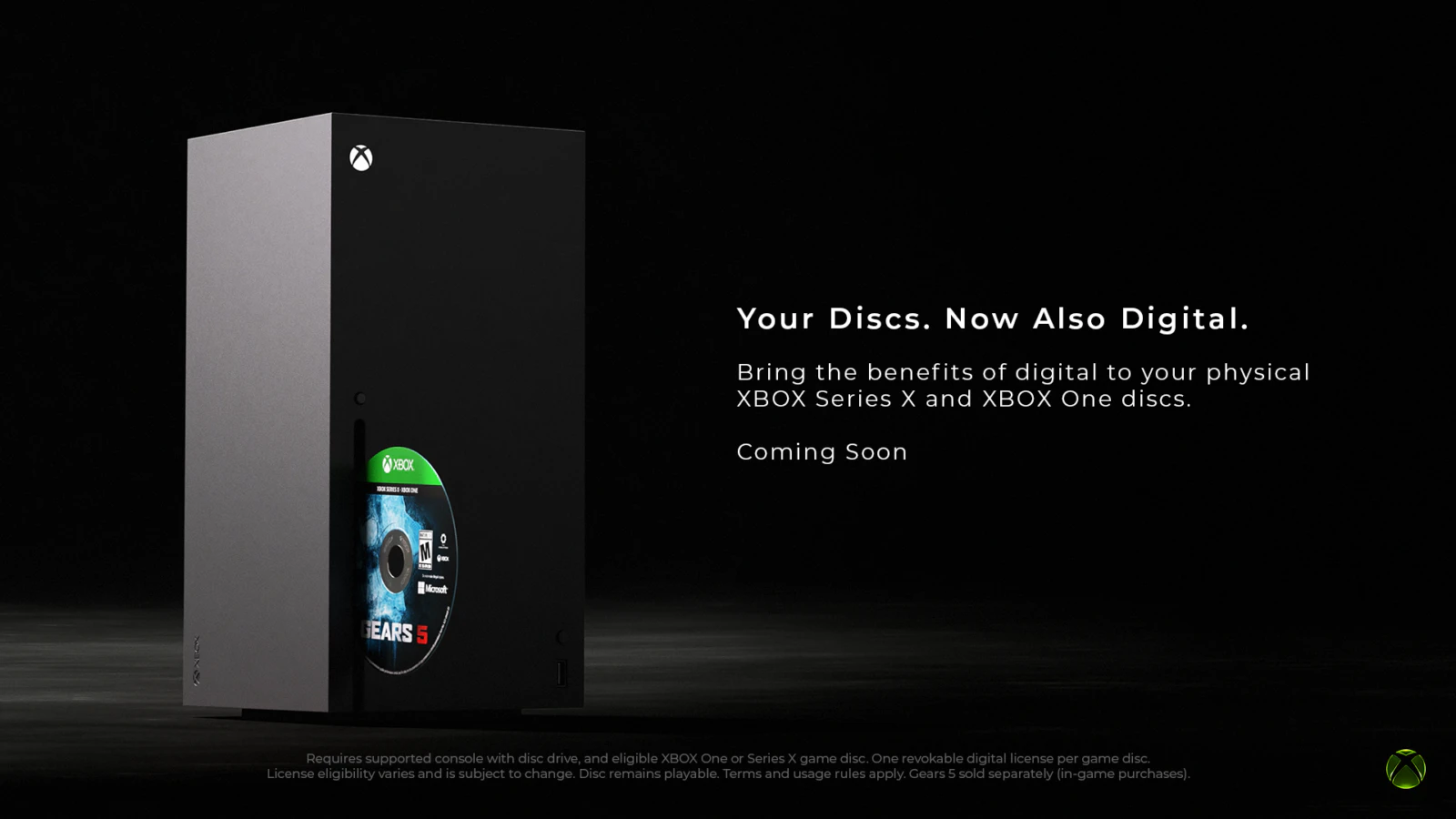
Microsoft has found a surprisingly sensible way to move Xbox toward a more digital future without telling people their shelves of physical games no longer matter.
A new disc-to-digital feature, announced August 26, lets players insert a supported Xbox One or Xbox Series X disc and claim a digital entitlement for that game. Xbox Insiders begin testing the system on August 31.
The clever part is that the digital right remains linked to the physical disc. This is not a one-time conversion that destroys the disc’s resale value. If the disc changes hands, the entitlement can move with it.
How the new system works
Microsoft’s official Xbox Wire announcement says players insert a supported Xbox One or Xbox Series X disc into a compatible console and launch the game. That action claims a digital entitlement.
Once claimed, supported titles can gain digital benefits such as Xbox Play Anywhere and Xbox Cloud Gaming where those features are available.
The physical disc continues to work normally. Microsoft says thousands of titles will be supported initially, with more added over time, although publisher participation means not every game will qualify.
The licence follows the disc, not just your account
This is the part that makes the idea different from a normal digital redemption code.
According to Microsoft’s implementation, the entitlement is revocable and connected to ownership of the disc. If another player uses the disc, the digital rights can transfer rather than leaving the first owner with a permanent digital copy after selling the physical one.
That design solves an obvious publisher problem. A permanent conversion would effectively create two usable copies from one purchase: the physical disc could be resold while the original buyer kept the digital licence.
It also preserves one of the strongest consumer advantages of physical media. A disc can still be sold, loaned or gifted.
This could make disc collections useful on future hardware
Microsoft describes the feature as part of its game-preservation strategy, and the timing is hard to separate from the industry’s gradual move toward hardware without optical drives.
Digital-only consoles are already common. Future Xbox devices may give Microsoft even more reason to separate the idea of owning a physical game from requiring a disc drive every time you want to play it.
A conversion system creates a bridge. A player could authenticate ownership using a supported console with a drive, then access the game through other compatible devices where Microsoft allows it.
The exact rules for future hardware are not yet fully defined, so it would be premature to claim that every current disc is now guaranteed to work on every future Xbox. The architecture clearly gives Microsoft more flexibility than the old “disc must be in the drive” model.
Cloud gaming becomes more interesting
A physical game traditionally ties you to hardware capable of reading the disc. Digital entitlement changes that.
If a converted title supports Xbox Cloud Gaming, Microsoft says the player can use those digital benefits while retaining the physical game. That could let someone who bought a disc years ago stream it on a supported device without rebuying the game digitally.
Xbox Play Anywhere can also extend supported purchases between console and Windows PC.
Not every game participates in those programs, and availability can vary by publisher and region. The feature should therefore be treated as a new entitlement layer rather than a promise that every disc suddenly becomes a universal Xbox licence.
There is a preservation benefit, but also a dependency
Microsoft is right that this can make physical libraries easier to carry forward. It does not turn digital licensing into archival preservation in the traditional sense.
A disc is a physical object that can exist independently of an account server. A digital entitlement depends on Microsoft’s infrastructure, account system and continuing support for the program.
That tradeoff is worth keeping clear. The new feature adds flexibility to a disc; it does not make the disc unnecessary as a preservation medium.
In fact, the best version of this system is precisely the one Microsoft appears to be testing: keep the disc useful while adding digital conveniences on top.
What Xbox owners should know before the test begins
Testing starts with Xbox Insiders on August 31.
You need a console with a compatible disc drive to claim the entitlement.
Most Xbox One and Xbox Series X disc games are intended to work, but not every title will be supported initially.
Digital benefits such as Play Anywhere and cloud streaming depend on the individual game supporting them.
The physical disc remains usable and remains part of the ownership system.
This is a better path to digital than pretending discs never mattered
The games industry has good reasons to prefer digital distribution. It reduces manufacturing and logistics costs, makes instant purchases easier and fits cloud and subscription services naturally.
Players have equally good reasons to value discs: resale, lending, collecting and a degree of independence from storefronts.
Microsoft’s disc-to-digital system is interesting because it does not require one side to disappear immediately. It tries to make a physical purchase participate in a digital ecosystem while preserving the object that was bought.
There will be edge cases and publisher restrictions to watch once Insiders test it at scale. But as an answer to the question “what happens to my physical library if consoles keep losing disc drives?”, this is far more consumer-friendly than asking people to buy everything again.
Tags: Xbox, Gaming, Game Preservation, Physical Games, Microsoft