Three Yandex Data Centres Went Offline in Four Days
Matthew Leo · Published October 23, 2026 · News
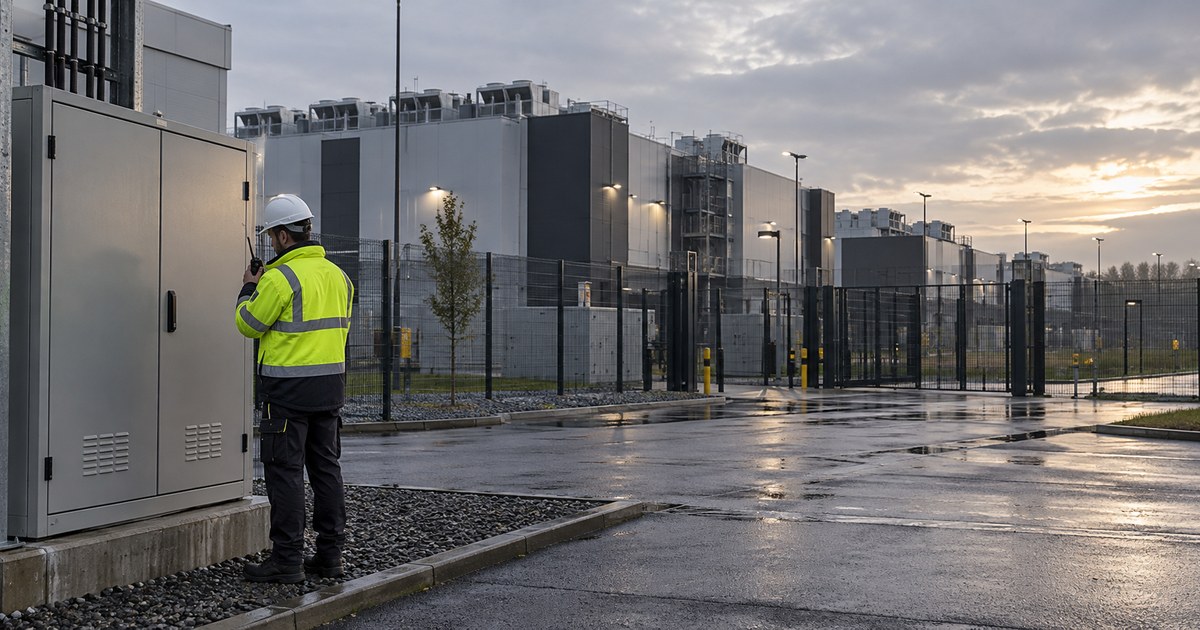
Three major Yandex data centres were knocked offline or impaired in four days, disrupting services and putting part of Russia’s AI infrastructure under unusual physical pressure.
Yandex said a drone attack damaged its facility in the Vladimir region on October 11 and forced a complete shutdown. The company reported no injuries, but said some services were unavailable. Reuters reported the shutdown after two earlier incidents at Yandex facilities.
The sequence matters beyond the immediate war. It is a concentrated example of a risk that ordinary continuity plans often understate: several locations can fail close together, and regional redundancy may share the same threat.
Three facilities were affected
Reuters said the Vladimir facility was the third major Yandex data centre taken out of action in several days. A centre in the Kaluga region was partly disabled on October 9. A day earlier, an attack shut the company’s Sasovo hub, which Reuters reported houses two of the three supercomputers used to develop Yandex’s AI model.
The Associated Press separately reported that the October 11 strike was the third in four days. AP cited Yandex’s operational channel saying the Vladimir infrastructure was damaged and operations had completely stopped. AP also reported user complaints affecting taxi, shopping and other services across Russia and neighbouring countries.
Those are company statements and reported user experiences, not an independent technical audit of the facilities. Neither report establishes the full duration of the outages, the amount of damaged equipment or how much workload shifted successfully to other sites.
Redundancy can still share one failure mode
A service can run in several buildings and remain exposed if those buildings sit within the same threat region, depend on the same communications routes or support the same control systems. The useful question is not simply whether a second site exists. It is whether the second site is likely to survive the same event.
That distinction applies to fires, floods, grid failures, fibre cuts and ransomware as well as military attack. Capacity also matters. A backup region that can handle routine failover may not be able to absorb multiple full facilities at once.
Mapletechie’s earlier look at the cost of rapid data-centre growth showed how power, debt and new capacity scale together. The Yandex incidents add the operational side: capacity has value only if the network can keep enough of it available through a severe disruption.
What Canadian operators should test
Canadian organizations do not need to model the exact circumstances in Russia to learn from the sequence. A useful exercise is to remove the primary region and its nearest backup from a continuity test at the same time.
- Map shared dependencies: identify common power corridors, fibre routes, identity services, control planes and staff.
- Set realistic recovery capacity: confirm what percentage of normal demand the surviving site can carry and for how long.
- Keep a manual path: define which customer, safety or payment functions continue when the main digital service is unavailable.
- Test communications: make sure status updates do not depend on the same infrastructure that failed.
- Exercise a prolonged event: include delayed repairs, inaccessible facilities and more than one simultaneous outage.
Cloud regions and data centres are physical places. The last four days are a reminder that resilience cannot end at a logical diagram.
Tags: Yandex, data centres, business continuity, AI infrastructure, Canada