Canada Is Backing a More Resilient GPS Alternative
Matthew Leo · Published October 23, 2026 · Canada Tech
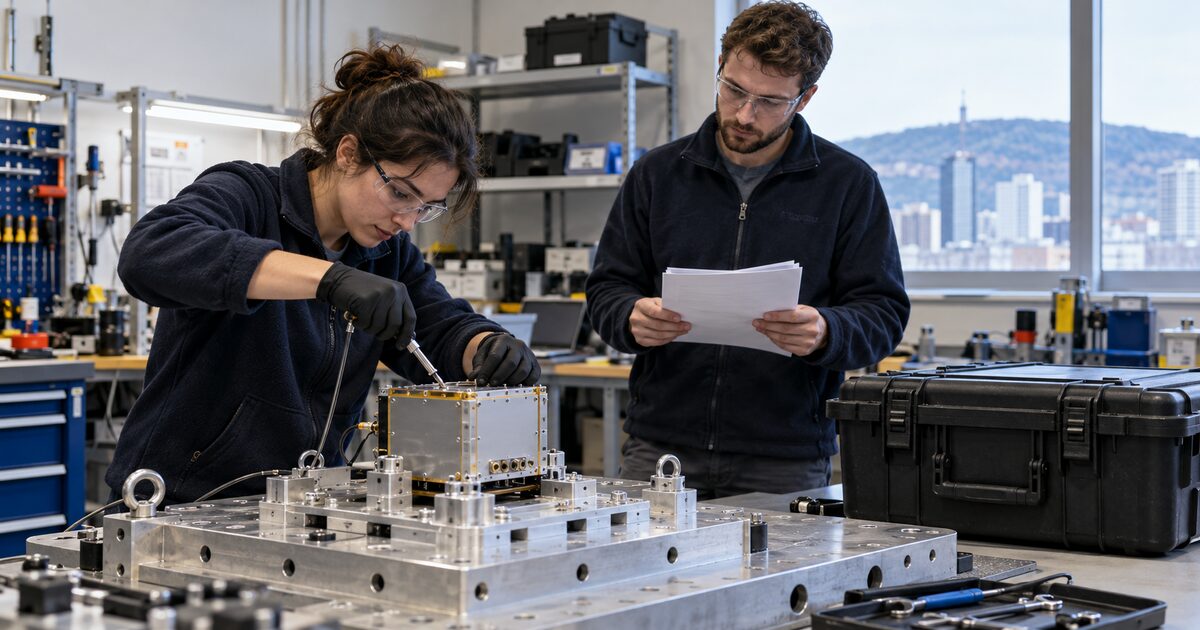
Canada is putting $15 million into a Montréal satellite centre that aims to make positioning and timing services less dependent on distant GPS satellites.
The federal government announced the investment in Xona Space Systems Canada on October 20. The money comes through the Strategic Response Fund and supports a project valued at $64.8 million.
That means the federal contribution represents about 23.1 per cent of the stated project value. Ottawa says the centre will support satellite development, manufacturing and mission operations, with roughly 126 jobs expected.
Why navigation satellites matter beyond maps
GPS is best known for turn-by-turn directions, but positioning, navigation and timing signals also synchronize telecom networks, financial systems, power infrastructure, transportation and emergency services. A signal disruption can therefore create problems far beyond a phone losing its place on a map.
Xona is developing a system called Pulsar that uses satellites in low Earth orbit. Because those satellites are much closer to Earth than the GPS constellation, the company says its signals can be stronger at the receiver. The planned service is meant to complement established systems such as GPS and Galileo, not instantly replace them.
That distinction matters. “GPS alternative” is useful shorthand for readers, but resilient infrastructure usually depends on several independent sources working together. A new constellation can add another layer; it does not make interference, equipment failures or cyber risks disappear.
Why Montréal is the strategic part of the deal
The project puts more of the satellite lifecycle in Canada: engineering, hardware work and day-to-day mission operations. According to the federal announcement, the centre is expected to support applications in transportation, defence, telecommunications, critical infrastructure, emergency response and the Arctic.
Those are unusually practical use cases for a space investment. Northern operations often have fewer terrestrial backups, while defence and emergency services need timing and location information that remains dependable during disruptions.
Specialist publication SpaceQ independently reported the investment and Montréal expansion. The facility also fits a larger Canadian push to build communications and navigation capacity at home. Mapletechie previously examined Canada’s space-infrastructure partnership with France.
What still needs to be demonstrated
The announcement describes planned capabilities and economic benefits. It is not proof that Pulsar already provides full commercial coverage in Canada, nor does it establish performance under every type of interference.
Readers should watch three milestones:
Constellation deployment: how many operational satellites are launched and when service becomes available.
Receiver support: whether equipment makers add compatible hardware without imposing steep costs.
Independent performance evidence: testing of accuracy, availability and resilience in Canadian conditions, including the North.
For Canada, the immediate result is an industrial investment and a new satellite-technology hub. The larger promise is a second source of navigation and timing signals for systems that cannot afford a single point of failure. That promise is credible enough to matter, but it will ultimately be judged in orbit and in compatible receivers, not in the funding announcement.
Tags: space, satellite navigation, Montréal, infrastructure, Defence