Google Will Test an AI Chip in Orbit Next Week
Matthew Leo · September 26, 2026 · AI
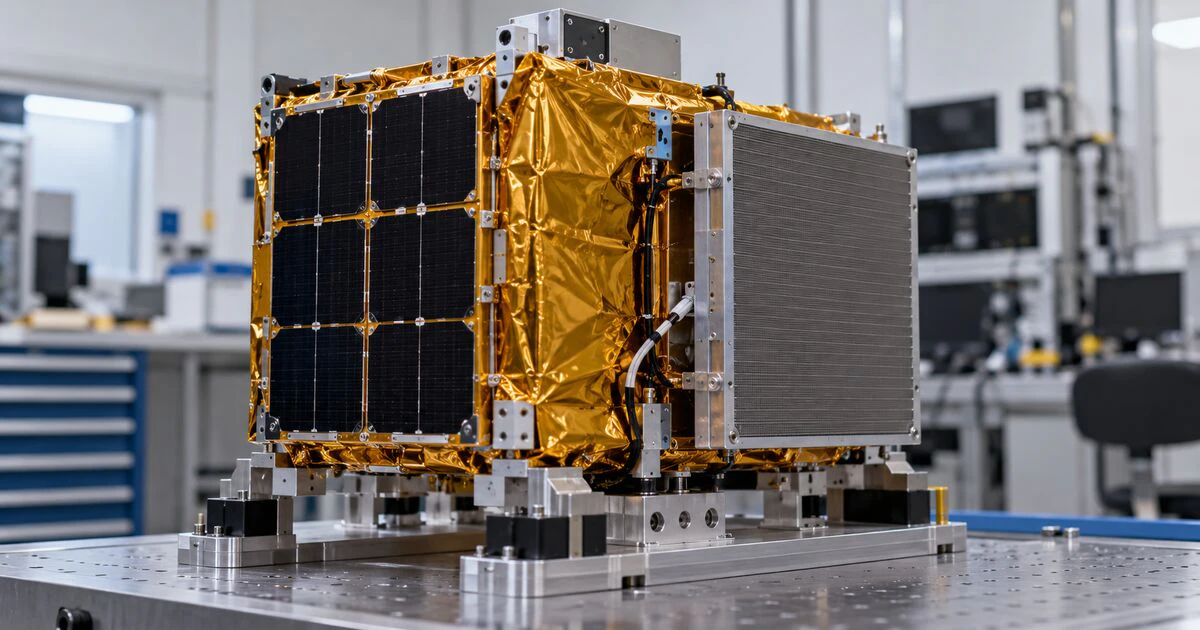
Google plans to put one of its AI chips in orbit next week. That is a hardware test, not the opening of a data centre in space.
The company told Reuters on September 24 that a prototype satellite carrying Tensor Processing Units, or TPUs, is scheduled to fly on SpaceX's Transporter-18 rideshare mission with Planet Labs. The launch has not happened yet, and schedules can change.
What this flight will test
The satellite is meant to measure whether the hardware survives launch forces and operates reliably amid radiation and temperature extremes in low Earth orbit. Radiation can alter bits in memory or degrade electronics. The team will also evaluate heat pipes and radiators to move heat away from a power-hungry chip. A vacuum has no air for an ordinary fan to push through a server.
Google says it has already subjected TPUs running AI workloads to radiation testing at the University of California, Davis. Lab exposure does not reproduce an entire mission, including launch, years of cycling temperatures and the behaviour of a complete satellite. An orbital result will be useful even if it finds failures.
Nothing about this first flight shows that a cluster can train a large model economically in orbit. It will not establish high-bandwidth links among satellites, an affordable launch-and-replacement cycle or a way to manage hardware faults at scale.
The bigger plan remains a research proposal
Google's Project Suncatcher design imagines many small, solar-powered satellites carrying TPUs and exchanging data over optical links. An orbit with long exposure to sunlight could provide ample solar power. Google now aims to launch two satellites in 2027 to test the laser connections a larger system would need.
There are reasons to explore it: land-based data centres need electricity, water or other cooling resources, and grid connections that can take years. But a satellite brings new costs and limits. It must radiate waste heat, maintain precise links while moving quickly, withstand radiation and eventually be replaced or serviced. Those are engineering and economic questions, not just a matter of placing familiar servers above the atmosphere.
Canada has reasons to watch the communications side as well. Its planned work with France on shared space infrastructure depends on dependable links and systems built for harsh conditions. That is not the same project, but it is a reminder that orbital computing would also require an unusually reliable network.
The useful milestone next week is modest: did the satellite launch, and what does Google later report about the chip, cooling and faults in orbit? A functioning AI data centre is still a separate, much larger claim.
Tags: Google, space, AI chips, Project Suncatcher