Samsung’s Record Profit Is a Warning for PC Buyers
Matthew Leo · Published October 9, 2026 · Business & Policy
Analysis
Samsung Electronics expects a record third quarter, and the size of the jump explains why memory upgrades are getting harder to ignore when Canadians shop for a computer.
On October 8, Samsung issued guidance for approximately 195 trillion won in sales and 107.4 trillion won in operating profit for the July–September quarter. A year earlier, operating profit was 12.17 trillion won.
Using Samsung’s published figures, that is an increase of about 783 per cent. It is also guidance, not a complete earnings report. Samsung plans to publish detailed results on October 29, when investors will see how much each division contributed.
The profit is evidence of a memory squeeze
Reuters linked the result to booming AI-chip demand and a deepening global memory shortage. It reported that Samsung’s estimate was slightly above an LSEG SmartEstimate of 106.1 trillion won and described this as the company’s fourth consecutive quarter of record operating profit.
The economics are straightforward. AI data centres are buying enormous volumes of advanced memory, while suppliers also need to serve the conventional DRAM and storage markets used by PCs, phones and other electronics. Capacity cannot expand as quickly as demand. When the market tightens, chipmakers gain pricing power and device manufacturers pay more.
The categories are not interchangeable. High-bandwidth memory used beside AI accelerators is different from the laptop RAM a consumer buys. The connection is production investment, materials, packaging and the suppliers’ incentive to prioritize their most profitable products.
What the numbers do not prove yet
Samsung’s short guidance notice reports consolidated sales and operating profit. It does not break out memory, foundry, phones, displays or appliances. Claims about the exact profit of the chip division remain estimates until the detailed release.
The figures also do not guarantee that every laptop or RAM kit will immediately rise by the same percentage. Retail inventory, supplier contracts, exchange rates, promotions and product mix all affect Canadian prices. A profitable quarter for Samsung is a market signal, not a price list.
There are longer-term risks as well. Reuters noted that weaker AI investment or greater competition could eventually reduce the imbalance. Memory markets have a history of moving from shortage to oversupply. Buyers should therefore avoid treating today’s pressure as a permanent one-way trend.
The Canadian buying decision has changed
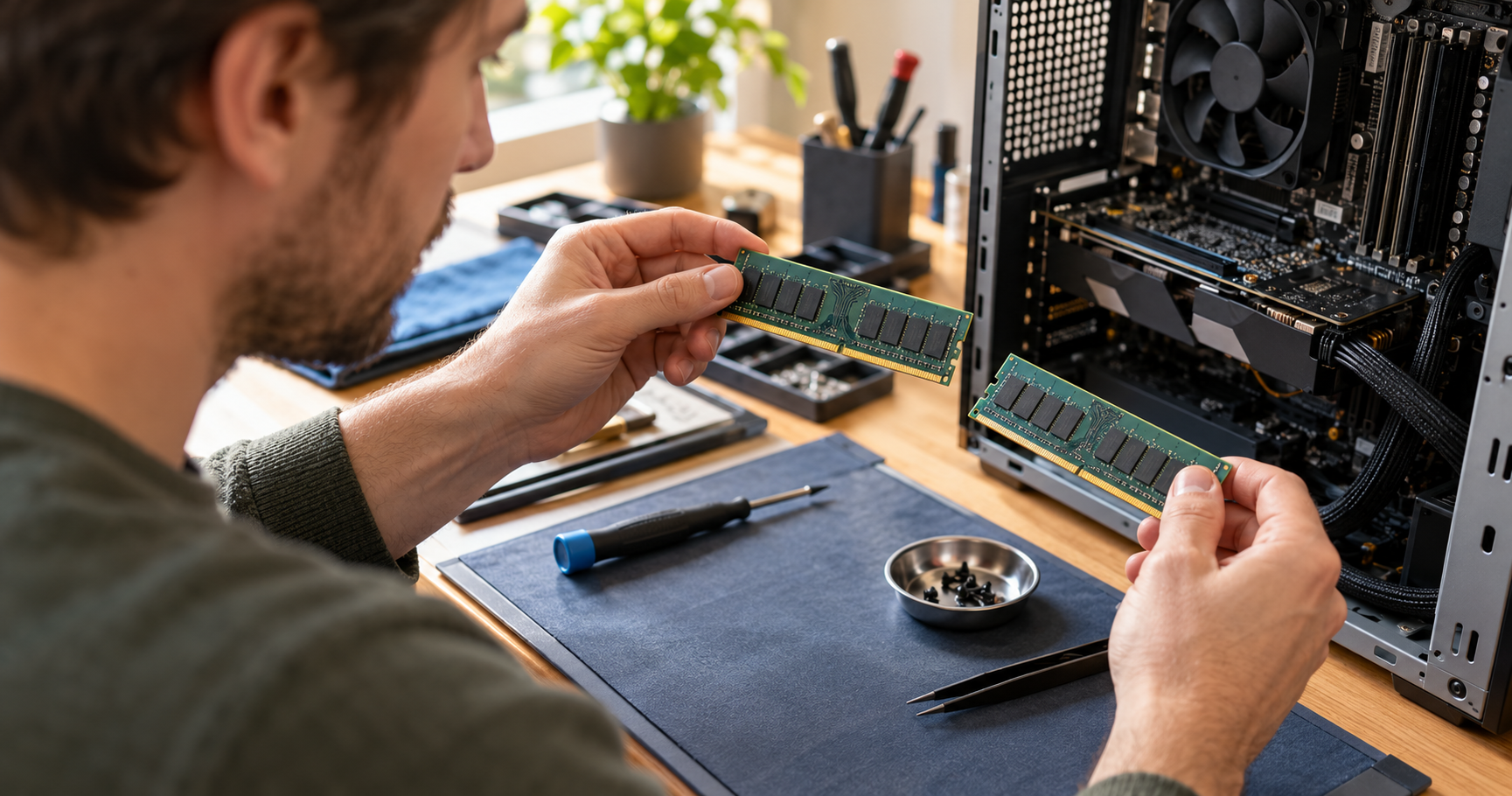
For Canadians who need a computer this year, memory capacity deserves more attention than an “AI PC” badge. Modern thin laptops often have soldered RAM that cannot be upgraded. A discounted 16 GB model may cost less today but force an earlier replacement if the buyer’s workload grows.
A practical way to shop is to separate the decision into three questions:
- Is the memory upgradeable? If it is soldered, buy for the useful life of the machine, not just the first six months.
- Does the workload truly need more? Web browsing and office documents have different requirements from virtual machines, large creative projects or local model work.
- What is the full Canadian price? Compare the final configuration after memory and storage upgrades, taxes and warranty coverage. A low advertised base price may disappear once the usable configuration is selected.
Mapletechie has already tracked the consumer side of this pressure. Amazon raised prices on several hardware lines while citing memory and storage costs. Lenovo also said memory costs contributed to PC price increases.
Samsung’s guidance adds the supplier view. Device makers describe higher input costs; the world’s largest memory producer is reporting extraordinary profitability at the same time.
When waiting makes sense
A buyer with a reliable computer and no urgent workload can wait for seasonal promotions and compare price history. But waiting specifically for memory prices to “return to normal” is not a plan unless there is a deadline. Samsung and Micron expect the supply imbalance to persist into 2028, according to Reuters, though forecasts can change.
Businesses should standardize a small number of configurations and negotiate around total fleet volume. Consumers should focus on the machine they can keep longest without paying for speculative capacity they will never use.
The lesson from Samsung’s guidance is not that every Canadian must buy immediately. It is that memory is no longer a quiet line item. It has become one of the clearest ways the AI infrastructure boom reaches an ordinary electronics receipt.
Sources
- Samsung Electronics: third-quarter 2026 earnings guidance
- Reuters: Samsung guidance and memory-market context
Tags: memory prices, AI infrastructure, PC prices, Samsung Electronics