UK Opens Ukraine Battlefield Data to Drone-Swarm Developers
Matthew Leo · September 26, 2026 · News
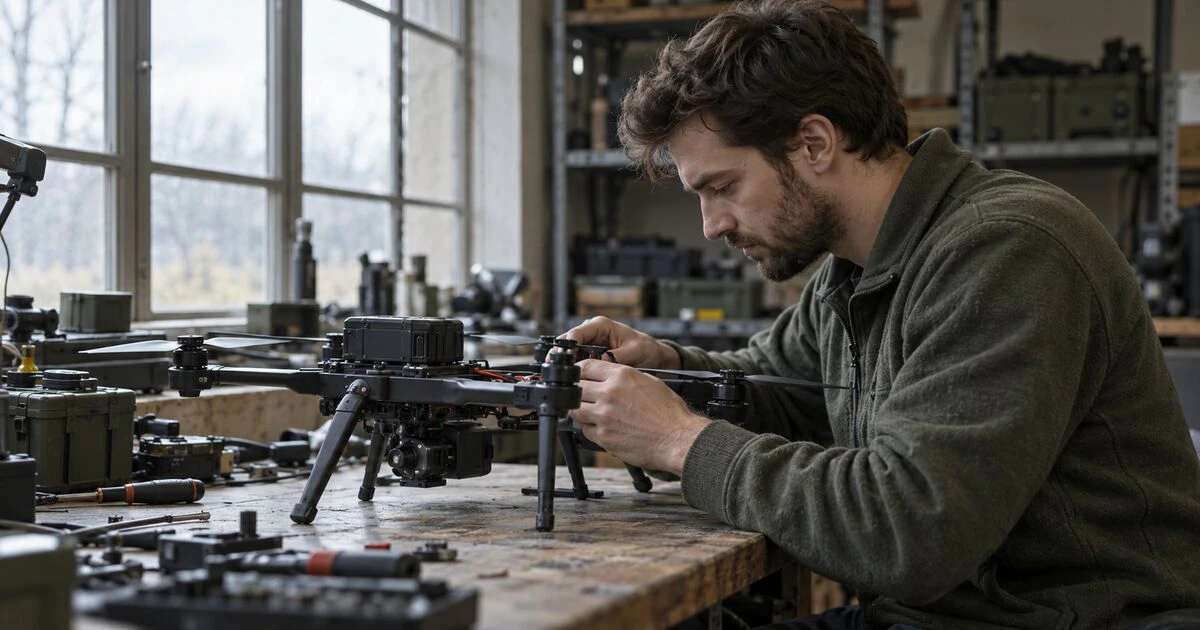
Ukraine has accumulated a huge record of what drones actually see in war. The UK now wants selected British companies to use it to develop software for groups of drones that can identify objects and coordinate their movements.
Under a deal announced on September 25, up to 12 firms can seek access to imagery and video collected by Ukrainian uncrewed aircraft, Reuters reported. The database includes more than six million detections of objects such as tanks, artillery, air-defence systems, infantry and aerial targets. Companies must submit proposals relevant to both Ukraine's and Britain's defence needs.
What the firms are being asked to build
The UK government is seeking work on automated target recognition and on distributed decision-making. In the second case, drones could adjust routes, priorities and behaviour without one central controller issuing every instruction. The government says people would remain involved in these operations.
That description is a research and procurement brief, not evidence that any new swarm has been fielded or that the database can train a reliable system on its own. A model that recognizes an object in recorded footage still has to work with different cameras, weather, camouflage, electronic interference and rapidly changing surroundings. False identifications in a civilian area would be far more consequential than a low score on a test set.
The agreement also leaves practical questions unanswered in the public account: which companies will be selected, how the footage is labelled and checked, whether civilian or sensitive imagery is excluded, and what restrictions follow a trained model into exports or future deployments. The government has not published a performance result for the proposed systems.
Why the data matters
Defence firms can fly test drones and simulate targets. Neither produces the same variety of conditions as years of operational footage. Access to a large annotated collection could help developers find mistakes before a field trial and compare one recognition method with another. It can also make the owners of that data important partners in any future system.
But “six million detections” is not six million independent, correct examples. Frames from one flight may repeat the same vehicle, and the labels may reflect an operator's uncertain view. Testing has to keep related footage out of both training and evaluation, or reported accuracy can be misleading.
For Canada, the useful comparison is not whether it should copy this particular data deal. As defence procurement shifts toward drones and software, buyers should demand a clear account of training-data provenance, independent field testing, human authority over force and what happens when communications fail. The UK announcement gives firms a chance to develop systems. It does not answer those questions for a finished weapon.
Tags: Ukraine, drones, defence technology, United Kingdom