Check the Chips Inside Your Cameras Before You Buy
Matthew Leo · Published October 31, 2026 · Guides
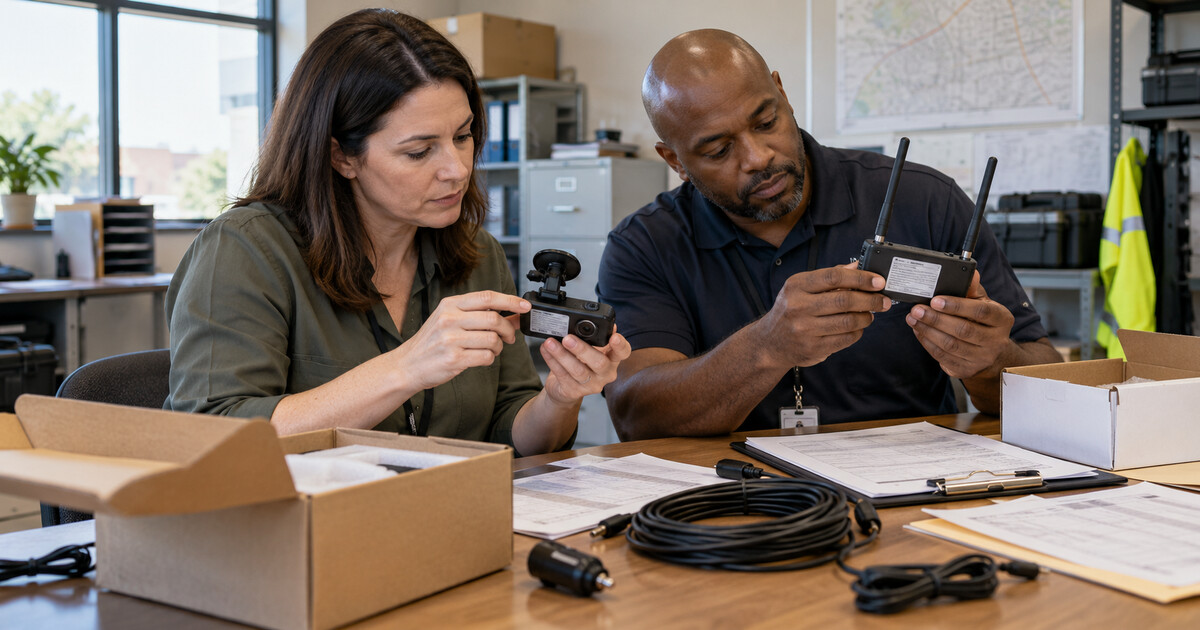
A product’s brand name does not tell you who designed every component inside it.
That became unusually visible on October 22, when the U.S. Federal Communications Commission stopped a dashboard camera and a wireless video transmitter from receiving authorization for sale in the United States. The agency said both contained video-processing chips made by HiSilicon, a Huawei subsidiary on the FCC’s Covered List.
The decision does not prove that either finished device secretly transmitted data. It shows something different: regulators are beginning to judge a product by restricted components inside it, not only by the name printed on the box.
What the FCC actually did
The FCC said its Office of Engineering and Technology prevented a dashcam and wireless video transmitter from being marketed or sold in the United States. It was the first use of new authority covering certain equipment that incorporates components produced by companies on the agency’s national-security list.
HiSilicon markets the identified chip family for video processing and computer-vision features, including human-face detection. That capability alone does not establish malicious behaviour. The FCC’s decision is a supply-chain restriction based on the origin and intended capabilities of a component.
Canada has not announced an equivalent ban on these two products. Canadian buyers should not describe them as prohibited here without a Canadian decision.
Why rebranded equipment is difficult to assess
Video equipment is frequently sold through original equipment manufacturers, distributors and private-label brands. The company on the storefront may not design the circuit board, firmware or cloud service.
A single camera can therefore involve several parties:
- the visible consumer brand;
- the original hardware manufacturer;
- the chip designer and fabricator;
- the firmware developer;
- the mobile-app or cloud-service operator;
- the distributor responsible for updates and warranty support.
If a buyer records only the storefront brand, it may miss the organization controlling security updates or receiving video data.
Build a component and service record
Before connecting cameras, recorders or wireless transmitters to a sensitive network, ask the vendor for information that remains useful after the sales conversation.
- Exact model and hardware revision: Similar product names can contain different boards or chips.
- Manufacturer and subsidiaries: Record the legal entities responsible for hardware, firmware and cloud services.
- Chipset or system-on-chip: Ask for a bill of materials or, at minimum, the principal processor and wireless components.
- Firmware support period: Get an end date, update channel and vulnerability-contact address in writing.
- Network destinations: Identify required domains, countries of service and whether the device works without a vendor cloud.
- Data handling: Document what leaves the device, where it is stored, how long it remains and who can access it.
- Independent testing: Ask for current security assessments and clarify whether they cover the exact hardware revision.
A vendor that cannot answer every question is not automatically unsafe. The gaps should change where the equipment may be used and what network access it receives.
Check regulatory lists without overreading them
For products sold in the United States, search the FCC authorization database and its Covered List. Confirm the grantee, model number and authorization rather than relying on a marketplace description.
Canadian procurement teams should also check applicable federal, provincial, municipal and sector-specific requirements. The Canadian Centre for Cyber Security warns that a compromise anywhere in a supply chain can affect a connected component and publishes broader supply-chain guidance.
A foreign restriction is evidence to review, not a substitute for Canadian legal advice or a technical assessment. The underlying reason may be national-security policy, a product vulnerability, ownership, data practices or a combination of concerns.
Limit what the device can reach
Documentation cannot replace network controls. Put cameras and recorders on a dedicated network segment when possible. Allow only necessary destinations and management systems. Disable unused remote-access features, change default credentials and monitor unexpected outbound traffic.
Keep an offline inventory that connects each physical device to its model, firmware, location, administrator and replacement date. Mapletechie’s guide to checking whether a router still receives security updates uses the same basic principle: equipment that still works may already have lost dependable support.
Plan for a restriction or supplier failure
A procurement decision should include an exit path. Contracts can require disclosure of material component changes, continued security updates, data export, local administrative control and notice before a cloud service is discontinued.
For higher-risk locations, test whether another product can replace the device without rebuilding the whole system. Retain configuration records and avoid proprietary formats when an open alternative meets the need.
The FCC action should not trigger panic about every camera or video chip. It should change the question from “Which brand did we buy?” to “Which companies and components do we depend on, what data can they reach, and how quickly can we replace them?”